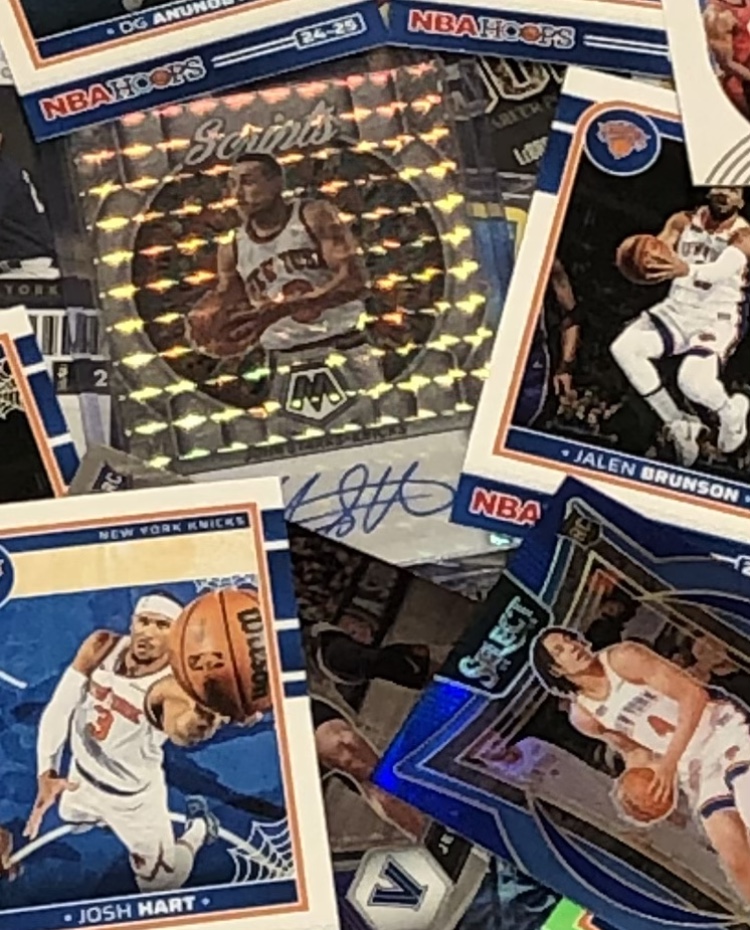
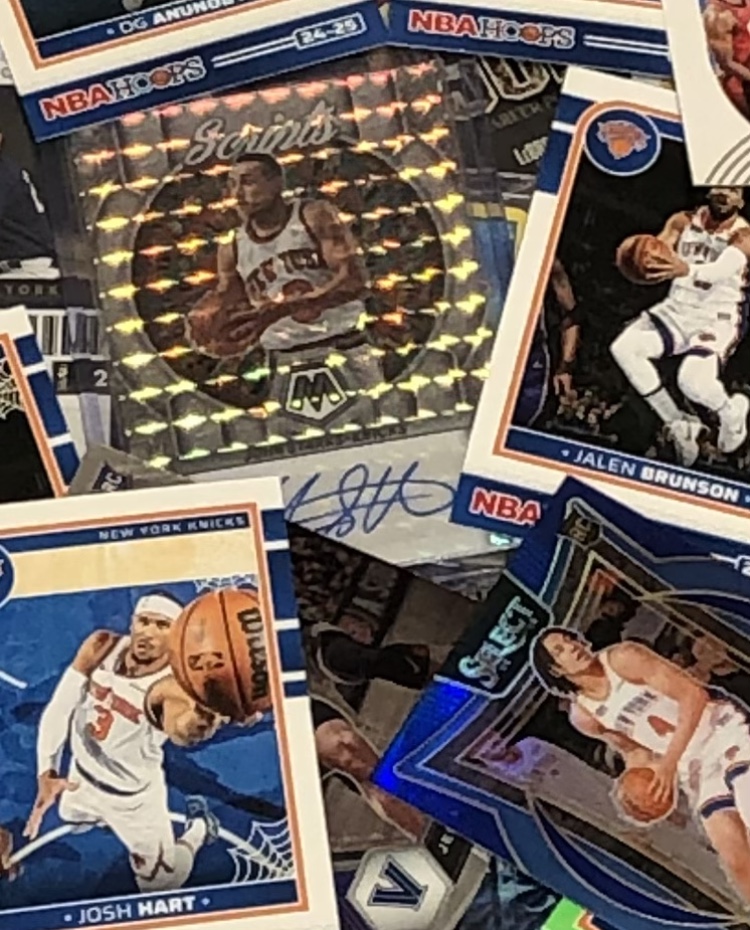
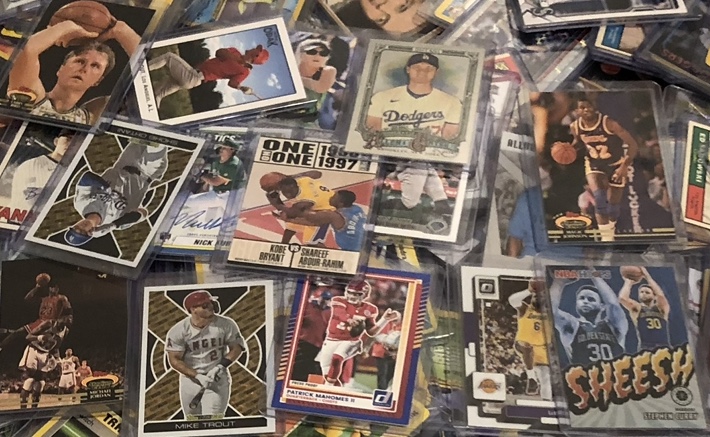
I think the future of the Knicks will be extremely bright for the next ten years. There will be more superstar free agents who will want to join the Knicks. This is also one of the reasons why I think Jalen Brunson cards may be over priced now from a long-term perspective. The biggest winners from the Knicks doing well financially besides the Knicks themselves is actually Villanova University. Villanova will likely see about 10 years of massive free marketing from the Knicks and the Pope with their combined billion plus followers where it can use this opportunity to expand its already billion dollar endowment, academic and athletic programs. Due to the school’s physical proximity to Upenn, there is an opportunity for Villanova to present itself as a near peer to the Ivy League in the next 30 years. Villanova is expanding quietly but rapidly likely completing its merger campuses of two different universities near its own campus into its own on the Main Line, one of the most affluence areas in the United States and home to the headquarters of one of the largest investment companies in the world.
Knicks fans due to their geographical locations are fairly richer than many other fans. This is shown recently when a large number of Knicks fans went to San Antonio and was about 40% of the stadium audience during this year’s Game 1 of the NBA Finals effectively mitigating the Spurs’ home field advantage. The Knicks have so many different good storylines right now with the whole Nova Knicks college teammates thing, developing a strong team culture, Knicks super fans potentially, finally seeing its team win and more that I think it is movie worthy. The NBA being headquartered in New York may have strong incentives for the Knicks to do well in the long run.
I live in America which means I have the rights to exercise reasonable free speech as permitted by the law. All posted content(s) on this website are my opinions only which means they should not be taken as advice of any kind. I am a non-celebrity, non-public figure posting anonymously for my own entertainment on a website that is not affiliated with any individual(s), organization(s) and/or any entity/entities.
The predicted future of the Knicks, Spurs and the NBA as a League.
The NBA has for years discussed having NBA teams outside of the United States and Canada, will increase the probability of their dream coming true if the league become much more wealthier. The league is already highly internationalized and there are likely already huge markets for the NBA when certain foreign countries have their own NBA franchises. I think the most likely potential for a new NBA team outside of US and Canada is likely in Mexico. Mexico City is one of the largest cities in the world already with probably the most popular NBA G League team playing in an around 22K seat capacity stadium setting attendance records with nearly 20K people attending the game. This is unbelievable when you think about the average size of an NBA G League arena and its average attendance. Mexico with a population of about 130+ million has an NBA fan base of 30 million people. If it makes sense to operate an NBA franchise in Canada with a total population of about 42 million and a fan base of about 8 million, it probably makes sense to operate an NBA team in Mexico City if the league and Mexico can work out the details.
San Antonio Spurs on the other hand will likely not be so lucky. I think their franchise’s golden era began and ended when Tim Duncan retired unfortunately. In the age of social media, the Spurs will have a hard time attracting and developing generational talents who will stay with the team in the long run. With the internationalization of the sports where many talented players are from overseas, they will most likely want to play in big market teams to increase their marketability. Both Wemby and Brunson appear to be injury prone given their injury history. The difference is Wemby is the core and almost everything the Spurs are about on both ends of the floor whereas Brunson plays with KAT and a team full of 3 and D players such as Mikal Bridges who can help the Knicks win without Brunson in the short term. Even though Wemby is a great player, many free agents will be hesitant to play for the Spurs because of San Antonio is a small market.
The NBA as an organization like many professional sports organizations will probably do better when its big market teams consistently do well hence the league itself may have incentives for the big market teams to do well in the long run. I think a future NBA where both of its major markets doing well will allow the league focus on supporting its other important NBA teams in key markets like Chicago, Philadelphia and Dallas become better as well. Ultimately basketball is a global game because it is easy to understand and almost accessible to anyone regardless of their social and economic situation given its lenient requirements for game play such as requirement on equipments which basically just a basketball hoop and a basketball that even one single person can play the game as a sole participant.
I think there is a 40% chance the Knicks will sweep the Spurs in this NBA Finals, a 70% chance it will win in five games, a 90% chance it will win in six games and a 99% chance it will win in seven games. I think the Knicks will most likely win in five games mostly because win streaks are usually hard to break like inertia unless something more powerful breaks it apart. When the inertia does break, there may be some “dead cat bounces” or a “last gasp.” Hence I believe even if the Knicks have their streak broken, they will likely still win the series, that probably is much higher if they can win Game 2. As I mentioned before the start of Game 1 of this NBA Finals, the Spurs were about 90% of themselves during that games and likely will be 95% of themselves in game 2. The Knicks essentially took away the Spurs’ home field advantage. New York and San Antonio are too totally different cities and environments. The Knicks play in arguably the world’s most famous arena with the brightest lights on them every home game. That lack of five percent from the Spurs likely in Game 2 will mean they may likely lose again. The Spurs are on an extremely short rotation heavily relying on Wemby on offense and defense.
KAT as I mentioned before will strength Wemby out and Mitchell Robinson will dominate the paint when they are both on the floor at the same time during the Finals. Unfortunately for Wemby, he came into the league during a time when there is already a likely GOAT in Lebron James and will likely be compared to Lebron in the future in terms of greatness. Lebron has too much going for him to likely not play a few more years which likely will coincide with Wemby’s prime. Unfortunately the Spurs cast at least in the next few years might not be a historical level all-time team. Wemby is also not American and plays on a very small market team which from a marketing prospective may not be the best scenario as big sports markets in America by far make the most money out of all single country markets in this category. From a cards investing standpoint, I don’t think Wemby cards are worth buying in the long-run contrary what all the hypes are all about. If you know what the current hobby hype mechanism and its typical pricing cycles, you probably know what I am talking about. In Wemby’s case, the marketability issues are just the multiplier.
The principal issues with Wemby being even near GOATesque are for one he will likely not even sniff GOAT levels because he is in Lebron James’ era, Lebron, likely the eventually NBA GOAT will likely not retire until a few years later when he achieve most of the remaining attainable milestone records in the NBA. Secondary, Wemby is too thin and will likely not be able to gain much weight and muscle without sacrificing his potentials and increasing injury risks which historically has held true for many players with similar physique. Thirdly, I am not entirely sure if Wemby will even be top three in all-time greatest Spurs before he retires which even the greatest Spurs in Tim Duncan is an around top seven to ten player. Right now the Iceman and the Admiral are well ahead of Wemby. Though I think Wemby arguably and statistically could be ahead of the Iceman, however, I am unsure if he will ever be better than the Admiral due to the big man era he played in, his likability as a sort of NBA American hero, the Twin Towers era and his rings. Fourthly, Wemby will likely be compared to Tim Duncan, the issue here is Tim Duncan won a ring in his second NBA season at 23, Wemby likely won’t win a ring this year, even if he wins one next year, he will be slightly older than Duncan was though just by a few months. Fifthly, the era Wemby plays in could be argued as one of NBA’s weakest era for the center position. NBA in its golden era was known for its physical guards play and bruising centers. There is a reason why great shooting centers like Jack Sikma was not elected to the hall of fame until recently. And lastly, I am unsure if any of Wemby’s teammates on this Spurs team will be a hall of famer for purely NBA basketball reasons, regardless of the rigor of being inducted as a basketball hall of famer. The 2022-2023 Spurs championship team had four hall of fame players in Tim Duncan, David Robinson (his last year playing in the NBA), Tony Parker and Manu Ginobili along with one of the greatest coaches in NBA history and the NBA coach with most NBA game coaching wins, hall of fame coach Gregg Popovich. That’s five hall of famers on one team. I think the Spurs this season is the accidental Finalist. The Thunders would likely have beaten the Spurs this year had Jalen Williams not had a reinjury regardless of whether Ajay Mitchell played or not. I believe NBA teams will essentially figure out how to win against Wemby.
I live in America which means I have the rights to exercise reasonable free speech as permitted by the law. All posted content(s) on this website are my opinions only which means they should not be taken as advice of any kind. I am a non-celebrity, non-public figure posting anonymously for my own entertainment on a website that is not affiliated with any individual(s), organization(s) and/or any entity/entities.
What cards to collect and/or invest in based on the NBA 2025-2026 season Finals?
My predictions are typically based on a set of dynamic factors considering both the statistical probabilities via using scientific data analytical methods and the real-world, human nature non-vacuum behavioral changes resulting from inputs and outputs that interacts ultimately creating various scenarios. When I predicted the Knicks will likely win Game 1 a day or two before the finals tip-off, I utilize historical and recent results based on various factors such as energy level, momentum/inertia, experience level, historical and recent performance etcetera combing with human factors. The Knicks are in high confidence with a historical 12-playoff win streak. Physiologically speaking, people are much more motivated and their best will come out when accomplishments are rewarded with positive reinforcements. In this case, a Knicks championship now is almost universally good for the world except for San Antonio Spurs linked entities. This version of the Spurs led by Wemby also have not had much playoff experience nor much playoff success. This is actually the Spurs’ first playoffs appearance in about seven years and the young core have no championship experience. The player one on the team who does is Harrison Barnes who is mostly a reserve player. Because of all this, the Spurs likely are mostly not expected by its fan base to win and likely have no pressure from anyone to win the championship. For the Spurs now, getting to the playoffs was already a huge success and making it to the finals was already a big surprise along with lucky breaks. In some sense, the Spurs may metaphorically have the imposter syndrome. Probably no one will be mad at the Spurs if they were swepted in the NBA Finals including their own fans, players, coaching/front office staff and ownership.
I highly doubt a small market team like the Spurs for whatever its past glories were will be able to field another historical team in the next ten years which will essentially eat away all of Wemby’s prime NBA playing years. With the rise of prime market teams like the Knicks, the small market teams will become less attractive for premier free agents. Drafting top draft picks hoping to turn them into superstars will take a lot of work, time and high level development talents, which for these reasons I believe it will be a low probability event that the Spurs will be a dynasty in the next ten years. One knock on Wemby’s cards are his best rookie cards, likely the ones that included his autographs, were unlicensed NBA cards which could indirectly affect his cards value going forward. I also think Wemby’s cards are over priced for his predicted historical value as an NBA player. I think there are two realistic ways to play this as someone who is looking to acquire new cards based on this year’s NBA Finals as of now. I think most likely both KAT and the Knicks will ink contracts to at least the 2030 season very soon. If KAT wins a championship this year as a Knicks and he maintain at around the same level of play as he exhibited during this playoff run, he will likely be a 10-time all star, earn more All-NBA honors, get at least 25,000 points, be named to All-NBA Defensive Team or two, contending for an MVP and Defensive Player of the Year and get rid of the “being soft” label for good. KAT being a high draft pick and winning the rookie of the year is simply fulfilling his potentials. Fulfilling full potentials through self-actualization of a society-professed prophecy is usually easier to achieve when it is already accepted by many as somewhat of a truth thereby will likely experience less systematic headwind when attempting to achieve such potentials. Putting all those philosophical points aside, what I find most attractive about KAT cards are the fact that most of his high-end rookie cards are almost unbelievably inexpensive compared to his very realistic potentials thus far. We are talking a low numbered rookie auto patch (RPA) for around 100 USD. I doubt this price level will maintain for much lower though. As someone who invested in a huge number of Jalen Brunson cards in 2018, I have to say I would not add any significant number of additional Brunson intently right now due to skyrocketing prices. As much as I think Jalen Brunson is a great player, at the end of the day, their are certain unwritten stereotypes about second round players that are still very much ingrained in the thinking of many collectors/investors that will ultimately affect how high Brunson cards value will go. Brunson and KAT will both be 30 years old at some point in 2026 yet KAT played in three more NBA seasons than Brunson did. Plus KAT is a stretch center in an almost bruisingless center area hence physically speaking, he will probably be able to play more years in the NBA. Brunson is a point guard who plays a physical post-up game, he will likely be less effective physically speaking in comparison with KAT in the timeframe as time progresses when they are both in the league. Brunson unfortunately will most likely be a hall of famer version of Isaiah Thomas formerly of the Boston Celtics in terms of career longevity trajectory. Realistically, I think KAT will be in the league for 20 years, ultimately elected to the NBA 100th anniversary team, win two to three NBA championships and likely be known as one of the top three centers in his era.
I think this depends on your capabilities if I am being honest. This is akin to asking if buying 10 houses is better than buying just one or renting. The issue here is really affordability in all of its aspects including the initial resource outlay, return on investment, level of personal commitment, maintenance cost, on-going resource commitments among many other considerations. One major issue with diversification is the potential for lower returns due to lower risk premium and higher transactional and other costs related to diversification. I personally have invested in many of the cards I encountered on the market that were undervalued in my eyes. I would buy sports cards in TCG shops which sometimes yield great deals for me. These are some of the best arbitrage opportunities that allow someone like myself to increase exposure to many different types of cards without high transaction costs because I almost never miss a chance to buy everything when it is at an affordable prices. Many of these decisions are instinctively but they are made because risk is already minimized due to smaller transaction values per such decisions and my continuous improvement processes.
Scale becomes important when your collection is scalable. Can you imagine owning millions of cards and tying up an enormous amount of cash flow without having a good inventory and cataloging system to know what you have? Can you imagine of having so many collectibles but having no idea what you have or where they are all located or pricing a large number of collectible inaccurately at great disadvantages to oneself? Most casual collectible investors and collectors do not realize how capital intensive this hobby can be. Prices changes constantly, having some kind of database is critical to tracking assets and making dynamic decisions. All those collectibles have to go somewhere and organized in certain ways probably requiring racks and designated inventory locations which means you may need a suitable space large enough to house all these collectible. Having racks may also mean having pallets and some type of forklift. Operating forklifts will probably require electric chargers and/or propane tanks. If you buy, sell and trade, you may need to pay various types of taxes to various jurisdictions. You may even find it more financially advantageous to set up a business entity for it. Guess what other expenses will be incurred when you do that? Probably potentially too many to count.
I live in America which means I have the rights to exercise reasonable free speech as permitted by the law. All posted content(s) on this website are my opinions only which means they should not be taken as advice of any kind. I am a non-celebrity, non-public figure posting anonymously for my own entertainment on a website that is not affiliated with any individual(s), organization(s) and/or any entity/entities.
Being specialized versus collecting and/or investing more broadly in collectibles.
Conditions matter a lot in this hobby so pictures of valuable cards need to be taken for cataloging purposes to determine its value both for oneself and potential buyers. Since prices change constantly, it is important to have an easy way to change marked prices on cards, electronic price tags may be helpful. Keeping collectibles in good condition entails having apparatuses, methodologies and procedures to temperature control, humidity control, particle control, fire proofing, UV control, pest control and etc. Keeping asset physically safe is also very important. This entails potentially getting locked safes, security cameras, subscribe to home security providers, buy insurances and using protective casing such as sleeves, top loaders, slabs and slab guards to protect the card from degrading. You may also need custom cases for mobile transportation of cards. If you plan to display your cards, you may need to buy various types of display cases. There are also significant intangible costs to keeping a large cards collection such as constantly analyzing what one has in order to make the most optimal financial decision on the assets. Such assets may also need to be physically inspected on a periodic basis to minimize damages to assets and shrinkage.
Every prudent scaling decision made early on can make a huge difference later on when errors in management of assets become significantly more costly. There are many other intangible costs associated with collecting in general such as sentimental attachment to certain collectibles that may cloud one’s ability to make prudent business decisions. At the end of the day no matter what your relationship is with certain collectibles, these assets are valuable resources that may yield future benefits for those who possess them. Allowing a collection to make decisions for the owner of a collection is another potential pitiful that frequently occurs. This entails people organizing their life’s plans around the collectibles themselves such as living in a certain geographical location or even dwell in the same living quarters for a long period of time in order to create the best conditions for the collection’s long-term viability. Some people may be hesitant to invite friends or family over or going on a vacation because they are afraid of their collectibles being potentially stolen. In essence, they are becoming servants to the exact resources that may help them generate wealth instead of the other way around. The way I personally avoid these issues is by invisible benefits swapping. I may give away certain things to certain people in exchange for potential future benefits such as potentially helping me with other things on a voluntary and legally compliant basis. By doing this frequently and broadly, the probability of getting some type of help in the future when I most needed it is reasonably high.
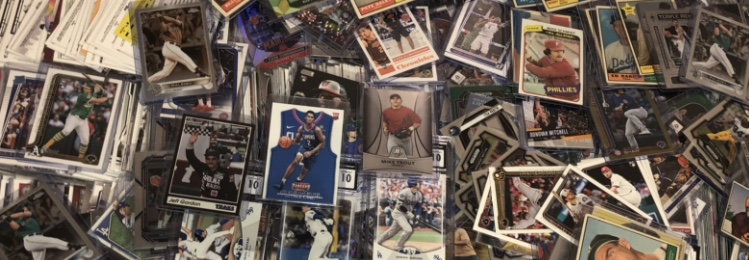
I was able to pick up boxes of non-big four major American sports’ superstars and GOAT rookie cards for Pennies per card for years. A lot people in mostly middle to upper class favorite sports like tennis, figure skating, golf, pickle ball and etcetera don’t really collect cards. Astute people will say if their fans don’t really collect the sports cards, it probably won’t be worth that much and the market won’t be that big. That is true to some extend but not all the way. If I am able to pick these cards up fairly cheap and only a small portion of my collection is made up of those cards, from a cash flow standpoint I can hold it for a while waiting for its appreciation without having any urgency to transact them. Because I hold so little of these cards, it will be easier for me to transaction these assets at reasonable market prices as small quantity transactions will help me clear inventory. Most people who are looking to buy at smaller quantities likely are willing and could possibly pay a bit more per a small lot on a per unit stand point versus a large lot on a per unit standpoint. My motto in this kinds of debates is diversify but microfy. Most cards from multi-sports products of North American non-four major sports are usually over looked. I now have a decently large amount of non-major four North American sports GOATs rookie cards that are likely still appreciating in value that I paid almost nothing for.
I don’t think neither entrepreneurship nor working for others are the best options. Entrepreneurship typically takes a lot of skills, experience, effort and resources to succeed. From an average expected value standpoint, entrepreneurship is a losing game for the vast majority of people. Depending on your definition of a successful entrepreneur, I would argue there probably are more moderate to major jackpot prize winners in various contests in the US now than there are actually successful entrepreneurs. That’s probably not a coincidence. For every successful entrepreneur, there are probably thousands of less successful ones. Besides controllable factors, there are tons of uncontrollable market risks such as bad timing that can devastate a new entrepreneurial venture. The risk of failure are extremely high for a new venture. Working for others appears to provide a stable income, however, it usually comes with less flexibility, lower ceiling in potentials and doing something potentially one find meaningless. For these reasons, I like the Mezzanine approach. The difficult part about implementing the mezzanine career approach is the work-life balance part. How can one still remain desirable as an employee on the job market when one is looking for a job and keeping a desirable job after being hired for a position while at the same time also be successful in entrepreneurship activities. This may take a lot of navigating in many different aspects.
Most people don’t get rich from working for other people. Some people will point to the highest paying major professionals like doctors And to say medical doctors are rich. While doctors on average make a great salary on average at around $400K a year, most doctors also have to go through 10+ years of post high school education and become doctors if they qualify after meeting various rigorous criteria in their 30s. Most doctors also have 300K or more in debt before they even become doctors. If one were able to work the approximate ten years during or after college and save that money in a 401(k), just based on market appreciation, an annual total 20K contribution (including contribution from the employer) at average calculated market growth of around 10% growth in 15 years will be $600K+. It also comes with tax advantages which I will not discuss at this time. An HSA for those who qualify in addition to a 401(k) for those who qualify could potentially be even more tax advantaged. Anyway, by the time the doctor pays off his or her debt, the non-doctor already has likely $600K+ in retirement account savings than the doctor has. Because there is a limit in tax advantages 401(k) annual contributions by a person while working for an employer, the doctor can not simply catch-up in 401(k) savings the regular way (unless we are talking about catch-ups exceptions at certain age) by throwing money at it. What this means is even if the non-doctor does not contribute anymore to a 401(k) plan after they saved $600K+ in 401(k) their money will grow to at least a few millions after 30 years more than enough to live comfortably in retirement. Ultimately, neither of these above methods will help one get truly do whatever you want wealthy.
I live in America which means I have the rights to exercise reasonable free speech as permitted by the law. All posted content(s) on this website are my opinions only which means they should not be taken as advice of any kind. I am a non-celebrity, non-public figure posting anonymously for my own entertainment on a website that is not affiliated with any individual(s), organization(s) and/or any entity/entities.
How to be well-off without taking excess risks?
Doctors will probably cave in social pressures to live a relatively expensive doctor lifestyle which due to political correct taboos I will not detail what this may entail here. It will likely not be a cheap lifestyle and likely not all being enjoyed by the doctor but rather by those who I also will not talk about due to political correct taboo reasons. Most doctors are not business professionals and while they are busy treating passions like professional athletes trying to be the best in their sport, there may possibility be people who may or may not be taking advantage of them financially for which I will not state due to social contract reasons. Point being, being wealthy may allow one to have the discretion of stop working and doing whatever they like, when whenever they like and however they like within a legally compliant manner within certain acceptable boundaries. That is what have FU money is all about. Being wealthy also means having the influence to exact changes to one’s advantage frequently utilizing other people’s and/or entities’ resources legally. The biggest issue with employees is they are essentially paycheck to paycheck without reasonable certainty of their employment status from one day to another either due to controllable and/or uncontrollable factors. They are essentially exchanging one valuable resource which is their precious time for another valuable resource which is money.
Employees only make what they earn when they use their own valuable time to own them, therefore they can not employ capital inefficiently in this endeavor without, you guessed it, expending more time. The whole time value of money concept is really meant for money to work for you passively without you intently expending your time. Money when managed right is the best, drama-free, salary-free and low-maintenance employee ever. I am not advocating for entrepreneurship alone. The reality is having a stable paycheck is great. Many successful entrepreneurs worked for other people before they became successful themselves. It is also important to have startup capital and experience which could be obtained by working for successful companies for a number of years. The social element is also important too as having coworkers to communicate everyday helps keep one within mainstream society and (mostly) helps maintain a stable mental help and help stay away from depression due to loneliness. Many ideas are created by seeing things in action and realizing a problem and a solution through social interactions. Great ideas usually don’t get created in a vacuum.
I still believe the OKC Thunders were the easier team for the Knicks to defeat in the 2025-2026 NBA Finals due to their injury issues. With that being said, the Spurs seems to be so exhausted from playing four more playoff games than the Knicks did this year. The Spurs will have to fly home or ride the bus for seven hours back to San Antonio to face the Knicks in just a little over three days after concluding the previous playoff series. Unlike the fully rested and extremely energetic Knicks with almost everyone who is somebody rooting for it to win, the Spurs have two key players who just recovered from injuries in Fox and Harper. The Knicks have much more playoff experience and finishing the Finals for New York is probably a life and career changing event for everyone on the team. Wemby, Castle and the Spurs’ core rotation played a lot of minutes due to the very short rotation. The Spurs also allows five more points per game than Knicks though Spurs scores about 5 more in away games. Knicks are typically make more 3-point field goals per game and make threes at a higher percentage.
KAT the center can stretch the floor extremely well as probably the best shooting big man in the game today something Wemby can’t match at this point. KAT is also heavier than Wemby but still moves quite well. Because the Knicks already have an elite defensive center in Robinson, they can afford for KAT to stretch Wemby out. Because the Spurs depend on Wemby so much on offense and defense, this strategy will be devastating for the Spurs. Any way you look at the rosters of the two team, besides a debatable about whether KAT or Wemby are better right now as players, every other starting position the Knicks have the better player playing. Knicks top reserves are also notably better in almost all aspects than that of Spurs. Spurs has no other legitimate rim protecting centers besides Wemby. Wemby averages about 29 points in the regular season but frequently play around 40 minute games in the playoffs. An elite defender like Robinson and a good defender plus one of the best 3-point shooting big man in the game will probably just be overwhelming. Plus the Knicks have a lot of 3-and-D guys.
I live in America which means I have the rights to exercise reasonable free speech as permitted by the law. All posted content(s) on this website are my opinions only which means they should not be taken as advice of any kind. I am a non-celebrity, non-public figure posting anonymously for my own entertainment on a website that is not affiliated with any individual(s), organization(s) and/or any entity/entities.
Why do I think the New York Knicks will win this year’s NBA Finals?
Anyone who played sports or watched sports probably know how much exhaustion affect a player’s performance. Exhaustion is not only physical but mental as well. I estimate due to Spurs’ intense playoff schedule, top heavy lineup and short rotation, it will probably only be 90% of who they are during Game 1 of the 2025-2026 NBA Finals. Knicks on the other hand will be 100% themselves due to enormous incentives to bring a championship to New York and how well-rested they are. Game 2 Spurs will probably be 95% themselves, the Knicks will probably still at 100%. I think the Knicks will most likely win Game 1. Knicks will have a greater than 50% to win Game 2. Knicks will be the favorite in this Finals in any home game.
Looking back to the 1999 NBA Finals when the 8th seed Knicks faced top seeded Spurs, it was literally David versus Goliath. Spurs had two all-time greats in Duncan and Robinson, one of the greatest coaches in NBA history in Popovich, one of the best 3-point shooters in NBA history Steve Kerr, some of the best defenders in the game versus a Knicks team at the time basically full of non-hall of famers with their one hall of famer Ewing who was injured and did not play in that Finals. What is interesting was that even under those circumstances that Knicks team still won a game in the series and lost another game by just one point, both of which happened in Madison Square Garden. I think the bright lights of New York has something to do with it. The Spurs point scored in away and home games are essentially the same yet the Knicks score over five points more at home versus away. The Knicks are out scoring and allowing less points than the Spurs during this year’s playoffs.
This 2025-2026 Knicks team is much different than the one from the 1998-1999 NBA season. Not only are they not the underdogs, they are straight up alphas and sigmas. Jalen Brunson could become a 100 anniversary player in the future and likely a borderline future hall of famer already. KAT is already a likely future hall of famer. Mike Brown is the much better coach in terms of experience and accolades hands down in this match up. If he wins a championship as the head coach, he will most likely become a future hall of famer himself after coaching a few more years. With each NBA Finals game this year paced around two days apart, in a seven game series, the well rested Knicks will have a significant advantage. I think there will be a couple of major winners from Knicks winning the championship. Obviously Knicks fans are one of the biggest winners. The other big winners are Jalen Brunson, Jalen Brunson cards collectors and Villanova University. If the Knicks wins the Finals this year, Jalen Brunson will be like Joe Namath. Villanova University will probably be the biggest winner from all of this. The Knicks being televised all the time get lots of public exposure, educational institutions typically don’t get as much public exposure as professional sports teams. However, Villanova with all of its legendary underdog championships, a large and growing endowment, well-ranked, acquisition of multiple campuses, the first North America Catholic Pope, the Villanova Knicks and let’s say a Knicks championship in a few weeks will probably help Villanova become a much elite university with more notoriety, resources and academic prestige due to having more resources to spend on academic and research related endeavors. It could push Villanova to the top by becoming the best Catholic university in the world and having Augustinian values as an important part of the community. If the Knicks win, the Villanova Knicks could get better contracts in the futures and either the Knicks or other teams will be looking for Villanova players just like many employers look to hire Villanova students. Spurs is a young team that may have opportunities in the future to win the Finals, however, this is likely not the year for them to win it all.
Yes. That’s exactly how the Villanova Knicks guys won their college championships, got drafted, became stars despite low draft positions and won at almost every level except for an NBA championship at this time. Contrary to popular belief, I believe the Thunders are a much easier team to beat. I watched too much sports to not have learned a few things or two. Teams with injured key players usually don’t do too well. The injury bug is mental as it is human nature. The root cause is actually pretty startling. Imagine you work super hard for something while you watch someone else relaxing on the bench and will collect a championship while you toll. Your mind might just subconsciously give up a little bit. That small difference at high levels essentially is what wins or loses championships. Team chemistry is like bonus points or extra credit. If you score 50, 60 all the time, the extra credit probably won’t make you an A student. You might pass the class but won’t get well-off from it. The Knicks are probably a 87/100 team in relative rankings of solely going by roster strength. The Knicks do not have any ”near GOAT plus players.” Almost every star on the team were looked down upon as players at some point in their career. They are that B+ student with an A+ attitude. They are the Rudy of patience, the Radio of inspiration and the Villanova of underdogs. Like the school itself, it only took them nearly two centuries to “make it.” Its current achievements are just unbelievable in so many ways you have to understand to believe.
This Knicks team is like many scrappy likely championless teams I have seen in many sports. They have the heart but don’t have the talents. I don’t think the Knicks are any different in that regard with many of these teams. Another championship team with at one Villanova player that won an NBA champion in 2019 with numerous likely first ballot hall of famers was probably significantly more talented than this Knicks team, yet it took numerous lucky breaks for it to win the championship that year. The difference is the team chemistry and everybody including some very important groups of people and entities who may want them to win not too dissimilar to everybody wanted a team named the Patriots to win the Super Bowl in 2001 with a 6th round second year quarterback, three eventual and likely hall of famers on the team versus Super Bowl team average of five to six, a track record of previously being unsuccessful and having won zero Super Bowls over three decades before that. Momentum builds and the rest is history. Plausible denial may only delay how history wants itself to be told for so long. Patrick Ewing draft pick or not, I think most teams need more than luck, resources and aspirations to win a championship. The sad part for basketball purest is the Knicks probably have the best realistic odds of winning this championship not because of who they are but because of who the opponents are.
I live in America which means I have the rights to exercise reasonable free speech as permitted by the law. All posted content(s) on this website are my opinions only which means they should not be taken as advice of any kind. I am a non-celebrity, non-public figure posting anonymously for my own entertainment on a website that is not affiliated with any individual(s), organization(s) and/or any entity/entities.
Will the Knicks win and should you invest in Jalen Brunson chase cards?
Many say the San Antonio Spurs will be the New York Knicks’ easiest opponent in the NBA Finals, I strongly disagree. Except for Fox, all of Spurs’ good guards are all the size of small forwards and some may be able to play a stretch power forward with no one really daring to go straight to the rim without thinking twice when Wemby is nearby. San Antonio can afford to play a smaller lineup with Wemby in the paint. Wemby is already a global superstar, neither Brunson nor Towns are at this time. Wemby, Fox, Johnson, Castle and Harper is a significantly stronger lineup than that of the Knicks’. Exhibit B’s Oklahoma City Thunders on paper is probably the best team with SGA, Chet, Three Williams, Wallace, Caruso, Hartstein, McCain, Dort and Mitchell. In reality, the second best player on the team Jalen Williams will likely play limited minutes if he plays in all games in the series. Ajay Mitchell the sixth man is also injured. Given SGA is a 30+ points scorer on average and everyone else average below 20 with Jalen Williams in essence the team’s second best scorer and Ajay Mitchell the 4th best scorer on the team. Whoever get their minutes in the series will probably on average score 10 points less than they do on average aggregate scale. The Spurs are like the Knicks with a clean injury report.
I think the Thunders will likely win their home game to go to the Finals through experience that the Spurs are likely too youthful to have gained. Against the Knicks that will be a much different story. Villanova players under a certain coach knows the pump fake very well. SGA is also for whatever reason becoming a less likeable player in the eyes of some fans whereas Wemby is continuously praised with many who may have entrenched interest in having him win a few championship. On paper OKC is a much better team, in reality, Knicks will have a much better chance facing OKC than Spurs in my opinion. The Spurs also have a Manifest Destiny type of attitude as they won five championships in the last 30 years and Wemby was literally coached by the man who helped them win all five. OKC although won a championship, it is a much newer team with only one championship in a small state without the basketball pedigree San Antonio has in its nearly 60 years history.
Imagine you have to rely on one foot because the other foot is injured, do you know how much weight and stress that is going to bring to the good foot and injury risk to the good foot? The worst part is, you have to take care of the injured body part by slowing down and recover decreasing overall efficiency. The Thunders have been relying too much on SGA potentially creating a Tyrese Haliburton 2024-2025 Finals situation in the making. The bottom line is, the Spurs are the much more difficult match up for the Knicks at this stage than the Thunders. I think Jalen Brunson is a significant upgrade from Kyle Lowry from a Villanova guard strand point. I think there are two ways to look at Jalen Brunson’s situation. If he wins, his cards will likely go much higher. If he loses, his cards will probably be cheaper in the off-season and probably even cheaper if he is in a slump early next season. I think he will stay with the Knicks for at least a few more years, likely 5-10 years. Knicks are probably willing to spend money on the team to continue to be good. I think if Jalen Brunson lead the Knicks to be championship this year, he will be a hall of famer and if he do a little more in his career he will be an NBA 100th anniversary player. The Knicks plays in Madison Square Garden, one of the most storied stadiums in the world. Knicks have been starving for a championship for a long-time and the league does need the Knicks to win. New York is unquestionable the richest city in the world consistently and on average for the last 100 years or so.
I repeat, if Brunson wins this championship, his chase cards especially his rookie chase cards are probably going to increase exponentially. While a lose might decrease his cards value somewhat but likely no where near the absolute percentage swing of him winning the championship. To win with your college buddies, roommates whom you already won NCAA championship(s) is incredible. That one commercial about the Villanova Knicks will be an instant classic. Jalen Brunson rookie chase cards are selling at only a fraction of SGA’s cards, yet the first Knicks championship in over half a century and in the modern era probably means way more for the world than OKC winning again or Spurs winning under Wemby. Knicks winning this year is like the Red Sox winning in 2004 after over 100 years not winning one. It’s historic.
Before I get started discussing this topic, no, I will probably not do a list of top 10 US universities with the most downsides or the top 10 list of the most overrated US universities. If you read some of my previous posts, you probably already figured out what your favorite permanent contrarian is all about. If I had a choice, all things being equal or slightly unequal, I would select colleges with names of alpha-ish cities as a central part of their names. I would also choose overall university prestigious over “major” or “school/division” prestige. If a school is overall prestigious, I believe all their offerings will likely revert to the mean eventually, meaning they will eventually be ballparkish great too regardless their current state due to resources expended and prestige of the parent brand. I would prefer to choose majors that are skills specific versus industry specific which means I will probably not choose those overly interdisciplinary sounding majors. I would also choose schools with amazing athletics as those are amenities and traditions that build a strong alumni network, increase giving rate and endowments which eventually translate to hire rankings and better job prospects for new graduates from the university.
I believe the best bang for the buck private schools are in the “Upper-Atlantic” regional colleges and universities. Many of these school do become “national research universities.” For those who want a state college experience and save some money, I believe some of the supposed “second tier” state college systems in the “bi-costal” areas may hold a lot of value. Many people fantasize living or visiting alpha-ish cities which likely include future interviewers and recruiters. I say this because doing so is essentially trying to squeeze a dime out of a dollar which means one can not be too choosy in many aspects including where to work geographically wise after graduation from college. Staying locally is probably not the best choice as in any competitive world-class super alpha US cities will likely have numerous top schools including Ivies or Ivy Equivalents. However, play the “diversity game” when one is go for broke through prestige arbitrage. Local recruiters from prestigious firms probably know the local landscape well and probably recruit where many of their top employees graduated from. Let’s be honest, if you are employing this strategy, it likely mean you either sucked as a student for whatever legitimate reasons you believe to true, don’t have the resources to go to a more prestigious school or both. Admitting and recognizing these facts and swallowing your pride is the first step to possibly succeed in utilizing this strategy. Obviously you may already hit rock bottom from academic standpoint, you may need to maintain a respectable GPA and possibly gain a top leadership position within a prestigious student organization at your school. I think some private universities in the 40-80 range as ranked by a not to be named popular undergraduate school ranking list may be undervalued gems from a potential higher future prestige standpoint. Because these schools are already in the “big league,” their prestige surge may be “trajectorally” different in exponential growth than the previously abovementioned types of universities. These schools may require marginally more resources or efforts to get into, however I think the upsides are much higher than the abovementioned types of good value schools.
I personally believe many public universities are ranked too high due to non-academic reasons at this time contrary to current/potential future MEI trends. Too many of these high public school rankings are likely based on grand sounding achievements that in actuality does not benefit those it is not trying to benefit and likely won’t benefit those who it is trying to benefit in the long-run due to human nature and “The John Locke versus Thomas Hobbes problem.” Delaying the natural evolutionary process or creating man-made interventions may or may not work from a historical standpoint. I think it is quite clearly DEI or MEI is currently winning in the last year or two from an admissions standpoint. The statistics increasingly show high productivity from these seemingly admission related MEI decisions in academia, business, society etc.
I live in America which means I have the rights to exercise reasonable free speech as permitted by the law. All posted content(s) on this website are my opinions only which means they should not be taken as advice of any kind. I am a non-celebrity, non-public figure posting anonymously for my own entertainment on a website that is not affiliated with any individual(s), organization(s) and/or any entity/entities.
Below are my top 10 US Universities with tremendous upsides for a non-elite student list:
A particular former regional university in the Northeastern with well-known athletics and academics that may present a prestigious arbitrage opportunity for the right person
A particular 40-80 overall ranked school as per a certain popular undergraduate ranking list
Certain public school with one of the three major Alpha/Alpha++ US cities as the central part of its name
Certain public school with one of the three major Alpha/Alpha++ US cities as the central part of its name
Certain public school with one of the three major Alpha/Alpha++ US cities as the central part of its name
Certain public school with one of the three major Alpha/Alpha++ US cities as the central part of its name
Certain public school with one of the three major Alpha/Alpha++ US cities as the central part of its name
Certain public school with one of the three major Alpha/Alpha++ US cities as the central part of its name
Certain public school with one of the three major Alpha/Alpha++ US cities as the central part of its name
Certain public school with one of the three major Alpha/Alpha++ US cities as the central part of its name
Ultimately I believe one’s attitude toward life is a big part of one’s potential success(es) or lack of success(es).
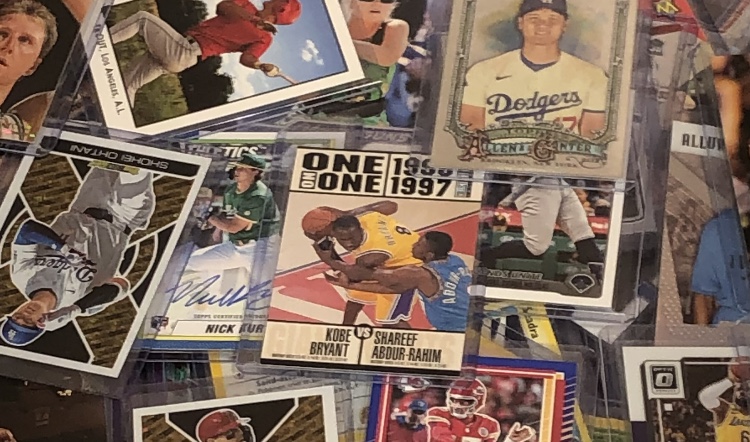
Kobe Bryant is one of my favorite basketball players of all time. In my opinion, his dedication and attitude toward the game were unparalleled. From an investment standpoint, however, I would not invest a large sum of money into Kobe collectibles. It’s not that I do not believe his cards will grow in value. It’s the fact that I believe his cards will grow in value slower than other high potential investments. I won’t discuss any potential off-court issue(s) in deference to my admiration for Kobe the athlete. Strictly from a basketball standpoint however, I think Kobe, being already a borderline NBA top 10 of all-time player, will likely be squeezed out of the list within 10 years and into the top 15-20. In my opinion, Curry, KD, SGA and Jokic all have greater than 50% probability of becoming a top 10 All-time NBA player. All four players won at least one championship ring and an MVP, will probably have more career points than Kobe with Jokic having the lowest probability of surpassing Kobe’s points total at around 50%.
Curry being the greatest pure shooter of all-time is probably already a top 10 player now and he will likely play a few more years. If KD joins the 40,000-point club he will most certainly be a NBA top 10 player of all time. The reality is, Kobe at this moment is probably already outside of the NBA top 10 all-time list. You can make an argument that either Lebron, Kareem or Bill Russell is the GOAT and not Jordan due to their unique accomplishments. Kobe, however, is in essence statistically speaking, a lesser version of Jordan as a player. Although Kareem played against Jordan, he was statistically superior to Jordan in almost every way during the era they both played in the league. Lebron never played in the league against Jordan, however, he is better than Jordan in many career statistical categories. No superstar player had won more NBA championships than Lebron did during the period that Lebron played NBA basketball. Lebron played in a highly fragmented era where there were no dominating superstars better than him. Kevin Durant was probably the second best active player in Lebron’s NBA basketball playing era. Lebron will most likely play for a few more years, that’s probably not the best news for anyone currently playing in the NBA who is trying to be the GOAT or those who are coming to the league aspiring to be the next GOAT. Even at Lebron’s current age, he is still dominating in the playoffs without any superstars or even true stars playing next to him. Lebron is metaphorically working a difficult job while rocking the baby cradle or possibly two at the same time in the future. I think as long as Lebron is playing, the era will still belong to Lebron. Anyone with the same amount of championships either retired or close to retirement and are highly unlikely to win another championship. The relatively young players in the league mostly only have one championship if they have one at all. None of them will likely have more championship than Lebron have before he retires. I believe if Lebron can play another 4-5 years, get 50,000 regular season NBA points, win another championship while playing with his two sons on the same team, Lebron will likely be the GOAT of GOATs. Even if he only accomplish some of these milestones, he will likely be the NBA GOAT within 20 years.
I live in America which means I have the rights to exercise reasonable free speech as permitted by the law. All posted content(s) on this website are my opinions only which means they should not be taken as advice of any kind. I am a non-celebrity, non-public figure posting anonymously for my own entertainment on a website that is not affiliated with any individual(s), organization(s) and/or any entity/entities.
Here is what I posted previously regarding a similar topic.
“Lebron is unquestionably the most dominating NBA player in the 21st century. It is safe to say the first 30 years of the 21st century in the NBA was dominant by Lebron James. I believe Lebron will retire at least after the 2030 season. If Tom Brady can play to 45, Lebron James definitely can. If Gordie Howe can play 32 years in professional hockey and retire at 52, so can Lebron if he wanted to. I believe Lebron can play another 7-10 years at an above average level. Kobe might arguably not even be the greatest Laker of all time and the Lakers produced about half of the top 10 players.
The bottomline is, when things are based on relative comparisons versus absolute, everything must be taken into consideration. I believe Kobe collectibles will not generate as high of growth on returns as some other similar investments. The scary part is, I believe Lebron could get one or two more championships. Jordan and Lebron are both naturally gifted and hardworking, the difference is Lebron was already deemed “chosen one” in high school, has great continuity without the distractions of multiple retirements. There is a reasonable likelihood Kobe will fall from the Top 15 due to his only one MVP and being the second best player on a team for years. Lebron was the best player on all of his championship teams. While Jordan had two other 75th anniversary players on his team, Lebron only had one other 75th anniversary player.
There are only so many players that can fit into a certain “top” something list, it is important to continue a pipeline of investments in order to be successful in this game in the long run. It is important to do so because GOATs may change overtime and current GOATs may be supplanted by new GOATs hence keeping the pipeline of new rookie card investments help build a formidable moat against trend changes. Eventually someone is going to sit on the top of the GOAT pyramid, ultimately it’s just a matter of who. You won’t always be right or wrong, second guess yourself doesn’t help either. You invest into what you invested in for a reason. I typically don’t change my mind on investments but I do protect myself through diversification and hedging. I typically reevaluate their GOATistics periodically to determine whether they will become GOATesque or not. I frequently study the GOAT list of the sheep or their bellwether to arbitrage between goat s*** and milk balls. Selling cards because you want to typically means you will lose money regardless for what cause. People who truly collect cards in the first place love cards that have signs of becoming heirlooms and will most likely not even consider parting with these cards until they reach some ridiculous certain 1952 card value level.
That means will most likely create volatility in card is one of the greatest-of-all-times (GOAT or at the very minimum a once in a generation talent and/or there is something special about the card itself that was later discovered that had nothing to do with the behaviors of the athlete. As mentioned earlier, I prefer to invest in lower valued versions of alternative assets that have all the right attributes because it allows me to free up cash by diversifying my risk into numerous smaller investments while keeping my portfolio liquid at the same time aiming for a higher expected value. Hence because the GOAT of a sport is literally just one person or a handful of people at the most, a title that take frequently decades of work to achieve and is often only publicly recognized and granted with consensus years later.
One would argue identifying a potential GOAT who likely had to be benchmarked against hundreds of thousands of contemporaries and predecessors in the few popular sports that actually have a large sports cards collecting fan base, the premium for the massive amount of effort and resources that are poured into this search is akin to finding a specific atom with just the right amount of electrons, protons and neutrons in whatever its required final form be it ionization, fusion or whatever else in a forest in the dark racing against time and with a copious amount of other hunters now that they smelled the money from a potentially $100 billion dollar future industry, have to be huge for all this expenditure to be worth it. Most people like winners and matters with certain desirable attributes, some people are actually willing to pay for these features.”
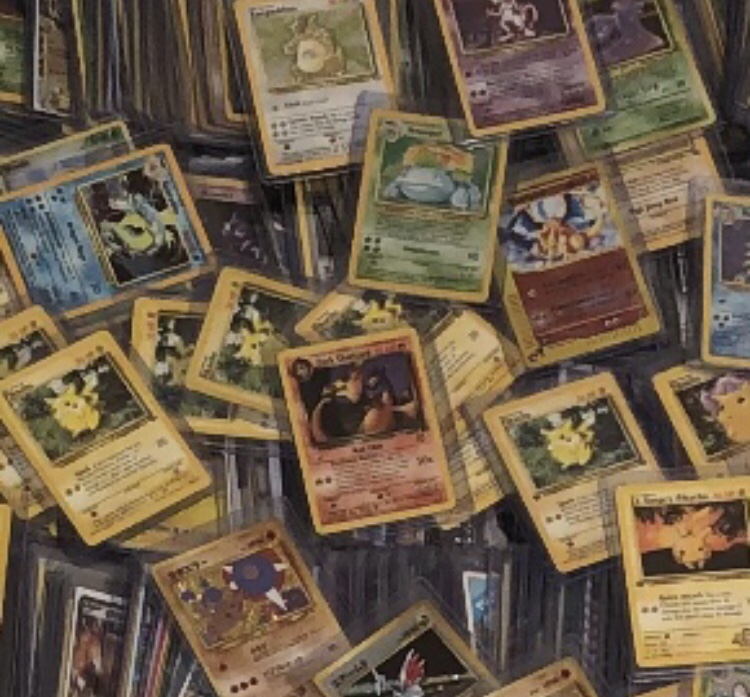
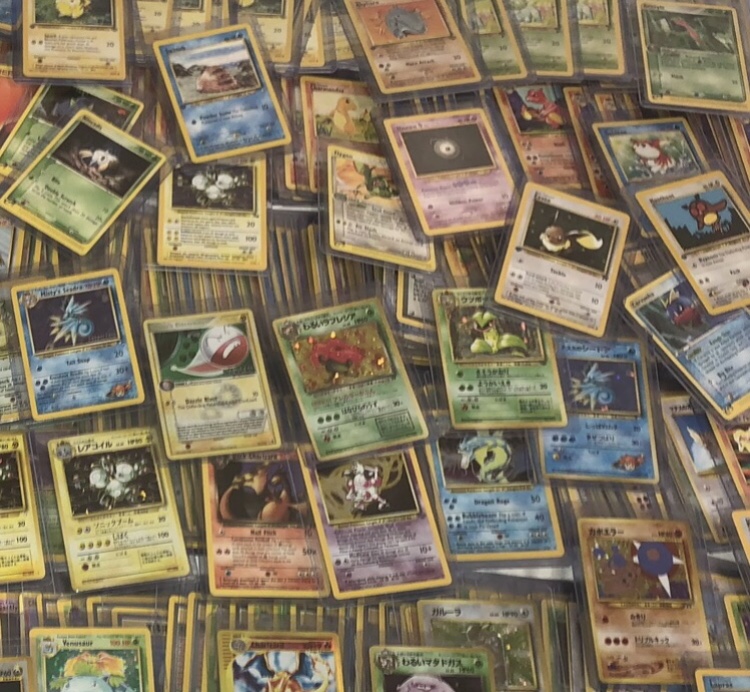
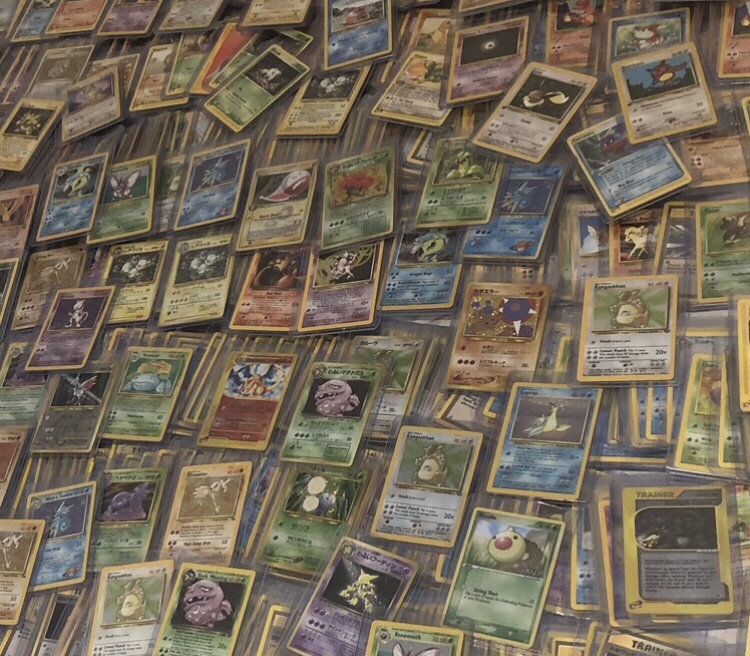
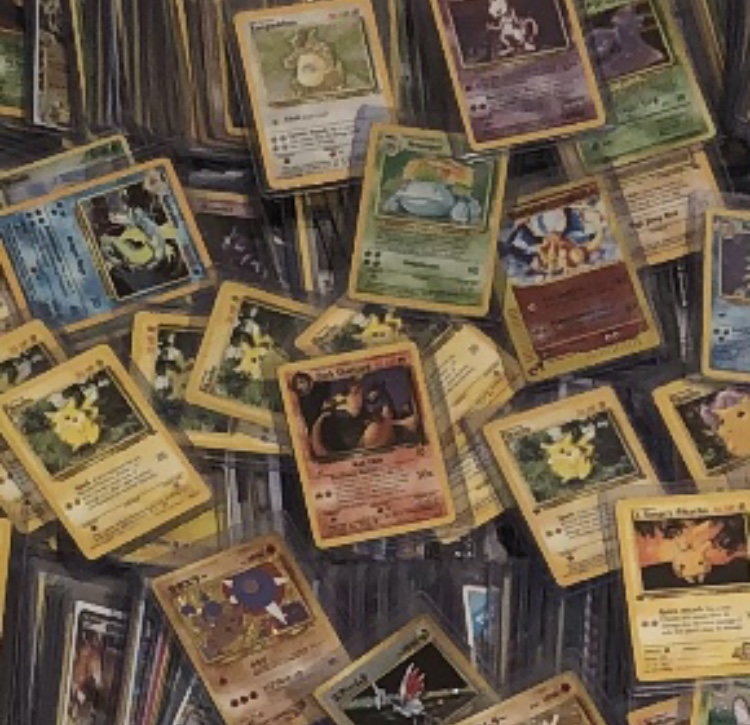
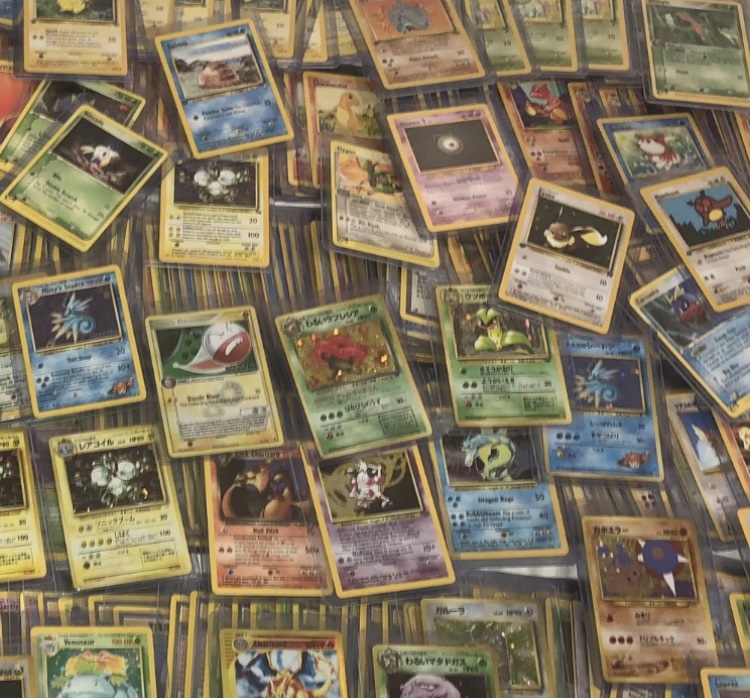
The short answer is I think 1999 English version Base Set Pokemon cards are a good value. I believe Pikachu is one of the most popular characters in the history of the entertainment world. The starter Pokemon and its evolutionary line in the anime are quite popular. Due to the popularity of Gengar, Gastly and Haunter appears to be somewhat popular too. I think this is a great set and many of the lower costing non-holographic cards in this set may be of good value. Out of the over 1,000 Pokemon, these Pokemon are some of the most popular. I live in America which means I have the rights to exercise reasonable free speech as permitted by the law. All posted content(s) on this website are my opinions only which means they should not be taken as advice of any kind. I am a non-celebrity, non-public figure posting anonymously for my own entertainment on a website that is not affiliated with any individual(s), organization(s) and/or any entity/entities.
Here is what I wrote previously on this and similar topics:
“If Charizard is power then Pikachu may be grit. If Charizard cards command a premium then Pikachu cards likely represent higher CAGR within a given price range. There are likely an infinite number of ways to collect, most people collect whatever they like. Fundamentally speaking, I am the exact same way. The difference is that I take a competitive spin to investing because I enjoy winning. Winning takes on many forms and shapes. Some victories may seem losses at first and other victories may be Pyrrhic in nature. You likely can’t win on every transaction but you probably don’t have to secure victory in every battle to win a war. One thing is for sure is you likely won’t win anything if you are not properly prepared for winning even when the opportunity presents itself. I am not trying to split hairs by saying investing in Charizard or Pikachu cards are better than the other. Each types of cards clearly could be winners no matter how you view the situation. I am talking about compatibility to my alternative investing strateg(ies). I am not trying to be funny or anything, but I think Pikachu is basically a mouse. When you think about all the prominent mice in the world, which I will not name due to “you probably guessed it” reason(s), you don’t always get a sense of overwhelming raw, menacing power. If a sports team name their team after a type of mice, I am not sure what the fans will think.
From a card investing standpoint, regular Pikachu cards typically are common cards. After the original series from the WOTC Pokemon cards era ended, many subsequently produced official Pokemon cards of Pokemon introduced during the WOTC Pokemon cards era may have been downgraded from rare to uncommon and from uncommon perhaps to common. All that to say is as the Pokemon universe expanded or continues to expand, powerful Pokemon may continue to emerge hence some of the original Pokemon from the WOTC card era may become relatively less rare and powerful. I live in America which means I have the rights to exercise reasonable free speech as permitted by the law. All posted content(s) on this website are my opinions only which means they should not be taken as advice of any kind. I am a non-celebrity, non-public figure posting anonymously for my own entertainment on a website that is not affiliated with any individual(s), organization(s) and/or any entity/entities.
I believe Pikachu has much higher appreciation growth potential in terms of return on investments than Charizard cards. Almost any holo Charizard cards probably are going to be some type of rare or promo whereas many Pikachu cards are mostly common and sometimes promos. The starting price for Charizard cards usually are much higher than that of Pikachu cards due to Charizard being a rarer and one of the most powerful Pokemon in the Pokemon universe. Pikachu, however, is much more accepted as being cute, approachable and inspirational. Pikachu merchandises seems to be literally everywhere and may frequently cross-promote with other intellectual properties. Pikachu to me is more than just an animation character, it is literally the biggest universal icon in the history of this world. In my opinion, Charizard is a cult favorite whereas Pikachu is universally beloved and recognized by almost everyone. In athletics terms, Pikachu may be comparable to the superstar guard most lay people have deemed as the GOAT, Charizard on the other hand appears to metaphorically resemble a dominant 7-foot center likely considered the best center of all-time.
When you think about it, Pikachu is probably a double-digit, billion-dollar industry on its own likely representing a 100+ billion dollar brand yet Pikachu official Pokemon cards are likely only a small percentage of the entire value chain. What is interesting about this is most people would probably say the most collectible Pokemon product is probably Pokemon cards even though it appears Pokemon actually make significantly more money from non-Pokemon cards merchandises. Without stating all the boring details from a marketing and business standpoint regarding the above, I believe the lesson here is Pokemon cards have potentially significant growth opportunities as it is currently not even any where close to being the most significant part of the Pokemon products market size. Many modern common, non-holo/foil/promo/error Pikachu cards possibly can be bought for a few cents each in bulk versus around at least a dollar for the most common Charizard cards. I believe Pikachu is the Pokemon’s spiritual equivalent of the “Logoman” for the NBA or whatever equivalent of the “Logoman” in other major sports league. It is no wonder that some of the most prized Pokemon cards feature Pikachu and not of any other Pokemon.
Pokemon and Pokemon cards of course are relatively new compared to some other brands/franchises and other classes. This may be why the price premium multiplier between newer more modern Pokemon cards and the older vintage WOTC era cards are not as significant as other types of certain types of vintage sports cards. I think the complete human history can not be fully told without the inclusion of the collectibles phenomenon therefore I view Pokemon cards as potential major human artifacts. The collectible cards industry may reach $100 billion dollars within a decade or two due to likely high CAGR which will be a major milestone in human history and have broad impacts on society. A likely large, critical mass percentage level of the world’s population are already collecting cards. This trend may continue to grow at the current or a more rapid pace in the near future. When one Pikachu card can increase by $10+ million and more than double its worth in a matter of a few years, cards that may share certain attributes may also be positive affected, the rest are just multipliers. There may be many examples of this phenomenon happening in recent times, one of which is how the popularity of Gengar cards are affect its “downstream/evolutionary downstream lineage” Pokemon cards like Haunter and Gastly.
If I were a new card collector and knowing what I know now, I would probably make Pikachu cards the staple of my collection. I would probably also buy some other cards that will make up a much smaller percentage of my collection to better diversify my alternative assets investment portfolio. I personally believe Pikachu cards have a higher upside than many other cards. When the Pikachu English version Base Set cards first came out it was probably worth a penny per card for many collectors at the time if anyone even bothered buying it as a single since they were common, non-holographic cards and much easier to pull than certain holographic cards. At about $4+ USD in raw, ungraded card format currently, the same card has increased around 40,000%. Charizard cards in the English version Base Set were rare, holographic cards. Approximately 1 in 3 English Base Set packs contained a holographic card and approximately every 40+ packs had a Charizard card. At the time those packs were selling at around $3.50 USD a pack. Base Set Charizard English cards at the time when they first came out were commanding around $50+ USD on the secondary markets. They are currently around $400 USD. Let’s just say it’s about a 700% increase which sounds impressive. However, when you consider that took 20+ years to get there and S&P 500 index grew by about 750% in the same period when its component stocks are much more liquid, you may think differently.
What about graded versions of these that got a “10” score? For simplicity sake, let’s just say the market value of an English version Base Set Pikachu cards in that graded condition is about $1,000 USD and the Charizard is about $30,000 USD. In that case, the Pikachu card is around 100,000% increase and the Charizard card is about a 58,000% increase. When you look even deeper, you may realize less than 1% of the graded Charizard English version Base Set card submitted to a certain popular card grading company may actually get a “10” score. The difference in value between a lower score of “9” and a “10” can be very significant for that card. The English version Base Set Pikachu card may have a much higher percentage of a “10” score under likely similar circumstances as described above. The above also does not account for how much more liquid the Pikachu versus the Charizard card per the above is due to price differences. The cost difference to grade a 50,000+ USD card versus a $1,000+ USD card can also be incredibly large. The print run difference between 1st edition base set and base set may or may not be as large as some people think. In summation, I believe Pikachu cards at least some of its WOTC cards may carry a much higher “time value premium”, even when they are risk/liquid adjusted, than cards of most other Pokemon.”
I think if you have to ask this question then in my opinion the answer is going to most likely be going to “the best and most affordable college.” At the end of the day most decisions are about the best results within a given range. If money is a rarer resource than prestige for you, then money will likely be the deciding factor. With lesser resource share per capita in the West and higher resource share per capita for the rest of the world, MEI versus DEI will eventually become a no brainer for most scenarios. That means meritocracy will increasing play a bigger role in society and in elite college admissions as it likely already had profound demographic effects.
Meritocracy means results matters not necessarily how you got there as long as it is legally compliant. It also means regardless of the hand you are dealt with, you are still expected to win. Sure advanced analytics and trends still matters, however, in a fast pace environment, potential can quickly be squandered if opportunities are not ceased by those who have the skills and background to exploit such opportunities that ultimately produce desirable yet verifiable results. I live in America which means I have the rights to exercise reasonable free speech as permitted by the law. All posted content(s) on this website are my opinions only which means they should not be taken as advice of any kind. I am a non-celebrity, non-public figure posting anonymously for my own entertainment on a website that is not affiliated with any individual(s), organization(s) and/or any entity/entities.
Here is what I wrote previously on this and similar topics:
“There are around 250 million students enrolled in colleges each year, guess how many attend the top 10 global? Where do the most prestigious and high paying companies in the world recruit many of their top talents from? Wait, why are you telling me all of this when I won’t ever get into any of these schools? That may be very true. The top ten-ers are people who likely and mostly concentrated in private schools in a certain geographical area, work in certain industries and live in a few highly concentrated cities. The chances of someone without that kind of credentials breaking into that circle without “extraordinary talent(s)” are slim to none, even so, they may never truly be accepted as equals. What are you trying to say? It may be much easier to convince someone to give you a chance when you excel at something and being quite good at it even potentially in lower tier competitions. Ever watched March Madness aka the NCAA D1 basketball annual championship tournament? How many NAIA schools played in it in 2026? Probably none. How many former NAIA schools played in it? Many. Why? Because those who are driven typically do the best they can at every level, get seen, get chances at higher levels of competition and may continue the cycle of success. This is how many sports leagues work in terms of promotion of teams and players from lower leagues. Can a NAIA team occasionally defeat an NBA team? Probably not. Can a historically elite NCAA D1 team occasionally defeat an NBA team? Probably. Why? Because most NAIA will never attract NBA ready level talents and some historically elite D1 teams have numerous NBA level talents.
Personally, I would go to the college that is most suitable for my situation while also aiming to attend the most prestigious university. Yes, not all colleges offer free tuition, however, I think in the long run the best overall universities will be near the best at whatever they do regardless of current specialty rankings. Use your potential direness as motivation to outcompete others and eventually you will get a metaphorical “major title shot” too. When you are good, “teams” would want to “trade” for you, in this case get a transfer, get dual degrees, a second bachelor’s degree or graduate degree(s) from the best universities you can get into. With momentum there will be metaphorical endorsement deals like an internship or a job at a Fortune 500 or better that may snowball into getting into top 10 global universities for graduate programs. I personally prefer getting a 3.7 GPA with a few presidencies at various major student organizations, prestigious internships/jobs and engaged in entrepreneurship while in school versus gettting a marginally better GPA of 3.8-4.0. Remember most likely the people who are doing the hiring may most likely subliminally be jealous/envious of you hence will try to cast you as one dimensional or ask you some dumb, irrelevant &€£% about it. Remember Time Machine currently doesn’t exist and traveling back in time will likely be harder than traveling forward in time. Not getting a high GPA while still in school may not be the best scenario from a momentum standpoint and your chance of getting a high GPA later on will likely be stifled due to historical and resource constrained reasons including decrease in motivation, energy and stamina.
You may not have to be the best at everything, you may establish your own path as an intersectional talent. Preexisting path are set up by someone else with their own odor, you don’t necessarily have to walk on the same line. Walking on a parallel line may still allow you to chart an easier path while still being unique enough until you can chart your own path completely. I have never in all my years working in a large number of industries for Fortune 100 companies in major cities across the globe heard of anyone including interviewers, employers, recruiters or anyone else ever say why did you put a 3.7 or similar GPA on your resume regardless how many years someone has been out of school for. When you graduated from a top 10 global, interviewers almost never ask you about it due to internal human nature issues. I typically do not consider any prospective organizations that can’t afford my services at premium or make jealous or envious subtle comments. These employers usually may not attract enough high calibers like me to truly succeed, hiring me is a privilege not every organization will get. Paying me is only step one, I need development opportunities and opportunities to be a champion. I’m not going to get stuck at some small market team without a championship contender lineup metaphorically speaking.
Any employer that treat people like me reasonably or even well at the organizational level, they typically do find more success based on my observations. If I were to ponder to make any type of investment in anything, I would view their starting executive lineup metaphorically speaking, submit my resume and observe from there. Not everyone in the organization has to have my background, they just need to treat the ones who does with the kind of respect they deserve. The funny thing is even though your high GPA, your degree from a top 10 global university, your various presidencies in major student organization or your industry top license never come up much during a job interview or daily corporate interaction processes, people for some reason remember your background every time there is some type of important event like a new promotional opportunity, a major project etc.”
I will post these picks in details in future posts. You probably wonder why for number 10 I put “your pick.” The reality is I believe it’s hard to go wrong in picking a regular non-holographic card from this set that interest you. I will discuss more on this topic in a future post.
I live in America which means I have the rights to exercise reasonable free speech as permitted by the law. All posted content(s) on this website are my opinions only which means they should not be taken as advice of any kind. I am a non-celebrity, non-public figure posting anonymously for my own entertainment on a website that is not affiliated with any individual(s), organization(s) and/or any entity/entities.
Below is my previous post on this topic:
“Let’s make a few things clear. Yes, Japanese Pokemon cards likely came out a few years before the English versions, however, the English versions were likely the most important releases for the franchise. The 1st Edition Base Set, Shadowless and the Base Set Unlimited were all released in 1999 with various supposed print run duration. I consider all three the rookie cards of the original Pokemon. I also believe the print run size for all three releases in modern print run terms relatively small. I also believe the current premium on the 1st Edition and Shadowless Base Set prints are egregiously overvalued compared to the Base Set. I equate 1st Edition Base Set to the Bowman 1st set in baseball cards were probably only. select group of people bought and collected these hence worth they are worth a bit more in certain circles. The Shadowless is like a Bowman 1st inexpensive insert subset that’s likely not going to be worth as much as a regular Bowman 1st card of the same player in the long-run. The Base Set is like the regular rookie cards that many people purchased.
English version of Pokemon cards were a kind of a novelty at the time of first release, the end-collectors of these cards were not adults and the cards themselves were meant to be played. No one probably thought the cards would be worth this much like it is now. The retention rate of these cards were likely extremely low for the Base Set Unlimited. The conditions on the retained cards likely were mostly in the lightly to moderately played conditions. I believe the secondary market was likely much stronger for 1st Edition Base Set and hence they were retained at a much higher rate and likely maintained in much better conditions on average. Despite the likely smaller print run, a very significant graded population for 1st Edition Base Set and Shadowless cards exist. Even if we presume the seemingly plausible rumor that 1st Edition Base Set was only printed for three days, I believe the 1st Edition Base Set to Base Set Unlimited print size ratio may be somewhere around 1:20. The difference is that I believe the 1st Edition Base Set were recognized for its potentials at the time of release by those who bought them during release or shortly after release on the secondary markets therefore those sets were on average in much better conditions.
There likely was a much higher likelihood of these boxes being kept sealed versus Base Set Unlimited. While I still believe 1st Edition Base Set is much more rare, I believe the retention rate was significantly lower for the Base Set Unlimited Set and cards. Hence I believe the around 15X valuation of a 1st Edition versus an Unlimited Base Set may not be justified from a rarity standpoint. My guesstimate would be a 7.5X valuation is probably more reasonable at this time. I also believe in another 40 years or so, the valuation ratio will come down to around 2.5 to 4X. I believe people are opening the Base Set Unlimited boxes and packs at a much higher clip as it is more affordable to do so versus the 1st Edition Base Set. As many of the collectors today are not professional investors, many fail to grasp the premium some people are willing to pay to own an early set of something. Because all three of the above-mentioned sets came out in the same year with only likely superficial, non-core artwork or substantive playing differences and likely were designed by the same people using the same machines and sold in the same channels, I think in the long-run people will see this a multiplier issue rather than a classification issue.
The multiplier issue will likely be mostly resolved by estimating supply and demand. What most people don’t realize yet is the original sets will continue to benefit from all future releases as they were the one and only originals. One of the frequently asked question in almost anything is the history of something. Which one do you think will get talked about more, the first few releases or the 72 release out of 100 plus releases? I believe Pokemon will likely have over 1,000 English set releases in the future and probably tens of thousands of sets releases when you count all languages. I believe there are over 2 billion Pokemon fans around the world approximately 30% of the world population. Pokémon’s ever increasing cross promotions allow it to add new fan bases and along with its various mediums including Pokemon Go, Anime, Cards, Toys, Tournaments and more, I believe the pipeline will continue to grow.
I think when cards related alternative assets become more mainstream with a large amount of mainstream investors investing into the field, more rational and less sentiments will be used in valuation. Aesthetic appeal of a card may be important, but how much more important is it over the fundamental economics? I believe one of the biggest arbitrage opportunities right now in investing in Pokemon cards is the concept of rookie cards. Many people in this space do not necessarily understand why that is important from a time value of money standpoint. Many collectors in this space are more on the nostalgic, artwork eye appeal and playability. In reality, a large population of the high-end investors or collectors do not play in any Pokemon tournaments nor even care about how it is being played. The divide between pure collectors/investors, the Anime watchers and the game players be it in electronic or physical card game format are huge. The cards are based on the games not the anime hence you almost never see Ash in any of the vintage cards except perhaps promos. I don’t mean to be condescending or anything. You may feel the same way that I feel if you were in almost everything in the very beginning. In terms of the cards hobby, I believe one’s perspective may change if one witness parents’ basement dwellers turn into nouveaux riches overnight with certain attributes akin to most lottery winners.”
Let’s make a few things clear. Yes, Japanese Pokemon cards likely came out a few years before the English versions, however, the English versions were likely the most important releases for the franchise. The 1st Edition Base Set, Shadowless and the Base Set Unlimited were all released in 1999 with various supposed print run duration. I consider all three the rookie cards of the original Pokemon. I also believe the print run size for all three releases in modern print run terms relatively small. I also believe the current premium on the 1st Edition and Shadowless Base Set prints are egregiously overvalued compared to the Base Set. I equate 1st Edition Base Set to the Bowman 1st set in baseball cards were probably only. select group of people bought and collected these hence worth they are worth a bit more in certain circles. The Shadowless is like a Bowman 1st inexpensive insert subset that’s likely not going to be worth as much as a regular Bowman 1st card of the same player in the long-run. The Base Set is like the regular rookie cards that many people purchased.
English version of Pokemon cards were a kind of a novelty at the time of first release, the end-collectors of these cards were not adults and the cards themselves were meant to be played. No one probably thought the cards would be worth this much like it is now. The retention rate of these cards were likely extremely low for the Base Set Unlimited. The conditions on the retained cards likely were mostly in the lightly to moderately played conditions. I believe the secondary market was likely much stronger for 1st Edition Base Set and hence they were retained at a much higher rate and likely maintained in much better conditions on average. Despite the likely smaller print run, a very significant graded population for 1st Edition Base Set and Shadowless cards exist. Even if we presume the seemingly plausible rumor that 1st Edition Base Set was only printed for three days, I believe the 1st Edition Base Set to Base Set Unlimited print size ratio may be somewhere around 1:20. The difference is that I believe the 1st Edition Base Set were recognized for its potentials at the time of release by those who bought them during release or shortly after release on the secondary markets therefore those sets were on average in much better conditions. I live in America which means I have the rights to exercise reasonable free speech as permitted by the law. All posted content(s) on this website are my opinions only which means they should not be taken as advice of any kind. I am a non-celebrity, non-public figure posting anonymously for my own entertainment on a website that is not affiliated with any individual(s), organization(s) and/or any entity/entities.
Let’s talk about my 1999 Pokemon Base Set collection.
There likely was a much higher likelihood of these boxes being kept sealed versus Base Set Unlimited. While I still believe 1st Edition Base Set is much more rare, I believe the retention rate was significantly lower for the Base Set Unlimited Set and cards. Hence I believe the around 15X valuation of a 1st Edition versus an Unlimited Base Set may not be justified from a rarity standpoint. My guesstimate would be a 7.5X valuation is probably more reasonable at this time. I also believe in another 40 years or so, the valuation ratio will come down to around 2.5 to 4X. I believe people are opening the Base Set Unlimited boxes and packs at a much higher clip as it is more affordable to do so versus the 1st Edition Base Set. As many of the collectors today are not professional investors, many fail to grasp the premium some people are willing to pay to own an early set of something. Because all three of the above-mentioned sets came out in the same year with only likely superficial, non-core artwork or substantive playing differences and likely were designed by the same people using the same machines and sold in the same channels, I think in the long-run people will see this a multiplier issue rather than a classification issue.
The multiplier issue will likely be mostly resolved by estimating supply and demand. What most people don’t realize yet is the original sets will continue to benefit from all future releases as they were the one and only originals. One of the frequently asked question in almost anything is the history of something. Which one do you think will get talked about more, the first few releases or the 72 release out of 100 plus releases? I believe Pokemon will likely have over 1,000 English set releases in the future and probably tens of thousands of sets releases when you count all languages. I believe there are over 2 billion Pokemon fans around the world approximately 30% of the world population. Pokémon’s ever increasing cross promotions allow it to add new fan bases and along with its various mediums including Pokemon Go, Anime, Cards, Toys, Tournaments and more, I believe the pipeline will continue to grow.
I think when cards related alternative assets become more mainstream with a large amount of mainstream investors investing into the field, more rational and less sentiments will be used in valuation. Aesthetic appeal of a card may be important, but how much more important is it over the fundamental economics? I believe one of the biggest arbitrage opportunities right now in investing in Pokemon cards is the concept of rookie cards. Many people in this space do not necessarily understand why that is important from a time value of money standpoint. Many collectors in this space are more on the nostalgic, artwork eye appeal and playability. In reality, a large population of the high-end investors or collectors do not play in any Pokemon tournaments nor even care about how it is being played. The divide between pure collectors/investors, the Anime watchers and the game players be it in electronic or physical card game format are huge. The cards are based on the games not the anime hence you almost never see Ash in any of the vintage cards except perhaps promos. I don’t mean to be condescending or anything. You may feel the same way that I feel if you were in almost everything in the very beginning. In terms of the cards hobby, I believe one’s perspective may change if one witness parents’ basement dwellers turn into nouveaux riches overnight with certain attributes akin to most lottery winners.
My conclusion is, in terms of legacy, Lebron is currently about 65% that of Jordan’s in the eyes of the general public. Lebron will likely have a over 50% probability of surpassing Jordan as the GOAT if he achieves some of the following: play with both of his two sons in the NBA, reach 50,000 points, tie with Vince Carter as the only two NBA players to play in four different decades, win a championship with his two sons, own an NBA team, be more involved in media after he retires and coach in the NBA. Lebron breaking almost single major NBA career individual record, first NBA player to play with his son in the NBA and becoming the first active player to be the first NBA billionaire are already GOATesque achievements. Lebron will likely not be in Jordan’s shadows as he never played in the same error as Jordan. Jordan was not particularly political, did not appear to take a political stand on many things, retired multiple times and played on a Wizards for two seasons that did not make the playoffs during that period of time. Yes, Jordan had a high career average, many sensational highlights, legendary storylines, two more championships than Lebron winning three consecutive championships two times, amazing athleticism, NASCAR involvement, the shoes, Dream Team etc.
In my opinion, out of the major professional sports, Jordan is the weakest of the major sports GOATs due to some of the decisions he may have made. Those decisions may seem legendary at first due to the emotional piece, however, in the long-run as the NBA become a century old league and beyond, Jordan’s legacy may be easily surpassed by other greats, I believe Lebron is in the best position to become the new GOAT. Lebron’s social impacts in the age of social media is one of a kind. Lebron in my opinion is a model parent. Lebron is also one of the most transparent people in the world due to his career is fully covered by the social media era. You will never be able to realistically compare Lebron and Jordan’s legacy against each other because they did not play in the same era. Lebron played in the era of wide spread internet global usage, social media, cryptocurrency, electrification, global warming, international players dominating the games, big men and small-ball and now the AI whiling playing on a huge global stage with geopolitical impacts. I dare to say Lebron is literally a combination of Babe Ruth as a sports pioneer, Jackie Robinson as a social justice trailblazer and Hank Aaron for withstanding record breaking pressures in baseball terms. Basketball as a sport did not become the success it is now until a couple of decades ago even in America nevermind internationally. Many of the legendary storylines sometimes may feel artificially forced due to economic necessity rather than genuine reality.
In 20 years or so, I believe Lebron’s image may likely be rehabilitated in the eyes of his naysayers when the world becomes a much more polarizing and realpolitik place. When people in the West realize just how evil and cruel certain unnamed places can be and wakes up to actively revolve its internal and external issues. Likely by keeping parts of neoliberalism at bay by first heal itself and mitigate the affects from some of its ills such as the various groups of potential leeches that sucks its blood, demotivates societal progress, spreading ideological viruses/potentially non-ideological viruses and bringing social upheaval by working with external nemeses through taking advantage of its magnanimity and guilt. The reality is America is the most powerful country in the history of the universe. It appears to be ideologically emasculated by various non-natural evolutionary behavior contrary to the natural evolutionary process. American likely can single-handedly attract almost any talent and affect changes for a reason. It likely maintain its way of life and values regardless of what others do. However, it may need to standup for itself powerfully against all enemies domestic and abroad in order to allow its people to live the greatest and most balanced lives ever. If you ever lived in other countries besides America, you probably know what I am talking about. If corporation have performance plans that evaluate the contributions of its employees, why shouldn’t society. From a MEI versus DEI standpoint, I believe society may no longer have the ample resources it use to have in order to subsidize below average-contribution providers. Yes, there may need to be social safety nets and exceptions to be made for extraordinary circumstances. Generosity frequently require economic resources. Lebron likely should be an inspiration for many groups of people to possibly emulate from a societal contribution standpoint. I live in America which means I have the rights to exercise reasonable free speech as permitted by the law. All posted content(s) on this website are my opinions only which means they should not be taken as advice of any kind. I am a non-celebrity, non-public figure posting anonymously for my own entertainment on a website that is not affiliated with any individual(s), organization(s) and/or any entity/entities.
Here is what I wrote previously on this and similar topics:
“Everyday that Bronny and Lebron play NBA basketball, they may be breaking records. Many of these records will likely be long standing records that will not be broken for ages if they are ever broken at all. That’s legendary and folklore level tales on its own. I now have a very sizable Bronny James cards collection including many chase cards. To me, the Lebron and Bronny James combination are not just historical sports figures but role models who inspire groups of people and impact their lives for the better that ultimately benefit the entire society. For that, regardless of the potential polarization of opinions regarding these two athletes, I believe history will see them playing together in the NBA as a watershed moment that ultimately integrated the ethos for entire groups and entire generation off people into the greater liberal order of Western societies. For that, I believe Lebron and Bronny James should be at least nominated for a Nobel Prize for their endeavors. In sports cards history, there are a number of cards of current non-GOAT and non-hall of fame/non-high probability hall of fame trajectory players that have certain value. Examples include certain Bo Jackson, Mark Jackson, Billy Ripken and Ja Morant cards and numerous other cards that were likely not on most collectors’ radar when those cards first came out.
I believe one of Lebron’s many admirable traits as a leader is that my perception of him voicing his opinions loudly and proudly despite what others think about them. I actually do not agree with some of his opinions, however, when I compare him against the supposed “GOAT” who rarely voice opinions in certain genre, I respect Lebron even more. Yes, likely no one is perfect in the eyes of everyone. I think some of the things Lebron does are quite admirable despite of his wealth and fame which is directly contrary to the potential actions of certain potential “GOAT.” One fact that will low key win Lebron’s GOAT status in the future is the fact that there was no one who is overall even close to Lebron’s level that played in the NBA during Lebron’s tenure in the NBA. Lebron was literally the greatest overall basketball player for 20 plus years. During that 20 years, the world probably changed faster than any period in the history of humanity. Lebron may have had to deal with more scrutiny due to prevalence of social media yet I think for the most part, Lebron handled it quite well without having three retirements and whatever possible else.
I think when people’s opinions become more rational and nuanced on Lebron, Lebron’s reputation will be greatly rehabilitated among his biggest critics after his retirement. Remember many definitions of concepts are subjective within a reasonable range/level. Lebron is GOATesque at the very least. This makes him GOATable and have a realistic opportunity to become the GOAT. I think Lebron will likely play another three to five years. That means Lebron may play in the NBA for nearly three decades. That means at least three generations of people with strong disposable wealth at some point in the next 80 years will have watched him play and may have the intend to transacting his cards. That is likely a longer time period than most S&P 500 companies on average will be in existence regardless of era.
Why don’t I just invest in Lebron’s cards instead of talking about Bronny’s cards? Lebron’s rookie cards were one of those rookie cards I considered “overhyped” so I completely skipped on. Lebron had been in the league for over two decades, during that time the S&P 500 went through the roof at the very least 10X when all dividends are reinvested, yet most of Lebron’s rookie cards’ appreciation percentage have not even come close to S&P 500’s appreciation in the same period even when S&P 500 stocks on average are significantly more liquid and the index is much better diversified than buying a single class of sports cards. That doesn’t mean I don’t think Lebron is potentially GOATable in the future. I am investing in Bronny James cards as a derivative of their combined future NBA performances and their legac(ies).
It is my hope that organizations that are engaged in social cohesion programs properly promote this event for the prosperity of the American society that may trickle down its benefits as a byproduct to the rest of the Western world and to others in this world who may deserve such godsend from the benevolence of American kindness. At the end of the day, my assets won’t appreciate as much without the nurture from a stable and free society. As a globetrotter who have seen the world in its many faces, I am immensely grateful for being associated with the greatest country in the history of all known universes and anything that resembles a universe regardless of time and space.”
Depending on the pack art, a “heavy pack” (high likelihood of containing a holographic card) of 1999 Pokemon Base Set is about $2000 USD while a “light pack” (low likelihood of containing a holographic card) of 1999 Pokemon Base Set is about a few hundred USD. Condition is obviously extremely important in card value which sealed packs may have a high likelihood of being in near mint condition (especially given Pokemon cards have round corners not square corners). The interesting part is many WOTC era Base Set non-holographic cards that are rare, uncommon and common cards can be bought for less than a US dollar in reputable locales. Frequently these can be had for about two for a dollar. Many of these cards are in near mint (NM) or lightly played (LP) conditions. I am talking about the likes of Pikachu, Charmander, Squirtle, Bulbasaur, Chameleon, Ivysaur, Haunter, Gastly, rare trainer and similar cards from other WOTC sets including Gym Heroes, Gym Challenge, the Neo series and e-series.
The reality is it will take on average around 48 packs to get a Base Set English version holographic Charizard, since around 1 in every 3 packs in that set contains a holographic card, that’s about 16 heavy packs and 32 light packs. Even at the low estimate of 50,000 worth of packs on average to pull a Base Set Charizard, one may most likely barely break-even on expected average value even if one is able to pull a card that is graded as a “10” by a certain popular grading service, which is about a less than 1% population of all graded versions of that particular card from the said popular grading service. Minus all the transaction fees with grading and other potential costs, cash flow issues, opportunity cost and how long and how difficult it might take to sell, there may not be that many people with that much cash who are willing to buy that many packs or a high value Charizard card. The other potentially concerning factor is many people probably don’t have the knowledge, the experience and the dedication to keep cards/sealed products in temperature controlled environments in the long run. These cards likely weren’t meant to be long-term investment grade assets when they were first created. Given the fractional system for high-end cards/sealed products are not necessarily very mature and liquid, putting that much resources into cards investing may not be the most sound financial decision from a cash flow management standpoint.
As for the “heavy packs”…..I will not comment further on this at this time except to say I may have discussed how technology is changing this industry in my previous post(s). Frankly, even if one pulls the best regular cards from a light pack Base Set, that card at ungraded condition is probably around 20 USD at near mint. All this is to say the economics even from a gambler’s mentality standpoint probably does not make sense since what can be pulled from a light pack can probably be purchased as single cards at much less than the cost of the sealed pack. I live in America which means I have the rights to exercise reasonable free speech as permitted by the law. All posted content(s) on this website are my opinions only which means they should not be taken as advice of any kind. I am a non-celebrity, non-public figure posting anonymously for my own entertainment on a website that is not affiliated with any individual(s), organization(s) and/or any entity/entities.
Here is what I wrote previously on this and similar topics:
At the time when Pokemon 1st Edition English version 36-pack Booster Boxes first came out in 1999, they were retailing approximately $150 a box. The secondary market of a 1st Edition English version Charizard card, the best card in the set, was approximately $50 dollars on the secondary market. That means for the cost of the box, one could buy three of the Charizard cards at the time of first release for the price of the booster box. The box now cost about $500,000 and it takes approximately 48 packs to pull that Charizard card from those booster boxes meaning it will on average take more than one box to pull the best card hence pulling the Charizard is not even certain for such a high price box now. Less than 1% of all graded versions of that card by a certain popular grading company graded a “10.” A graded “10” sells for around $800,000 and a “9” is about $100,000. All posted contents are my opinions only which means they should not be taken as advice of any kind.
If I were a new card collector and knowing what I know now, I would probably make Pikachu cards the staple of my collection. I would probably also buy some other cards that will make up a much smaller percentage of my collection to better diversify my alternative assets investment portfolio. I personally believe Pikachu cards have a higher upside than many other cards. When the Pikachu English version Base Set cards first came out it was probably worth a penny per card for many collectors at the time if anyone even bothered buying it as a single since they were common, non-holographic cards and much easier to pull than certain holographic cards. At about $4+ USD in raw, ungraded card format currently, the same card has increased around 40,000%. Charizard cards in the English version Base Set were rare, holographic cards. Approximately 1 in 3 English Base Set packs contained a holographic card and approximately every 40+ packs had a Charizard card. At the time those packs were selling at around $3.50 USD a pack. Base Set Charizard English cards at the time when they first came out were commanding around $50+ USD on the secondary markets. They are currently around $400 USD. Let’s just say it’s about a 700% increase which sounds impressive. However, when you consider that took 20+ years to get there and S&P 500 index grew by about 750% in the same period when its component stocks are much more liquid, you may think differently.
What about graded versions of these that got a “10” score? For simplicity sake, let’s just say the market value of an English version Base Set Pikachu cards in that graded condition is about $1,000 USD and the Charizard is about $30,000 USD. In that case, the Pikachu card is around 100,000% increase and the Charizard card is about a 58,000% increase. When you look even deeper, you may realize less than 1% of the graded Charizard English version Base Set card submitted to a certain popular card grading company may actually get a “10” score. The difference in value between a lower score of “9” and a “10” can be very significant for that card. The English version Base Set Pikachu card may have a much higher percentage of a “10” score under likely similar circumstances as described above. The above also does not account for how much more liquid the Pikachu versus the Charizard card per the above is due to price differences. The cost difference to grade a 50,000+ USD card versus a $1,000+ USD card can also be incredibly large. The print run difference between 1st edition base set and base set may or may not be as large as some people think. In summation, I believe Pikachu cards at least some of its WOTC cards may carry a much higher “time value premium”, even when they are risk/liquid adjusted, than cards of most other Pokemon.
To better understand why Pokemon cards have high potentials, you just have to look at the coin and banknotes and the sports cards markets, more specifically, baseball cards market. If you ever attended a coin and banknotes show, scanned the room for who most of the attendees attending these shows are, you will probably understand what I am talking about. This is even more pronounced before the pandemic. It all make sense since these types of investments require high levels of disposal income, extensive knowledge about the subject matter, in the field experience and strategic patience to buy cards for often large sums of money, hold them for years then sell these assets when they want to. With that, they can dictate which attributes in these assets are the most desirable traits such as a specific originating locale or era and those who want to make money from the market will simply have to tailor to these people’s needs.
The average age of Pokemon card collectors are still quite young, completely reasonable given the age of the franchise and its initial likely target audience’s ages. Demographic groups of stakeholders matters in almost everything including in investing. Yes, one Pokemon card owned by a very famous person with a large social media presence did break sales record(s) recently, however, if you read articles about the highest valued cards ever sold, you probably already know most of these are sports cards. Like generational wealth, baseball cards are frequently passed down from generation to generation. I believe one of the biggest issues with sports cards is its volatility, more so with cards of currently active athletes than retired athletes. The problem is athletes are human-beings who live in real life unlike Pokemon characters. That means will most likely create volatility in card is one of the greatest-of-all-times (GOAT or at the very minimum a once in a generation talent and/or there is something special about the card itself that was later discovered that had nothing to do with the behaviors of the athlete. As mentioned earlier, I prefer to invest in lower valued versions of alternative assets that have all the right attributes because it allows me to free up cash by diversifying my risk into numerous smaller investments while keeping my portfolio liquid at the same time aiming for a higher expected value.
At the end of the day, rational people will benchmark assets one way or another. Metrics like multipliers and ratios will likely be employed. If I am significantly above average in identifying value than others and presuming multipliers are relatively within ballpark, why would I want to tie up that much cash in one single high value asset that will take time to sell when I can spread the risk among my portfolio and possibly get a higher premium due to the card’s lower cost of acquisition and higher liquidity. For purchases on cards of athletes I invest in, I tend to stick to rookie cards, cards in good condition because of the lower price differential on lower valued cards at the time of acquisition, numbered cards, autographed cards, patch cards, and/or all of the above like numbered RPA cards. As long as the prices are properly adjusted, I am typically okay with differences among similar cards such as on card vs sticker autographs and professional vs. amateur level uniforms. After all, these differences do not change the core essence of the investment’s attributes, only its desirability of the baseline value which will affect the multiplier. All of the abovementioned attributes make a card more rare and scarce provided you have reasonable trust in the issuing entity and the industry and the world have not fundamentally changed at the macro level.
Wait, investing in sports cards sounds like a lot of work, why don’t I just stick with Pokemon cards since they are way more stable and also grows pretty fast! There is a reason why investors prefer to diversify their portfolios. Sports cards have higher alphas but also have higher betas, translation, higher risk and higher returns. With Pokemon cards, you mostly only have to worry about systemic or market risk once you come up with a prudent collecting strategy. In some sense, the cards of desirable Pokemon characters like Pikachu and Charizard, mostly introduced in the mid to late 1990s and the early 2000 during the Wizards of the Coast era are kind of fungible in that you mostly can’t go wrong buying them because the storylines are already fundamentally set and its future storyline is not too difficult to predict ballpark wise. Hence regardless of the cards of the sets you buy for some of these Pokemon characters, the baseline values will likely be perceived as the same by bellwether investors, attribute differences like artworks are just multipliers to the equation.
With sports cards, because there are millions of athletes in all different kinds of sports who played in different eras, in different leagues and who played with different levels of completion, investing in these is more like buying a house with each having distinct characteristics like its location, neighborhood median income level, local economy etc and all these things constant evolve over time. This is precisely why English Pokemon holographic cards, especially the vintage ones cost more. Not just because of the language or potential market size difference, but mostly due to pull rate of holographic cards where the Japanese vintage packs essentially guaranteed one holo card per pack whereas the English version packs did not. Hence because the GOAT of a sport is literally just one person or a handful of people at the most, a title that take frequently decades of work to achieve and is often only publicly recognized and granted with consensus years later.
One would argue identifying a potential GOAT who likely had to be benchmarked against hundreds of thousands of contemporaries and predecessors in the few popular sports that actually have a large sports cards collecting fan base, the premium for the massive amount of effort and resources that are poured into this search is akin to finding a specific atom with just the right amount of electrons, protons and neutrons in whatever its required final form be it ionization, fusion or whatever else in a forest in the dark racing against time and with a copious amount of other hunters now that they smelled the money from a potentially $100 billion dollar future industry, have to be huge for all this expenditure to be worth it. Most people like winners and matters with certain desirable attributes, some people are actually willing to pay for these features.
The animation and TCG aspect of the Pokemon franchise will likely prevent it from issuing true rookie cards, numbered cards, memorabilia cards including autographed cards any time soon, things that are highly valued in sports cards collecting. One thing that could be a Pokemon card trend in the future is collecting the cards of a Pokemon’s first introduction or appearance in the TCG. This concept is currently not valued in the Pokemon TCG world with the first edition labels on certain Wizards of the Coast sets being the closest concept. This concept could take off some time in the future, however, given most of the super popular Pokemon’s were introduced during the WOTC era and they had 1st edition labels back then, the ceiling on this concept taking off is probably mild at best. Yes, timing is more important in sports cards investing and it requires up to date information and data to make the most optimal decisions, kind of like what a short term investor or a day trader need to do to be successful in their craft.
Determining what cards to invest in is a complicated process involving doing a ton of research and analysis on on the athletes featured on the cards themselves including their current and future on the field performance and off the field marketability as celebrities. My goal is to buy future GOATs cards before they evolve into their final form of greatness. This means I need to know what are the important aspects of their roles as professionals, what their personal career and life goals are and do they have what it takes to get there. Winning is not really about luck or having some type of super natural abilities, while both will probably help immensely, for the common person it basically comes down to do you understand the groups who will be in some way transacting with these assets. It’s mostly about understanding the group think strategy dictated in various ways by the opinion leader(s) now and potential ones in the future in a timely and relevant manner frequently requires predicting or forecasting. To move the market, pure independent and critical thinking alone will not work. What will work is movement by the masses based on some type of a robustly or even widely believed plausible built logic that at least initially makes sense and the concepts can be refined in the future if necessary, and a call for action from the bellweathers will lead to action. There is a reason why the term bellwether is frequently referred to in investing, a sheep that is both empowered and emasculated, an interesting dichotomy that makes you wonder if things really appear as it seems.”
The short answer, I find singles to be a more viable investment than sealed products be it boxes or packs. Some people buy sealed products because of the supply and demand logic of a sealed opened is one sealed less. That may very well be true. However, for the average person, he or she will likely not benefit much from this given most cards companies rarely disclose their true print runs. Even if they do somewhat, besides estimating print runs and reviewing graded cards population published by popular grading service(s), it will be difficult to know exactly how much more supplies are available, unlike the with M1 to M4 reporting of the money supply.
Remember, when cards products are first released, there were likely plenty of supply and no one for sure knew how well these things will do in the long run. If people already know how well something will do with 100% certainty, the profit margins will likely be squeezed because there will be less uncertainty hence less risk premium demanded. Without going too deep into the business and financial side of things, consider this. At the time when Pokemon 1st Edition English version 36-pack Booster Boxes first came out in 1999, they were retailing approximately $150 a box. The secondary market of a 1st Edition English version Charizard card, the best card in the set, was approximately $50 dollars on the secondary market. That means for the cost of the box, one could buy three of the Charizard cards at the time of first release for the price of the booster box. The box now cost about $500,000 and it takes approximately 48 packs to pull that Charizard card from those booster boxes meaning it will on average take more than one box to pull the best card hence pulling the Charizard is not even certain for such a high price box now. Less than 1% of all graded versions of that card by a certain popular grading company graded a “10.” A graded “10” sells for around $800,000 and a “9” is about $100,000. I live in America which means I have the rights to exercise reasonable free speech as permitted by the law. All posted content(s) on this website are my opinions only which means they should not be taken as advice of any kind. I am a non-celebrity, non-public figure posting anonymously for my own entertainment on a website that is not affiliated with any individual(s), organization(s) and/or any entity/entities.
Sealed boxes or packs versus singles Pokemon and sports cards investing?
I highly doubt in 1999 many people viewed cards as mainstream investment vehicles alternative assets or not. The market size for these things at the time versus now, most people’s attitudes toward them as investment vehicles and the possible social stigma of treating them as investment vehicles likely made these things being mainstream investment vehicles impossible back in the late 1990s and early 2000s. Card grading has about a 40+ year history, however, it didn’t become all that popular until the last 10 years or so. One huge change that occurred in this market was using market “comps” versus relying on price guide(s) price guidances, this alone likely created a true market driven pricing system. I still use the price guides as a checklist reference guide to see what cards are in a given cards product. The other revolution in the industry is technology. Now it appears machines similar to X-rays can be utilized affordably by certain groups of people to see what are inside of a pack or box. AI whether it’s agentic, generative or whatever else via machine learning and training also appears to be changing the game. Cards can now be scanned by an app using a smart phone’s camera that will instantly give users access to a database or a web aggregator of some sort that allow the cards to be identified, graded, compared, listed online instantaneously among likely many other available features.
Regardless of the investment type whether sealed sports cards or Pokemon cards or something similar, it’s important to understand the cash flow issues, opportunity cost, time value of money, supply and demand, after purchase cost like storage and maintenance cost, selling costs and many other relevant factors that ultimately affect returns on such potential investments. Specifically to sealed cards products, it is important to understand what attracts people to buy certain sealed products in the first place at various stages including prerelease, at release and post release. I believe some of the following questions are important to ask oneself when buying sealed products. Does a cards box have a high returns ceiling? What is the potential returns floor for the cards box? Have all the chase cards already been found? What are the graded cards population trends for the set as reported by a certain popular grading company? Are the rookie cards and/or chase cards in the box still desirable?
My biggest issue with sealed boxes is regarding control. If I am looking for whatever specific card and it only cost moderately more, the same or even less to buy the card as a single versus the aggregate expected cost to find it in its sealed form(s), isn’t that basically trying to win the lottery or gambling? Some major countries have regulations and laws that govern the disclosure of cards pulling odds on card sealed products such as boxes and/or packs. At the end of the day, if everything I do is based on luck and it works out for me the majority of the time, I would probably not even bother thinking at all. Then again, if that’s how things work across the board, there likely won’t be any profits due to lack of scarcity/rarity for anyone because prices will likely be depressed or if it’s still so high, inflation may probably takes place. Either way, no one is necessarily possibly be better off.
If Charizard is power then Pikachu may be grit. If Charizard cards command a premium then Pikachu cards likely represent higher CAGR within a given price range. There are likely an infinite number of ways to collect, most people collect whatever they like. Fundamentally speaking, I am the exact same way. The difference is that I take a competitive spin to investing because I enjoy winning. Winning takes on many forms and shapes. Some victories may seem losses at first and other victories may be Pyrrhic in nature. You likely can’t win on every transaction but you probably don’t have to secure victory in every battle to win a war. One thing is for sure is you likely won’t win anything if you are not properly prepared for winning even when the opportunity presents itself. I am not trying to split hairs by saying investing in Charizard or Pikachu cards are better than the other. Each types of cards clearly could be winners no matter how you view the situation. I am talking about compatibility to my alternative investing strateg(ies). I am not trying to be funny or anything, but I think Pikachu is basically a mouse. When you think about all the prominent mice in the world, which I will not name due to “you probably guessed it” reason(s), you don’t always get a sense of overwhelming raw, menacing power. If a sports team name their team after a type of mice, I am not sure what the fans will think.
From a card investing standpoint, regular Pikachu cards typically are common cards. After the original series from the WOTC Pokemon cards era ended, many subsequently produced official Pokemon cards of Pokemon introduced during the WOTC Pokemon cards era may have been downgraded from rare to uncommon and from uncommon perhaps to common. All that to say is as the Pokemon universe expanded or continues to expand, powerful Pokemon may continue to emerge hence some of the original Pokemon from the WOTC card era may become relatively less rare and powerful. I live in America which means I have the rights to exercise reasonable free speech as permitted by the law. All posted content(s) on this website are my opinions only which means they should not be taken as advice of any kind. I am a non-celebrity, non-public figure posting anonymously for my own entertainment on a website that is not affiliated with any individual(s), organization(s) and/or any entity/entities.
Let’s talk about my Pikachu and Charizard cards collection.
I believe Pikachu has much higher appreciation growth potential in terms of return on investments than Charizard cards. Almost any holo Charizard cards probably are going to be some type of rare or promo whereas many Pikachu cards are mostly common and sometimes promos. The starting price for Charizard cards usually are much higher than that of Pikachu cards due to Charizard being a rarer and one of the most powerful Pokemon in the Pokemon universe. Pikachu, however, is much more accepted as being cute, approachable and inspirational. Pikachu merchandises seems to be literally everywhere and may frequently cross-promote with other intellectual properties. Pikachu to me is more than just an animation character, it is literally the biggest universal icon in the history of this world. In my opinion, Charizard is a cult favorite whereas Pikachu is universally beloved and recognized by almost everyone. In athletics terms, Pikachu may be comparable to the superstar guard most lay people have deemed as the GOAT, Charizard on the other hand appears to metaphorically resemble a dominant 7-foot center likely considered the best center of all-time.
When you think about it, Pikachu is probably a double-digit, billion-dollar industry on its own likely representing a 100+ billion dollar brand yet Pikachu official Pokemon cards are likely only a small percentage of the entire value chain. What is interesting about this is most people would probably say the most collectible Pokemon product is probably Pokemon cards even though it appears Pokemon actually make significantly more money from non-Pokemon cards merchandises. Without stating all the boring details from a marketing and business standpoint regarding the above, I believe the lesson here is Pokemon cards have potentially significant growth opportunities as it is currently not even any where close to being the most significant part of the Pokemon products market size. Many modern common, non-holo/foil/promo/error Pikachu cards possibly can be bought for a few cents each in bulk versus around at least a dollar for the most common Charizard cards. I believe Pikachu is the Pokemon’s spiritual equivalent of the “Logoman” for the NBA or whatever equivalent of the “Logoman” in other major sports league. It is no wonder that some of the most prized Pokemon cards feature Pikachu and not of any other Pokemon.
Pokemon and Pokemon cards of course are relatively new compared to some other brands/franchises and other classes. This may be why the price premium multiplier between newer more modern Pokemon cards and the older vintage WOTC era cards are not as significant as other types of certain types of vintage sports cards. I think the complete human history can not be fully told without the inclusion of the collectibles phenomenon therefore I view Pokemon cards as potential major human artifacts. The collectible cards industry may reach $100 billion dollars within a decade or two due to likely high CAGR which will be a major milestone in human history and have broad impacts on society. A likely large, critical mass percentage level of the world’s population are already collecting cards. This trend may continue to grow at the current or a more rapid pace in the near future. When one Pikachu card can increase by $10+ million and more than double its worth in a matter of a few years, cards that may share certain attributes may also be positive affected, the rest are just multipliers. There may be many examples of this phenomenon happening in recent times, one of which is how the popularity of Gengar cards are affect its “downstream/evolutionary downstream lineage” Pokemon cards like Haunter and Gastly.
If I were a new card collector and knowing what I know now, I would probably make Pikachu cards the staple of my collection. I would probably also buy some other cards that will make up a much smaller percentage of my collection to better diversify my alternative assets investment portfolio. I personally believe Pikachu cards have a higher upside than many other cards. When the Pikachu English version Base Set cards first came out it was probably worth a penny per card for many collectors at the time if anyone even bothered buying it as a single since they were common, non-holographic cards and much easier to pull than certain holographic cards. At about $4+ USD in raw, ungraded card format currently, the same card has increased around 40,000%. Charizard cards in the English version Base Set were rare, holographic cards. Approximately 1 in 3 English Base Set packs contained a holographic card and approximately every 40+ packs had a Charizard card. At the time those packs were selling at around $3.50 USD a pack. Base Set Charizard English cards at the time when they first came out were commanding around $50+ USD on the secondary markets. They are currently around $400 USD. Let’s just say it’s about a 700% increase which sounds impressive. However, when you consider that took 20+ years to get there and S&P 500 index grew by about 750% in the same period when its component stocks are much more liquid, you may think differently.
What about graded versions of these that got a “10” score? For simplicity sake, let’s just say the market value of an English version Base Set Pikachu cards in that graded condition is about $1,000 USD and the Charizard is about $30,000 USD. In that case, the Pikachu card is around 100,000% increase and the Charizard card is about a 58,000% increase. When you look even deeper, you may realize less than 1% of the graded Charizard English version Base Set card submitted to a certain popular card grading company may actually get a “10” score. The difference in value between a lower score of “9” and a “10” can be very significant for that card. The English version Base Set Pikachu card may have a much higher percentage of a “10” score under likely similar circumstances as described above. The above also does not account for how much more liquid the Pikachu versus the Charizard card per the above is due to price differences. The cost difference to grade a 50,000+ USD card versus a $1,000+ USD card can also be incredibly large. The print run difference between 1st edition base set and base set may or may not be as large as some people think. In summation, I believe Pikachu cards at least some of its WOTC cards may carry a much higher “time value premium”, even when they are risk/liquid adjusted, than cards of most other Pokemon.
Parents of college-bound students, college-aged adults and their parents attempt to ask me this question all the time, few ever ask the right question(s) to get an in-depth answer from me. Most people just can’t swallow their pride when it comes to things like this. What they are actually trying to ask is “You are clearly far superior than me in living life. Would you please share your secrets to your life’s successes with me and I promise I will pay it forward so the history of the world will honor your legacy forever.” Not only am I not blushing when hearing this, I feel deserving of such compliments. Of course there are likely infinite numbers of ways to answer this question. I typically tailor my responses to the person who is asking the question in this case the end users are usually people who are at an important crossroad in their lives. The reality is, the people who need this type of help the most are precisely the people who will likely not succeed at a very high level. You see, there are around 50,000 universities in the world and approximately 4,000 of these are in the US. The aggregate average of the major ranking lists typically have mostly US universities on their global top 10 list. In my opinion, the top 10 global universities by consensus should all be American.
I won’t dove into my issues with certain non-American centric major ranking lists and their “methodologies” here. To save us all some time, I will only say that generous funding, highest per capita income to largest nominal GDP ratio, growing economy, open society with innovation, strong capital markets, a large market for everything, a free business environment, respect for intellectual/private property rights and human rights and having the wherewithal to defended it all among other elements probably are prerequisites for fostering the best universities in the world. And yes, how can I forget the perfunctory and somewhat gratuitous “trade schools are great” line. Though I am pretty sure having tertiary education means I could probably earn certificates in many skilled trades if I wanted to by learning via watching videos and apprenticeships. I live in America which means I have the rights to exercise reasonable free speech as permitted by the law. All posted content(s) on this website are my opinions only which means they should not be taken as advice of any kind. I am a non-celebrity, non-public figure posting anonymously for my own entertainment on a website that is not affiliated with any individual(s), organization(s) and/or any entity/entities.
Let’s talk about why achieving a relatively high college GPA may be important for career success.
There are around 250 million students enrolled in colleges each year, guess how many attend the top 10 global? Where do the most prestigious and high paying companies in the world recruit many of their top talents from? Wait, why are you telling me all of this when I won’t ever get into any of these schools? That may be very true. The top ten-ers are people who likely and mostly concentrated in private schools in a certain geographical area, work in certain industries and live in a few highly concentrated cities. The chances of someone without that kind of credentials breaking into that circle without “extraordinary talent(s)” are slim to none, even so, they may never truly be accepted as equals. What are you trying to say? It may be much easier to convince someone to give you a chance when you excel at something and being quite good at it even potentially in lower tier competitions. Ever watched March Madness aka the NCAA D1 basketball annual championship tournament? How many NAIA schools played in it in 2026? Probably none. How many former NAIA schools played in it? Many. Why? Because those who are driven typically do the best they can at every level, get seen, get chances at higher levels of competition and may continue the cycle of success. This is how many sports leagues work in terms of promotion of teams and players from lower leagues. Can a NAIA team occasionally defeat an NBA team? Probably not. Can a historically elite NCAA D1 team occasionally defeat an NBA team? Probably. Why? Because most NAIA will never attract NBA ready level talents and some historically elite D1 teams have numerous NBA level talents.
Personally, I would go to the college that is most suitable for my situation while also aiming to attend the most prestigious university. Yes, not all colleges offer free tuition, however, I think in the long run the best overall universities will be near the best at whatever they do regardless of current specialty rankings. Use your potential direness as motivation to outcompete others and eventually you will get a metaphorical “major title shot” too. When you are good, “teams” would want to “trade” for you, in this case get a transfer, get dual degrees, a second bachelor’s degree or graduate degree(s) from the best universities you can get into. With momentum there will be metaphorical endorsement deals like an internship or a job at a Fortune 500 or better that may snowball into getting into top 10 global universities for graduate programs. I personally prefer getting a 3.7 GPA with a few presidencies at various major student organizations, prestigious internships/jobs and engaged in entrepreneurship while in school versus gettting a marginally better GPA of 3.8-4.0. Remember most likely the people who are doing the hiring may most likely subliminally be jealous/envious of you hence will try to cast you as one dimensional or ask you some dumb, irrelevant &€£% about it. Remember Time Machine currently doesn’t exist and traveling back in time will likely be harder than traveling forward in time. Not getting a high GPA while still in school may not be the best scenario from a momentum standpoint and your chance of getting a high GPA later on will likely be stifled due to historical and resource constrained reasons including decrease in motivation, energy and stamina.
You may not have to be the best at everything, you may establish your own path as an intersectional talent. Preexisting path are set up by someone else with their own odor, you don’t necessarily have to walk on the same line. Walking on a parallel line may still allow you to chart an easier path while still being unique enough until you can chart your own path completely. I have never in all my years working in a large number of industries for Fortune 100 companies in major cities across the globe heard of anyone including interviewers, employers, recruiters or anyone else ever say why did you put a 3.7 or similar GPA on your resume regardless how many years someone has been out of school for. When you graduated from a top 10 global, interviewers almost never ask you about it due to internal human nature issues. I typically do not consider any prospective organizations that can’t afford my services at premium or make jealous or envious subtle comments. These employers usually may not attract enough high calibers like me to truly succeed, hiring me is a privilege not every organization will get. Paying me is only step one, I need development opportunities and opportunities to be a champion. I’m not going to get stuck at some small market team without a championship contender lineup metaphorically speaking.
Any employer that treat people like me reasonably or even well at the organizational level, they typically do find more success based on my observations. If I were to ponder to make any type of investment in anything, I would view their starting executive lineup metaphorically speaking, submit my resume and observe from there. Not everyone in the organization has to have my background, they just need to treat the ones who does with the kind of respect they deserve. The funny thing is even though your high GPA, your degree from a top 10 global university, your various presidencies in major student organization or your industry top license never come up much during a job interview or daily corporate interaction processes, people for some reason remember your background every time there is some type of important event like a new promotional opportunity, a major project etc.
I will be honest, I personally don’t think Drake Baldwin, Nick Kurtz, James Wood or Dalton Rushing will become GOATesque nevermind GOAT. The reality is they are unfortunately playing in the same era as prime Ohtani, Judge and arguably the most talented era in MLB history. Baseball just became super exciting again with all the rule changes, global stars, competitive teams and various intriguing storylines. Baseball as a sport appears to be growing significantly globally. The World Baseball Classic becoming popular, baseball’s return to the Olympics and the fact that baseball is spreading from Asia bellwether pop culture centers like Japan, South Korea and Japan into Southeast Asia is a very important trend for the sport. Because baseball and cricket are very similar, there is a good chance it could get a piece of that 2.5 billion fan market.
All this to say is that because the much larger pie for all, I think rookie cards of these four players are good value. I tend to think baseball has the highest career longevity of all the sports for players who are good at what they do. It is not exceptionally uncommon to see baseball players in the MLB play to their mid 40s. However, the players who play to their mid 40s may likely are chasing something record wise. Many of these players start in the league in their very early 20s. Hence when I am buying rookie cards of new MLB players, I typically look for guys who make to the league early, play a premium position, has height and can either hit or pitching or both with power. Of course I look at their minor league stats as well to analyze their potentials. And yes, because my rookie cards pipeline strategy also entails maximizing upside risk and with almost insignificant downside risk when I can buy maybe a box of 4,000 of inderrated new player rookie cards for less than 100 dollars, I am able to also get rookie cards of Patrick Mahomes, Steph Curry and for sure Aaron Judge when they first came out. Of course, most of these cards won’t be worth the storage cost after a while within a given time range, hence every year I either donate those cards or give them away to friends. I live in America which means I have the rights to exercise reasonable free speech as permitted by the law. All posted content(s) on this website are my opinions only which means they should not be taken as advice of any kind. I am a non-celebrity, non-public figure posting anonymously for my own entertainment on a website that is not affiliated with any individual(s), organization(s) and/or any entity/entities.
Let’s talk about my Drake Baldwin, Nick Kurtz, James Wood and Dalton Rushing rookie sports cards to invest in for May 2026.
Why do I have a huge collection of these players’ rookie cards when there are so many other top players’ rookie cards I can choose from? One word, value. At a dollar or two per many of their base rookie cards, I think this is a very solid deal. Drake Baldwin and Nick Kurtz are Rookie of the Year winners. Historically speaking, the rookie of the year winners have high probability of being GOATesque for a variety of reasons including momentum and probably self-fulfilling prophecy as well. Baldwin also plays the catcher position for the best team in baseball right now. The Braves probably have enough depth to match evenly with the Yankees and Dodgers in postseason. James is a power hitter who may likely hit 600+ home runs and earn 3,000 hits if he has a long MLB career. I think he might have a similar career trajectory to that of Soto’s.
Dalton Rushing is a unique case. He plays a premium position as a catcher but he is a backup for someone who will likely be on the Dodgers for a long time. If he was the starting catcher of the Dodgers, I would probably would not be investing in so many of his rookie cards because his rookie cards would probably be too overly hyped for my liking. Yes, some of the intangible stuff may seem a bit off recently, however, I think a potential trade might actually be good for him. The catcher position is probably the most difficult position to play in baseball hence shorter career longevity and more in demand especially those with a big bat. Rushing is way undervalued and way underutilized on both ends especially the offense side. He only had 60+ at-bat yet he already has seven home runs with a .300+ battling average compared the 2026 at bat leader Gunnar Henderson with 170+ at-bats, a barely .200+ batting average and nine home runs. Aaron Judge arguably the best hitter in baseball right now and this season’s home run leader so far with 16 home runs had 140+ at-bats. Andy Pages, his teammate who has 140+ at bats has nine home runs. I don’t usually intently invest in the rookie cards of pitchers for value reasons.
I think that within 30 years there will be a *clean new all-time home run record given progressively better training, conditioning and athletics nutrition programs. Many players are able to regularly hit 50 and occasionally 60 home runs a season at the moment already. I think it is doable currently for a power hitter comes into the league at 20, and starts hitting on average 50 home runs at 26 for 10 years and average around 23 home runs for the other 12 years in the league. I also tend to believe if the all-time home run record can be broken the single season home run record can also be broken likely by the same player. I also think that player will also be able to get 3,000 hits as well. As great as Shohei Ohtani is, I think there will likely be a better American version of him within the next 50 years given the high athlete percentage in total US population. I believe two-way players in the MLB will become much more common in the future hence traditional one-way pitchers may not be as valued by teams as before.
Within the next five, I believe 90% of the most prominent superstar level players playing in the NBA right now will either retire or be out of their career primes. The potentially concerning part is there does not seems to be enough superstars who are prominent enough in the basketball pipeline right now who will likely fill their shoes in quality and quantity. Around 45% and 40% of the 50th and 75th NBA anniversary teams played in the NBA in the 1990s. Approximately 60% of the NBA’s top ten players of all time played in the 1990s. How many players on a future top 10 NBA players list who played in the 2020s? I’m sure most NBA fans have a ball park figures on that…..
What does this all mean? What this means is that the NBA likely still need to create a 100 year anniversary team. This means the NBA still need to pick certain number of players to be on the 100th anniversary team. Fans may not think a relatively young player playing in the NBA in the 2020s as a historical great, however, given each era may be judged a little bit different, that means if that player is relatively good, there is a solid chance of this player being on the 100th anniversary team, making multiple all stars, winning awards and ultimately being inducted to the basketball hall of fame. More post season games, introduction of the new in-season tournament and the 65 game award eligibility rule will likely mean a higher probability of injury and more NBA all star injury replacement(s) being selected. Regardless the strength of the league in a given era, the league still need superstars, face of the league, all stars and award winners etc. With all that being said, I think the rookie cards of Cade Cunningham, Chet Holmgren and Paolo Banchero are good values in my opinion.
Wemby seems to be a great player. However, I personally am not invested in his rookie cards for several reasons. Mostly for basketball reasons. He appears to have had numerous injuries hence I question his basketball career longevity. I am not entire sure if can gain enough muscles to be Shaq level dominant without being potentially basketball injury prone and losing his court mobility. With the NBA rules on load management and 65 game award eligibility requirements, I am not sure how he will adapt to that in the long-run. If we talk about the Spurs we can’t talk about Tim Duncan and David Robinson. Tim Duncan is usually considered as a top 10 player and the greatest power forward of all time with five championships. Even at that level, Tim Duncan is considered a top 7-10 greatest NBA player of all time. David Robinson is widely considered one of the greatest centered of all time who played in the best big men era in the NBA, played on the Dream Team and has two championships. Both were teammates, won championships together, spent their whole careers playing for the Spurs and played against some of the greatest players and the greatest teams in NBA history and with some of the greatest Spurs ever. To me, just basketball wise, Wemby is going to have to surpass the careers of these two players to even have a shot at being a top 10 players of all time. On the non-basketball side, besides the normal overhype of top new players’ rookie cards and Wemby being a center and not a guard, there may be a few other marketability issues I will not mention here. The best example I can give on this is look at the prices of Shaq and Duncan’s base rookie cards now and compare that against the prices of his rookie cards when they first joined the league. I live in America which means I have the rights to exercise reasonable free speech as permitted by the law. All posted content(s) on this website are my opinions only which means they should not be taken as advice of any kind. I am a non-celebrity, non-public figure posting anonymously for my own entertainment on a website that is not affiliated with any individual(s), organization(s) and/or any entity/entities.
Let’s talk about my Cade Cunningham, Chet Holmgren and Paolo Banchero rookie sports cards to invest in for May 2026.
My 2020s rookie basketball cards collection is primarily made up of Cade Cunningham, Chet Holmgren, Paolo Banchero and Bronny James (whose rookie cards I discussed in my previous post(s)) rookie cards. I standby what I mention below and what I previously said about Cade, Chet and Paolo in my previous post.
“Chet Holgrem potentially generational beef with Wemby may work out like Bill Russell versus Wilt Chamberlain comparisons. One has too many rings for ten fingered to each wear one and the other is not primarily known as a winner but has significantly more on the personal career statistics and may have lots of stories some of which I don’t think would be appropriate to discuss here. With or without film, historically speaking after both retires many years later, if it were the case, the distinction between a top 40 player versus a top 50 player or whatever will come down to what first comes to mind to people who remember them. Chet’s cards value will likely be pegged to a ratio of whatever Wemby is at whether that’s plus or minus. I don’t waste money on buying Wemby cards just like I don’t buy David Robinson or Tim Duncan’s cards anymore even though many of their rookie cards are around a dollar or two each now.
Cade Cunningham’s Pistons historically have been perceived as a tough team for whatever historical reasons. As a guard, his height alone is relatable for many people. I think he is a regional story who may become a national or international story once he starts to win in the playoffs more consistently. I am not particularly attracted to his playing style or anything else. I just think from a statistical standpoint, his cards are very undervalued right now. Cade may get 30000 points and some championships making him a legend. I am not particularly attracted to Paolo Banchero’s playing style or anything else. I just think from a statistical standpoint, his cards are very undervalued right now.”
I think one of the elements that make watching or playing sports fun and entertaining is records. Records comes in many forms and do not necessarily have to be solely based on individual accomplishments. When players win championships, is that a purely individual accomplishment or a team effort? If you are a legend and won a championship in the twilight years of your career without being a core contributor, did you really win a championship? In baseball Wins Above Replacement (WAR) is probably one of the most important metrics if not the most important modern metric in judging a player’s value whereas in basketball +/- is an important metric. Are these metrics not heavily influenced by outside factors like intensity of competition and team composition? Hence I standby what I posted previously:
“If I think as the same way as other people, I wouldn’t be the permanent contrarian. There are really a few intriguing things about him( Bronny James) that will resonate with people despite the hate he sometimes may get. His story of perseverance health wise and humbleness for someone who is in his situation is quite rare. He is pretty mentally tough and is quite wise for his age. People will look his stats and say all kinds of things. I don’t need to repeat it here. However, you have to see the forest for its guano not just s*** that one needs to spend money to clean up. This is a liability to asset double swing if one gets this valuation correctly. The father-son due is a combined story not just a singular story. That means stats can also be split among two players as in first father son duo reach xxxxx of points, assists, steals, regular season games, playoff games etc. Lebron is a historical figure of significant importance hence his scions who are part of this story will be as well. It is an inspirational tale about life and not just about sports. Lebron has at least a few more records to chase (tie for playing in most decades in the NBA, 50,000 regular season points, playing with his two sons in the NBA and in an NBA game on the same team).” I live in America which means I have the rights to exercise reasonable free speech as permitted by the law. All posted content(s) on this website are my opinions only which means they should not be taken as advice of any kind. I am a non-celebrity, non-public figure posting anonymously for my own entertainment on a website that is not affiliated with any individual(s), organization(s) and/or any entity/entities.
Let’s talk about my Bronny James rookie cards collection.
Everyday that Bronny and Lebron play NBA basketball, they may be breaking records. Many of these records will likely be long standing records that will not be broken for ages if they are ever broken at all. That’s legendary and folklore level tales on its own. I now have a very sizable Bronny James cards collection including many chase cards. To me, the Lebron and Bronny James combination are not just historical sports figures but role models who inspire groups of people and impact their lives for the better that ultimately benefit the entire society. For that, regardless of the potential polarization of opinions regarding these two athletes, I believe history will see them playing together in the NBA as a watershed moment that ultimately integrated the ethos for entire groups and entire generation off people into the greater liberal order of Western societies. For that, I believe Lebron and Bronny James should be at least nominated for a Nobel Prize for their endeavors.
In sports cards history, there are a number of cards of current non-GOAT and non-hall of fame/non-high probability hall of fame trajectory players that have certain value. Examples include certain Bo Jackson, Mark Jackson, Billy Ripken and Ja Morant cards and numerous other cards that were likely not on most collectors’ radar when those cards first came out.
I believe one of Lebron’s many admirable traits as a leader is that my perception of him voicing his opinions loudly and proudly despite what others think about them. I actually do not agree with some of his opinions, however, when I compare him against the supposed “GOAT” who rarely voice opinions in certain genre, I respect Lebron even more. Yes, likely no one is perfect in the eyes of everyone. I think some of the things Lebron does are quite admirable despite of his wealth and fame which is directly contrary to the potential actions of certain potential “GOAT.” One fact that will low key win Lebron’s GOAT status in the future is the fact that there was no one who is overall even close to Lebron’s level that played in the NBA during Lebron’s tenure in the NBA. Lebron was literally the greatest overall basketball player for 20 plus years. During that 20 years, the world probably changed faster than any period in the history of humanity. Lebron may have had to deal with more scrutiny due to prevalence of social media yet I think for the most part, Lebron handled it quite well without having three retirements and whatever possible else.
I think when people’s opinions become more rational and nuanced on Lebron, Lebron’s reputation will be greatly rehabilitated among his biggest critics after his retirement. Remember many definitions of concepts are subjective within a reasonable range/level. Lebron is GOATesque at the very least. This makes him GOATable and have a realistic opportunity to become the GOAT. I think Lebron will likely play another three to five years. That means Lebron may play in the NBA for nearly three decades. That means at least three generations of people with strong disposable wealth at some point in the next 80 years will have watched him play and may have the intend to transacting his cards. That is likely a longer time period than most S&P 500 companies on average will be in existence regardless of era.
Why don’t I just invest in Lebron’s cards instead of talking about Bronny’s cards? Lebron’s rookie cards were one of those rookie cards I considered “overhyped” so I completely skipped on. Lebron had been in the league for over two decades, during that time the S&P 500 went through the roof at the very least 10X when all dividends are reinvested, yet most of Lebron’s rookie cards’ appreciation percentage have not even come close to S&P 500’s appreciation in the same period even when S&P 500 stocks on average are significantly more liquid and the index is much better diversified than buying a single class of sports cards. That doesn’t mean I don’t think Lebron is potentially GOATable in the future. I am investing in Bronny James cards as a derivative of their combined future NBA performances and their legac(ies).
It is my hope that organizations that are engaged in social cohesion programs properly promote this event for the prosperity of the American society that may trickle down its benefits as a byproduct to the rest of the Western world and to others in this world who may deserve such godsend from the benevolence of American kindness. At the end of the day, my assets won’t appreciate as much without the nurture from a stable and free society. As a globetrotter who have seen the world in its many faces, I am immensely grateful for being associated with the greatest country in the history of all known universes and anything that resembles a universe regardless of time and space.
I will say it right here. Ben Rice has a high probability of becoming a Yankees legend. Rice started his career with the Yankees, peaked at the right time and therefore have a solid chance of retiring with the Yankees. He is already quite unique in that he is an Ivy Leaguer who may also become legendary sports wise. That is usually not a high probability combination historically. Game recognizes game. Most typical global top 10 graduates don’t possess the OGidability on the book and on the street end. I worry more about Rice’s mental toughness aka potential Ivy preppiness than his technical skills. If he is perceived soft, his competition who may be hungrier and have far less pre-sports resources and options, may change his whole upward momentum. Even though sports is not a zero sum game, one could argue the competition is not only against contemporaries, not just generationally, not even against all athlete at all times, it is essentially against every living organism at all times in every parallel universe, multiverses, meta verses, data verses and whatever else other than between space and time.
When you recognize Kobe is a borderline/fringe top 10 NBA player of all time even with his grit, skills and accomplishments, you will realize how hard it is to be a historical great. If Kobe had a hand contusion like that, he may likely return to the game the next play. Momentum and timing are very important in sports and in life, you can’t be considered clutch or can be depended upon if people believe you fade away when things get tough. Rice will likely have extremely high multipliers in card value due to his appeal on many fronts. However, the value the multiples ultimately create will depend on his on-field performance.
One thing that he will likely benefit greatly from is the Yankees now have a historically deep team that will likely add more capable players down the road. With all things considered, I believe the Yankees are better than the Dodgers and the Braves. With the Dodgers it’s more about direction than talent. Unfortunately righting a ship when it is going the wrong way takes time and time is limited in every season. The Braves’ issues are more structural. Albies should have been paid more. The fact his contract is perceived as possibly one of the worst in baseball’s century plus history is telling about what the organization can possibly do to make the situation right. When people feel they are being undervalued, it will not only potentially make them disgruntled or resentful, they may not be motivated or incentivized enough to reach their full potentials. Being magnanimous doesn’t mean being stupid, it could very easily also mean being a global minded strategic thinker.
With many of the Yankees top players on long-term contracts, the combination of Aaron Judge, Ben Rice, Cody Bellinger, Jasson Dominguez,and other great players and the Yankees being an attractive destination for elite players, I believe there is a reasonable likelihood Ben Rice will win a few championships with the Yankees. Yes the Yankees’ farm system is somewhat depleted, however, the Yankees has historically been able to attract marquee players from free agency. I see Rice as a 500 home run, 3000 hits and a Yankees legend with a statue in Monument Park kind of a player. I live in America which means I have the rights to exercise reasonable free speech as permitted by the law. All posted content(s) on this website are my opinions only which means they should not be taken as advice of any kind. I am a non-celebrity, non-public figure posting anonymously for my own entertainment on a website that is not affiliated with any individual(s), organization(s) and/or any entity/entities.
Let’s talk about my Ben Rice and Jasson Dominguez rookie cards collection.
I have a very large Ben Rice rookie cards collection right now. Most of these I bought very early on in his career. Many of these rookie cards are in the form of chase cards like numbered RPAs. I personally think Rice will likely not be at the same performance level of Aaron Judge whom I believe will probably hit 600-700 home runs in his career, however, I think Rice’s cards will likely exceed that of Aaron Judge’s cards in value on average once they both retire due to Rice’s likely much higher cards multipliers.
Jasson Dominguez is known to be a five tool player with a powerful offense. Dominguez’s recent defensive efforts are proving his intent to dominant both ends of the game. Yes, like Ben Rice Jasson Dominguez is currently not in the line up due to injuries. However, both players may be back to playing very soon. Dominguez also appears to be adjusting his batting posture which shows he is trying to actively improve his offense. He already been in the leagues for four seasons however limited that is and he is only 23 years old at this moment. I own numerous Dominguez’s rookie cards including his Bowman 1st rookie cards and his rookie chase cards.
I believe there is a high likelihood Ben Rice will get a decade long plus contract from the Yankees. I also think Jasson Dominguez will be a Yankees for a few more years at the very least. It seems a few weeks ago some people were able to buy certain Jasson Dominguez rookie parallels and autographs cards in the $5 and $30 USD range respectively. Ultimately, at a dollar or two for their base rookie cards, it appears to be excellent deals to me when the right investment disciplines, hedges, diversification and reasonable moderations are in place. With the higher priced cards especially expensive chase cards, my typical strategy is to own a few of them to seek the upside exposure since the multipliers are quite high for GOAT rookie chase cards.
To better balance my cards portfolio, I typically do not buy cards over $100 USD. I’m in this for the long haul, that means I will likely experience “switch GOAT,” another term I coined to refer to GOATistic perception changes over time due to various new social, societal, technological and other significant changes that causes new GOATs to be named and previous GOATs to no longer be considered GOATs in a given future era. When switch GOAT occurs, I usually see more paper gains in my portfolio. The previous GOAT’s rookie cards will likely still be worth something significant, just probably worth much less than the new GOAT’s rookie cards with much slower CAGR growth than when they were the GOAT. However, the aggregate cards value for both cards markets in my opinion usually is higher after switch GOAT occurs since in my opinion it typically expand the market with an enlarged fan base. If I didn’t have a good rookie cards pipeline, I would most likely have to pay a lot of potentially life changing money for these/those card(s) if I wanted them. Even then the downside risk might be too high and the upside gains may not be worth the potential downside risk and opportunity cost expended.
At end of the day, my alternative assets portfolio is only a small piece of my total investments. The collectibles market will probably start to peak to its full potentials when the tax laws change that will allow collectibles to be treated like mainstream investment vehicles with preferential tax treatments available for investment by various types of investment accounts including retirement accounts. For this to happen, the asset class likely need to be much more liquid, perceived as an economic engine, fungible, fractional and exist in derivative forms. This is another reason why I am developing a long game. I have seen significant increases in the amount of people who know about the hobby and who collect cards over the years. I think when in the future players themselves can form individual “Professional Athlete Corporations (PAC)” or a similar type of entity where their Name, Image, Likeness are incorporated into specialized investment indices with a market capitalization value and the PAC can issue licenses and control quality of the products it produces, that’s when these collectibles can truly become mainstream investments. Even though there is a modest likelihood of this happening, it will likely take years for this to happen. When people start to expect this to happen, likely exponentially more money will flow into this hobby and securing a “subscription” of a share of two at IPO in the PAC will probably be extremely difficult for the regular person. This is precisely why I am in this for the long-haul with a system in place to benefit from the future upsides.
Per what I talked about in my last post, I have a pipeline of rookie cards that I created by focusing on buying a substantial number of rookie cards of approximately 15-30 new players in a given major professional sports league annually. These are indexed long-term investments for me, ones that even if I appear to be wrong on, I typically do not ever intentionally sell unless I am literally needing money to keep me alive. I however will give away my cards to friends, people who are in need of cards or donate them. I have probably given out over a million cards one way or another in my life-time. I do this because it makes me feel good to give back because I have received plenty of free stuff from other people over the years as well and giving it away in my opinion does help grow the hobby by bring people who otherwise would not have known or be interested in the hobby in the first place.
I do sometimes add cards of a given player’s rookie card outside of their rookie year only if it’s within the early years of their career when they have foreseeable additional unrealized potentials and their cards are unnecessarily undervalued due to systematic issues. Typically a player need about five years to show signs of mirage GOATness, a term I coined to reflect seeing glimmers of GOATesqueness that you are almost never too sure about but your instincts tell you something could potentially be up. It will typically require at least eight years to see GOATesqueness in the open consistently. Unless that player starts at 19 years old in the NBA or MLB or 21 year old in NFL, you won’t most likely know the player has high GOATness probabilities until near the end of their competitive sports athletic primes. By that time, if you want to invests in that player’s chase cards, you will probably be spending a lot of money acquiring them. This is probably one of the biggest downsides of the flip culture. People who are not in this for the love of the underlying art will have a hard time making wise decisions for a sustainable strategy and creating millennium wealth. With my background I could probably do almost anything I want to legally, however, I chose to do what I do because it brings me happiness due to a cocktail of reasons.
Of course there will be one out of a million chance that a seemingly undeserving person win in the long-term, but hey, it’s a probability game, if you like that kind of odds then maybe go for it. But before you do, you may or may not want to lookup what may have happened to many lottery winners after they win life changing money. I don’t have to wait 20 years, 10 years or even two years to see results, my rookie cards pipeline is decades involving multiple major professional sports. I literally get new hall of famer rookie cards in my collection during each professional sports’ hall of fame induction ceremony just by maintaining my rookie cards pipeline. With modern day financial strategies, my cards “cards investment farm system” is even cheaper to maintain. I invest in what I invest in, I pick up the non-hyped new athletes’ rookie cards I don’t invest in extremely cheaply in bulk. I will let the cocktail investors make all the “big bucks” on rookie cards of players who I believe are overhyped. In my mind, these cards operate in the same vein as new cards on car lots, few rarely become the “vintage” worth the “opportunity cost” to maintain after driving off the lot and after depleting its “functional useful life.” I live in America which means I have the rights to exercise reasonable free speech as permitted by the law. All posted content(s) on this website are my opinions only which means they should not be taken as advice of any kind. I am a non-celebrity, non-public figure posting anonymously for my own entertainment on a website that is not affiliated with any individual(s), organization(s) and/or any entity/entities.
Let’s talk about my top 10 list of athletes’ rookie sports cards to invest in for May 2026.
I have some criteria I use when I buy rookie cards. I typically buy rookie cards of rookies from the same year and of players who base cards are typically found in dollar boxes. With some exception, that means I do not usually chase the “next biggest thing.” To be clear, hypes do materialize into GOATential occasional, however, they frequently end up manifesting into your run of the mill hall of famer (which are great achieves for the player given how hard they likely worked to get there) that typically end up in the inflation adjusted rookie base year dollar boxes. You just have to search for the prices of the non-premium junk era and later sets base rookie cards of your favorite non-GOATesque hall of fame inducted players to get an idea. It’s almost like you got nothing to show for if you held their cards for the long-term. Since I don’t buy for short-term gains or speculate due to volatility and risk, if I bought certain overhyped cards of top draft picks, I will probably on average end up losing the time value of money game due to inflation and compounding affects of good investments.
Legitimate GOATs’ rookie cards can be 100X or more in value than their regular hall of famer peers. Think about some of the GOATs that have great reputation in some major sports and then compare their rookie cards from whatever set versus their non-GOATesque hall of famer peers. Like what I mentioned in previous posts, I play the long probability game which somewhat resemble the long-tail strategy, another contrarian strategy I frequently rely upon.
I will discuss why I am collected the below rookie cards of each of these athletes in details in my subsequent posts. The below is a brief summary. Most of their base rookie cards below are around a dollar or two at the moment.
Ben Rice (Baseball): Reaching prime with the right statistics while playing for a world-class icon of a team. Higher multipliers due to reasons that I cannot fully disclosed due to social contract reasons.
Nick Kurtz (Baseball): Higher elite professional average expectancy remaining. Higher multipliers due to reasons that I cannot fully disclosed due to social contract reasons.
Drake Baldwin (Baseball): Hit the right indicators at the right age. Followed up with good second year trends on a good and storied franchise with recent championship. Many GOATs are rookie of the year winners.
Jasson Dominguez (Baseball): Plays for a marquee franchise, still young, been talked about for years, probably just need to learn to field better which is likely not difficult if he becomes a designed hitter.
Chet Holmgren (Basketball): His potentially generational beef with Wemby may work out like Bill Russell versus Wilt Chamberlain comparisons. One has too many rings for ten fingered to each wear one and the other is not primarily known as a winner but has significantly more on the personal career statistics and may have lots of stories some of which I don’t think would be appropriate to discuss here. With or without film, historically speaking after both retires many years later, if it were the case, the distinction between a top 40 player versus a top 50 player or whatever will come down to what first comes to mind to people who remember them. Chet’s cards value will likely be pegged to a ratio of whatever Wemby is at whether that’s plus or minus. I don’t waste money on buying Wemby cards just like I don’t buy David Robinson or Tim Duncan’s cards anymore even though many of their rookie cards are around a dollar or two each now.
Cade Cunningham (Basketball): Pistons are frequently perceived as a tough team for whatever historical reasons. As a guard, his height alone is relatable for many people. I think he is a regional story who may become a national or international story once he starts to win in the playoffs more consistently. I am not particularly attracted to his playing style or anything else. I just think from a statistical standpoint, his cards are very undervalued right now.
Bronny James (Basketbal): If I think as the same way as other people, I wouldn’t be the permanent contrarian. There are really a few intriguing things about him that will resonate with people despite the hate he sometimes may get. His story of perseverance health wise and humbleness for someone who is in his situation is quite rare. He is pretty mentally tough and is quite wise for his age. People will look his stats and say all kinds of things. I don’t need to repeat it here. However, you have to see the forest for its guano not just s*** that one needs to spend money to clean up. This is a liability to asset double swing if one gets this valuation correctly. The father-son due is a combined story not just a singular story. That means stats can also be split among two players as in first father son duo reach xxxxx of points, assists, steals, regular season games, playoff games etc. Lebron is a historical figure of significant importance hence his scions who are part of this story will be as well. It is an inspirational tale about life and not just about sports. Lebron has at least a few more records to chase (tie for playing in most decades in the NBA, 50,000 regular season points, playing with his two sons in the NBA and in an NBA game on the same team).
Dalton Rushing (Baseball): Plays for a marquee team. Higher multipliers due to reasons that I cannot fully disclosed due to social contract reasons.
Paolo Banchero (Basketball): I am not particularly attracted to his playing style or anything else. I just think from a statistical standpoint, his cards are very undervalued right now.
James Wood (Baseball) – Higher elite professional average expectancy remaining. Hit the right indicators at the right age. Followed up with good second year trends.
Yes, Wemby and a bunch of other players you probably think should be on my top 10 list for reasons I have mentioned above and below. To be Frank, if it was that high on your list, I would probably not have invested in the cards to begin with. All GOATs are historical figures, not all historical figures are GOATs. That means to become a GOAT, you have to do something historical relevant first as the first step to becoming a GOAT, in essence the historical figure that other historical figures during their life-time talked about. The thing you need to understand about Bronny James is he already made plenty of history and will likely make more history.
Many of the players on my list of rookie cards I have a substantial holdings of are majority baseball and the remaining are basketball with no football or hockey. Obviously this list is only a top 10 list, my actual shortlist of cards of athletes per annum is in the triple digits across all major professional sports. Baseball cards are the oldest types of collectible sports cards with over 150 years of history. Their cards collecting fan base is typically wealthier and the sports has many grail cards that shatters records almost every time they are sold. Yes, baseball is not played everywhere like basketball and soccer are, however, America is the richest country in overall nominal GDP and has extremely high median income that no 10 trillion or more econom(ies) now or in the next century will likely come anywhere near it.
What the collectors in the biggest markets prefer set the trend and also sets the prices. The issue with football is career longevity. Most position players will play much shorter careers than their major professional sports counter parts. American girdiron football is undoubtedly popular, however, unlike other sports, the roster is huge with 50 plus active players on a team and players typically specialize on the defensive side, the offensive side or the special team. This makes long-term investing in the hobby challenging. The true premium position in football is the quarterback and then the two wide receiver or the two running back and maybe the tight-end. At most, there are only about six premium positions out of 30 plus possible major on the field positions (approximately 11 players on each of the three sides of play). Premium positions are about 15% of all positions in the NFL. In basketball premium positions are about 60% of all positions as the two guards and the small forward are typically more relatable for normal people therefore more popular than the power forward and center. In baseball premium positions are about 70% including the multiple starting pitchers, shortstop, centerfield, pitcher, third base and often sluggers such as designed hitters. Obviously prospecting baseball minor league cards are a completely different field of study that requires much more research.
I love chase cards with the sole exception that I no longer chase them. I probably opened over a million packs in my life, not too hard to do when you are able to open dollar packs and special packs that contains just one or four cards or when you bought thousands of junk era boxes of baseball, basketball, hockey and football cards for like three dollars per a 36 pack box. The real cost is on my hands, arms and personal life which I won’t discuss here. Years ago chase cards use to only mean a certain rookie card, an error card, a massively produced insert or a superstar card. Then parallels became a thing first with puzzles, holograms, gold/silver colors, numbered, acrylic and chrome cards then progressed into memorabilia cards such as on-card/sticker autograph and game/player worn material.
I think opening packs are a waste of money except as a diversification tool. Your average expected value overtime in opening packs may most likely be a money losing endeavor. Even if a certain player become good propping up your initial investments, the opportunity cost of doing so in my opinion is much higher than a weighted diversified approach. What I do is I take a measured approach of buying an index of rookie cards of maybe 15-30 players depending on the sport each year based on an actuarial calculation framework. I take into account their age, position and skill sets and make a scientific estimate to a player’s cards appreciation potential. At this stage, I don’t care very much about a player’s marketability or intangibles because that’s just a multiplier issue which will be somewhat adjusted by the market anyway when buying their cards. The bottomline is, sports is a merit based endeavor with tangible result driven objective metrics, everything else is just icing on the cake. Good players will likely have value regardless of their other non-on-the-field attributes or conducts, as long as they are socially acceptable attributes. I focus on collecting cards of a certain number of new players because typically hall of fame induction, which many people use as a benchmark for how good a player was at his or her sport(s), will only have about 10 inductees every year. Out of that 10 inductees, some may or may not be former players and some may or may not be inducted due to their on the field sports achievements. Even more so, many hall of famers do not get their jerseys retired, not franchise players and are not part of all-time teams and top whatever lists.
Most junk wax era hall of famers’ rookie cards are only worth a few dollars at the most at retail unless they are one of the GOATs. I am in this sustainably meaning investments has to make fundamental sense in the long-term basis. I don’t waste time trying to catch the right timing with a speculator’s mentality. In my opinion, that is one of the easiest ways to lose everything, fast. As everyone may know, skill sets do not always translate into career success in sports. Unsystematic issues like Injuries, health issues, differences in mentality and motivation, scandals along with a whole host of problems may derail a player’s career quickly. Systematic issues like lockouts, pandemics, change in amateur sports landscape like NIL that most players can’t control will also impact a player’s professional prospects. Momentum can shift rapidly and is even more pronounced at high levels of competition with higher intensity and faster pace of play. This is why sports cards investing is basically a probability game with underlying factors that determine direction and variation factors which ultimately dictate multipliers. I live in America which means I have the rights to exercise reasonable free speech as permitted by the law. All posted content(s) on this website are my opinions only which means they should not be taken as advice of any kind. I am a non-celebrity, non-public figure posting anonymously for my own entertainment on a website that is not affiliated with any individual(s), organization(s) and/or any entity/entities.
Let’s talk about my chase cards collection.
I typically never sell rookie cards of a player. Of course you probably know the joke that in some sports due to their numerous levels of minor league systems, a player could literally be a rookie forever and 30 plus year old “rookies” are not that uncommon. However, some people do make a distinction between cards of players in pro uniforms, their “1st” card as labeled by a card brand I shall not name and their “true” rookie cards. Again, that’s just a multiplier issue of how many times that card appreciate when the player becomes the GOAT or possess GOAT features. I don’t typically sell rookie cards unless my life literally depends on it because those are the arguably the most important cards from a historical standpoint of a player. And because time travel doesn’t exist yet and generally most people will say one or two years are a player’s rookie year, rookie cards are relatively more desirable than other base cards, though there may be a distinction between rookie inset cards versus rookie base cards from a valuation standpoint depending on the features and rarity of both types of specific cards. In this day and age, even though the players with the most potential are selected at earlier rounds of the annual major sports drafts, many good players are still drafted at later rounds sometimes in the 6th or 7th rounds in the NFL or near 20th round in baseball or completely not drafted in basketball.
The 30 or so different new players each year that I focus on buying their rookie cards will not all be hall of famers, GOATS or even semi GOATs. There are only so many players that can fit into a certain “top” something list, it is important to continue a pipeline of investments in order to be successful in this game in the long run. It is important to do so because GOATs may change overtime and current GOATs may be supplanted by new GOATs hence keeping the pipeline of new rookie card investments help build a formidable moat against trend changes. Eventually someone is going to sit on the top of the GOAT pyramid, ultimately it’s just a matter of who. You won’t always be right or wrong, second guess yourself doesn’t help either. You invest into what you invested in for a reason. I typically don’t change my mind on investments but I do protect myself through diversification and hedging.
I still open backs once in a while, I just see opening packs as another way to diversify based on the will from the above whatever cards that brings me. I also don’t frequently say no to inexpensive rookie cards in bulk when it makes financial sense from the most recent years as that is another way to own rookie cards of players not on my annual rookie card short list in order to better distribute my risks.
I equate a card collector selling their short listed newer rookie cards in large bulk to a farmer serving breeder seeds on the dinner table. Most of these cards have some kind of historical value, at least a portion of these cards may need to be preserved for sustainability and historical reasons. Never mind everything and everyone takes time to grow and develop, I just think prospecting rookie cards is the bread and butter of those who are able to make serious money in this hobby sustainably. There were a lot of numbered cards from earlier eras that were numbered to the thousands or tens of thousands. More recent numbered cards may be numbered to less, however, there are also numerous “color” or “pattern” variations of these that when you add them all together as a similar asset class, it’s probably in the low to mid thousands.
Wait, if you never sell rookie cards, what do you do with the tens of thousands of “worthless” rookie cards of non-hall of fame players over time? I typically give these away to friends or people I know or just donate them to help grow the hobby. As for the hundreds or thousands of base rookies of players that become hall of famers or on a hall of famers trajectory, I typically reevaluate their GOATistics periodically to determine whether they will become GOATesque or not. I frequently study the GOAT list of the sheep or their bellwether to arbitrage between goat s*** and milk balls. Selling cards because you want to typically means you will lose money regardless for what cause. People who truly collect cards in the first place love cards that have signs of becoming heirlooms and will most likely not even consider parting with these cards until they reach some ridiculous certain 1952 card value level.
One of the wise moves when transacting rookie cards is the modified collar strategy or an alternative asset alpha-beta strategy. I will continue to hold the cards of a player, I just want to diversify my portfolio of cards of that player by various attributes like trading for one or a few grail card with many non-grail rookie cards of the same player and holding certain amount of non-grail rookie cards of that player. This is just an internal diversification to balance between liquidity, upside and downside risks. I typically like my grail cards to be some sort of a low numbered specific type of RPA (rookie card of the player their pro uniform, game used patch/laundry tag, fancy autograph with a general but bold statement next to hand-numbered serial numbers) from an established card company. And yes, some collectors also collect second or third years card of a player, I typically do not for all the above mentioned reasons.
Some people put a date or a range of card sets that they consider vintage in their definition of vintage sets. In my decades of collecting, I typically define vintage as something that is old enough to be considered a popular classic by the masses (the older the better because time travel into the past is physically impossible at the moment) and in decent condition that people would enjoy viewing. Ever wonder why multi-trillion dollar companies split their shares or issue millions of shares for a price regular people can afford? Like in life, there is no such thing as absolute-absolutes, only relative comparisons. Not all good stories starts with happily ever after, in fact, some begin with an evil step mother or a destitution. I look at an investment first at the systemic level. That means I typically have already identified an asset class as viable investment options for me before I do additional research. A high tide lifts all boats regardless whether the high tide is caused by nature like gravity or by humans like dumping a large number of cards into the ocean. After observing the tide movement, the savvy investors try to look under the waters to study what happens when the tide ebbs and that is typically when causality may be explored.
As I live with a futurist mindset, I do not feel comfortable paying anything that the sheep flock cannot afford. To put it bluntly, unlike in certain societies abroad, the economic vitality in much of the American aligned western world depends on these people to work and spend, frequently in advance of actual outputs. That is why I typically spend a penny to below five hundred to invest in various items that I enjoy and that ultimately will yield a better outcome for me. In reality, it’s usually the cheapest things that end up being most expensive anyway because most people take these things for granted and therefore never true appreciated its value until they miss the boat.
Most people don’t realize some of the biggest portions of investment expenditure is actually time and opportunity cost not the initial financial expenditure. Everything that is worth something now all derived from something that initially was near free. Like natural resources such as land and knowledge that ultimately become innovation and technology. All these things became expensive overtime because of economics. Nominally free things are never truly free because nothing is ever free. Free things take me too much time to figure out its real cost. You may be able to homestead land centuries ago, however,you still had to defend it with whatever methods you had to do it based on your level of morality, adherence to the law and the social contract kind of like with everything today for example reputation, intellectual property and pretty much everything. You can’t tell me there is no cost associate with all of that. I was going to write a whole paragraph detailing my elite background that you probably don’t have and are even considered rare on Wall Street, in Silicon Valley or K Street but after further thoughts, I decided to channel my energy to getting rich from “husbandry.” For these reasons, there is absolutely no where else I want to be at now than in America. I live in America which means I have the rights to exercise reasonable free speech as permitted by the law. All posted content(s) on this website are my opinions only which means they should not be taken as advice of any kind. I am a non-celebrity, non-public figure posting anonymously for my own entertainment on a website that is not affiliated with any individual(s), organization(s) and/or any entity/entities.
Let’s talk about my vintage cards collection.
If you followed the markets, you know many collectibles rise because of popularity of certain themes but what is equally important is its affordability to its target market. I am skeptical of large transaction amounts with only few bids. The potential for manipulation on these are high. With collectibles, you could probably securitize the underlying assets through creating derives like equity products such as REITs making these assets fungible, however, the underlying assets themselves are non-fungible and not as liquid as publicly traded equities. Not understanding this concept is kind of like earrings chicken nuggets and not thinking about the chicken.* Investing in fungible goods frequently involve benchmarking against some type of parameter and also having to rely on one’s judgment because of the uniqueness of each item.
Certain assets are just a popular social media influencer or two’s endorsement away from becoming big time. If a certain card from a not to be named 1952 card set is so valuable because of reason x, why isn’t the same happening to the rest of the cards in the set at various justifiable multipliers? If the vintage Pokemon card boom is any indication of a high tide lifts all boats in that harbor, it certainly appears there is a reasonable probability of the effect possibly happening elsewhere within similar asset classes.
If you are one of the historical GOAT contenders of the hobby, you probably know how hard it is to buy certain vintage stuff offline. I am consciously making a trust factor distinction between offline transactions regardless whether it is on card or sticker autographs issued by known card companies versus its online equivalents. When dealers have a desire to buy certain items as an indicator of market demand and they can not easily obtain these items from the supply side of the market, that typical is a clue that either collectors may be conspicuously and non-violently boycotting current market valuation mechanism for the assets they possess or there truly are not that many left of those item to sell to begin with. The distinction definitely matters in pricing valuations which is basically just a multiplier issue, however for all intents and purposes, I will likely start buying those assets immediately by paying around asking price. In this regard, dealers in realpolitik terms may just be pawns of the capitalism game for that marketplace.
I will start off by saying I have never graded anything in my life for reasons I described below. However, I been through the process before, owns many graded card and know how it all works. Basically grading encompass mainly two services combined into one: authenticating if the item is real then identify what it is and grading the condition of the item based on certain criteria. Note, grading companies also don’t grade everything even within their own grading collectible asset class specialt(ies) making their service(s) not anywhere close to omnipotent. Their reputation is also a big variable as most if not all are not global Fortune 500 companies with other aspects that I won’t say here but clearly annoys me. When the certification from certain grading compan(ies) is/are reported, it can create a permanent issue for those who may be involved in a transaction, at minimum, potential privacy related issues.
In my opinion, the people investing certain alternative asset classes may not be ready to handle Wall Street type money. It is not too difficult to review someone’s resume and within 10 seconds know that is not the drop down of 10 or so schools, elite internship, extracurricular activities, patents and trademarks, national competition awards, entrepreneurship experiences and being the president of whatever club your firm is looking for. And that’s just credentials. Never mind what a background check that includes a check on potential criminal records, federal agency hiring process friends and family check and credit scores may find. With all due respect, some of these people should never be in this hobby in the first place. Obviously, many already left, but there is probably still many more who should not be in this hobby. I am quite annoyed by the grading services for opening the floodgate making it easy for these people to come in and disrupt the market. On the other hand, I am also a greedy capitalists like many others who is extremely thankful for these people coming in and making the hobby much bigger than before. Obviously the whole collecting scene had changed significantly a few years before the pandemic but much of the growth in the large inflow of people came during and after the pandemic. The field is still in some sense a Wild West for most collectibles asset classes except for the coins and banknotes scene for reasons I discussed in previous post(s). I live in America which means I have the rights to exercise reasonable free speech as permitted by the law. All posted content(s) on this website are my opinions only which means they should not be taken as advice of any kind. I am a non-celebrity, non-public figure posting anonymously for my own entertainment on a website that is not affiliated with any individual(s), organization(s) and/or any entity/entities.
Why do people value grading in the first place?
It is true standardization for certain things can be reasonable in the modern era. Some people who clearly know their craft grade just because they know the buyer need to see a grade provided by an “expert” in order to make a decent profit. Grading wasn’t even a thing, with some exceptions, for the thousands of years people have been collecting. The earliest form of grading services of any kind, not related to cards grading, may have been around for close to 60 years yet just baseball cards alone have been around for over 150 years. Card grading may not have been a very prevalent service most people utilized until the last decade or so.
Why don’t I grade things or precisely, why don’t I grade things right now? First of all, I think grading is very subjective within a somewhat objectively framework. Most of the grading services employ different human beings to grade the condition of cards from corner sharpness and surface conditions to centering and etc. I think there are just way too much standard deviation between the grade provided by one grader vs that provided by another grader which frequently result in collector’s arbitrage opportunities where they crack the slab/plastic package open and send collectibles to get graded again, frequently to the same grading company and may often get a different grade. There may be grading companies that use AI for grading, but then again, AI probably can’t escape the potential human bias either because most of the time it’s about machine learning things humans want it to learn based on the criteria set by the human. My biggest issue regarding the grading is transparency. I don’t trust these companies enough to leave anything with them for even one millisecond, or actually, I don’t even want them to know I have it.
The other issue is indicators. Right now most grading services give out scores on point systems which seem to be a good standardization measure. However, many collectors believe grading companies were less stringent on their grading in earlier years than now resulting in collectors rigorously review the certification length to determine which era the grading came from and assigning premium or discounts on the value of the graded collectible during negotiations based on that. That is why I believe the grading services’ core competency is actually their ability to authenticate an item. However, historically there have been mistakes made on that front as well by grading companies in certain collectible fields.
So if I don’t grade collectibles, how do I know if a collectible is real or not and it’s condition? To me, if you are going to be in this field for a long time with a lot of stake in the game, you will likely become an expert yourself. In my opinion, the ones who do well in this field in the long terms are likely already naturally selected and vetted by the hobby market forces. And to be frank, I wouldn’t trust anyone who may be paid a near minimum wage with incentives that may or may not be in contrary to my best interest to handle my stuff without me being involved from start to finish and every second during the process. I am not going to allow a carefully curated collection powered by raw American capitalistic prowess potentially get sabotaged like that.
In my opinion, privacy is probably going to be more valuable as time goes on. If you are an investor, you may have a higher propensity to want anonymity for perfectly valid reasons. People who prefer precious metals and cash may probably wouldn’t like their information freely being associated with a graded piece of collectible that is bought and sold over time.
Yes, people can know your information if they work really hard and expend resources to do so. You may want to create as high of legally compliant deterrent cost as possible for people to not potentially violate your rights. Having your information all over a certification number kept online likely forever is probably not the best way to protect your information. It could get worse if you ask a store or a third party to submit to a grading service. To put it simply, getting your things graded may exposes you to an economic class that may not be within your normal economic circles. Collecting is no longer about sophistication since the influx came in. Savvy collectors and investors may be wise to come up with innovative and social contract acceptable /non-taboo ways to legally insulate themselves from a different crowd that they may not want to associate due to higher potential negative risk yet at the same time taking advantage of the larger market size and liquidity.
Don’t get me started on the grading cost which can frequently exceed the value of the item submitted for grading depending on the grade that is received, turnaround time which can frequently take half year or more and the “up charge” fees because your collectible is now worth more because of getting certain grade. To get faster turnaround time, one may have to pay premium prices to the grading companies which frequently cost exponentially more. I believe grading for condition is most desirable when you have something of high value that you want to sell as soon as possible, you are willing to pay premium prices for fast turnaround and if you can feel assured that your assets are safeguard in all phases of the grading process preferably same day service. Above all of the mentioned above, I am looking for something to hold long term which is typically how you become old money. Grading services and its industry “GOATs” may be too young to have any multi-century brand equity trust factor premiums and don’t have the sophisticated backgrounds which means it may add no long term value in most of my life-time. Considering there is almost zero barrier cost of entry meaning there are a lot of these companies and we are in the AI, I personally don’t even waste time grading anything. If I have to grade something, I probably don’t know what I am doing and in that case, I should have no business in being in the field. Everything else is just transactional cost like day trading.
Like in the stock markets, there are cocktail collectors and there are Wall Street institutional investors with elite backgrounds. I only listen to cocktail collectors to arbitrage better. Their collecting tendencies are frequently more sentimental than what is required to get paid big but they are the biggest herd with mass. Then again I don’t listen to the Wall Street ones either. Many of these type of investors are bandwagon people and some may be in this hobby for the wrong reasons. Normally I would recommend a website for you to learn more about the topic if you want to, however in this case, I won’t even bother because I could not in good conscience do so.
My first loves in collectibles are banknotes and coins. I use to go to many shows just for fun and I was frequently the only youngster in the room looking to buy stuff. Many of my investing principles derive from my days of buying paper money and coins. Sure, I also collected many other things at the time, however, the coin and banknotes community was at the time the most vibrant and largest in terms of market size for a consistent class of mainstream, investible collectibles assets by far out of all of the collectibles at the time. Obviously one of the major factors that made coins and banknotes so valuable is because they are each 1/1 collectibles with their own serial numbers that is unique making them essentially non-fungible products issued by authoritative sources that have incentives to keep their currencies trustworthy and actually had a real function since they are a medium of exchange. When they are in circulation, they may even come with a “life-time warranty” since damaged ones can be exchanged for functional ones at almost any bank within the jurisdiction territories where the currency is created. Basically, these items as a collectibles is just a byproduct of something much larger. Other people have more incentives to make this work more than you do. I live in America which means I have the rights to exercise reasonable free speech as permitted by the law. All posted content(s) on this website are my opinions only which means they should not be taken as advice of any kind. I am a non-celebrity, non-public figure posting anonymously for my own entertainment on a website that is not affiliated with any individual(s), organization(s) and/or any entity/entities.
Now, let’s talk about my coins and banknotes collection.
Money supplies are typically controlled by the governments of the issuing countries and territories. Running sustainable economies require active fiscal and monetary policies like M1-M4 measurement monitoring to ensure fiat, coins and credits are managed at a level that create liquidity, curb unnecessary inflation, stray away from deflationary pressure, create employment opportunities, encourage reasonable and sustainable investments that create more jobs and spur invention etc. Money as a core financial instrument follows opportunity cost principles. Time is a valuable resource. You can’t easily buy time, at least right now, you can likely only better manage time. With current technology, it is technically plausible to time travel forward but likely very difficult to travel in time backward. A reality that likely make time value of money and opportunity cost principles work, at least at this moment. This is why when I get a chance, given all things and elements are equal or near equal, I like to buy older/vintage investable item(s) from earlier periods, before my time. I am able to do this, frequently at no premium, because not everyone hold the same view on this topic.
There are some truth to some people stating it is difficult to lose monetary face/nominal value of the coin and banknote when collecting currency because even if the currency is no longer legal tender, Western governments usually offers some type of redemption for new currency at whatever the new exchange ratio is. Of course, real value of money could and frequently do get impacted by purchasing power changes due to economic reasons like inflation or deflation, though that can also be mitigated through diversification, arbitrage, hedging and other potential methods.
Sovereign entities though sometimes do issue solely commemorative currencies, most governments issue and circulate currencies to provide liquidity in the market which they often do so through the services provided by banks at the retail and wholesale levels. In simple terms, if you are a collector, you could legally get near uncirculated or even uncirculated coins and banknotes from banks at face value via simple banking transactions. And in most cases throughout history, if you simply just hold these for long period of time, with the power of inflation and human nature, you could literally see these assets increase over time without doing anything else accept storing them properly. Obviously there are things that make certain coins and banknotes more rare than others like lower estimated circulation rate, certain desirable year of issuance, place of mint that rarely make these, error that may have been accidentally created but we’re widespread etc.
With many collectibles now being viewed as legitimate alternative assets, I believe coins and banknotes collectors will likely be some of the biggest beneficiaries of this trend long term, generationally speaking. With potentially significantly more digital transactions happening on Zelle, Venmo, PayPal, Google Pay and Apple Pay in the US, in the West and overseas, coins and paper money’s market share of total money supply may decrease overtime that potentially could make paper money and especially coins that increasingly cost more and more to make due to inflation on raw materials like metal, more valuable. One thing about physical money that rarely get discussed is the relative freedom it holds for people. Barring a national collapse or other catastrophic collapses which are unlikely to happen in large scale for the next 100 years in the Western world given the entire financial system is riding on its strength and well-being, physical currency protect people’s privacy, a feature that is called out prominently in cryptocurrency. If you do not want people or perhaps just certain person to know what you transacted historically, keep your financial information secure and want to keep your anonymity for all kinds of valid and legally permissible reasons, you probably want to pay in cash. Cash is literally more freedom for those who simply want more privacy when used in compliance with the law. Yes, there are serial numbers on banknotes, however, in almost 99.99% of the cases, no entity will spend vast amount of time and resources just to track it down when it is not worth it.
Many older coins that were made from gold or silver had significant intrinsic value that were themselves kind of act like inflation protected assets. Investing in coins and banknotes are wonderful isn’t it? Perhaps, however, most investments are inherently subject to the risk-reward tradeoff. Also, one needs to remember not all investments work for everyone. For example, if you are looking to sell an item that is worth one million USD quick and due to its cost, there will be very limited amount of potential buyers hence you as a seller have little leverage in this situation and may need to wait a long while before selling the item and possibly not sold at the optimal price. Conversely, you may have a large number of items you want to sell for one million USD. Yes, many can buy pieces from the collection but the time it takes to sell them all and presumably to various buyers will also mean it will take a long time to sell all the items you want to sell and possibly not sold at the optimal prices. You can learn about coins and banknotes by visiting The American Numismatic Association’s website.
Last time I talked about Pokemon cards as a potentially high growth alternative asset, especially Wizards of the Coast era vintage cards. What I didn’t provide were benchmarks serving as indicators to its probable meteoric rise in value. I like winners and I value my time. I will only own or spend time on things that I believe will make me either better off directly or as a medium to become better off. I owned a large number of cards from the Legend of Blue Eyes White Dragon cards and cards from almost every popular set and franchise you can name. Not only are some cards from certain entities hard to sell, in the case of Yu-Gi-Oh!, I lost interest even keeping them “pennies on the opportunity cost dollar for similar era optimal investments” due to a myriad of reasons, most notably because of Yu-Gi-Oh! reprints, whatever logic for these are. One of my core tenets investing in assets is that they must have stakeholders, even the peripheral ones, with a sense of fiduciary responsibility to my well-being as an investor, regardless of motivation, form or substance. I live in America which means I have the rights to exercise reasonable free speech as permitted by the law. All posted content(s) on this website are my opinions only which means they should not be taken as advice of any kind. I am a non-celebrity, non-public figure posting anonymously for my own entertainment on a website that is not affiliated with any individual(s), organization(s) and/or any entity/entities.
Now, let’s talk about my sports cards collection.
To better understand why Pokemon cards have high potentials, you just have to look at the coin and banknotes and the sports cards markets, more specifically, baseball cards market. If you ever attended a coin and banknotes show, scanned the room for who most of the attendees attending these shows are, you will probably understand what I am talking about. This is even more pronounced before the pandemic. It all make sense since these types of investments require high levels of disposal income, extensive knowledge about the subject matter, in the field experience and strategic patience to buy cards for often large sums of money, hold them for years then sell these assets when they want to. With that, they can dictate which attributes in these assets are the most desirable traits such as a specific originating locale or era and those who want to make money from the market will simply have to tailor to these people’s needs.
The average age of Pokemon card collectors are still quite young, completely reasonable given the age of the franchise and its initial likely target audience’s ages. Demographic groups of stakeholders matters in almost everything including in investing. Yes, one Pokemon card owned by a very famous person with a large social media presence did break sales record(s) recently, however, if you read articles about the highest valued cards ever sold, you probably already know most of these are sports cards. Like generational wealth, baseball cards are frequently passed down from generation to generation. I believe one of the biggest issues with sports cards is its volatility, more so with cards of currently active athletes than retired athletes. The problem is athletes are human-beings who live in real life unlike Pokemon characters. That means will most likely create volatility in card is one of the greatest-of-all-times (GOAT or at the very minimum a once in a generation talent and/or there is something special about the card itself that was later discovered that had nothing to do with the behaviors of the athlete. As mentioned earlier, I prefer to invest in lower valued versions of alternative assets that have all the right attributes because it allows me to free up cash by diversifying my risk into numerous smaller investments while keeping my portfolio liquid at the same time aiming for a higher expected value.
At the end of the day, rational people will benchmark assets one way or another. Metrics like multipliers and ratios will likely be employed. If I am significantly above average in identifying value than others and presuming multipliers are relatively within ballpark, why would I want to tie up that much cash in one single high value asset that will take time to sell when I can spread the risk among my portfolio and possibly get a higher premium due to the card’s lower cost of acquisition and higher liquidity. For purchases on cards of athletes I invest in, I tend to stick to rookie cards, cards in good condition because of the lower price differential on lower valued cards at the time of acquisition, numbered cards, autographed cards, patch cards, and/or all of the above like numbered RPA cards. As long as the prices are properly adjusted, I am typically okay with differences among similar cards such as on card vs sticker autographs and professional vs. amateur level uniforms. After all, these differences do not change the core essence of the investment’s attributes, only its desirability of the baseline value which will affect the multiplier. All of the abovementioned attributes make a card more rare and scarce provided you have reasonable trust in the issuing entity and the industry and the world have not fundamentally changed at the macro level.
Wait, investing in sports cards sounds like a lot of work, why don’t I just stick with Pokemon cards since they are way more stable and also grows pretty fast! There is a reason why investors prefer to diversify their portfolios. Sports cards have higher alphas but also have higher betas, translation, higher risk and higher returns. With Pokemon cards, you mostly only have to worry about systemic or market risk once you come up with a prudent collecting strategy. In some sense, the cards of desirable Pokemon characters like Pikachu and Charizard, mostly introduced in the mid to late 1990s and the early 2000 during the Wizards of the Coast era are kind of fungible in that you mostly can’t go wrong buying them because the storylines are already fundamentally set and its future storyline is not too difficult to predict ballpark wise. Hence regardless of the cards of the sets you buy for some of these Pokemon characters, the baseline values will likely be perceived as the same by bellwether investors, attribute differences like artworks are just multipliers to the equation.
With sports cards, because there are millions of athletes in all different kinds of sports who played in different eras, in different leagues and who played with different levels of completion, investing in these is more like buying a house with each having distinct characteristics like its location, neighborhood median income level, local economy etc and all these things constant evolve over time. This is precisely why English Pokemon holographic cards, especially the vintage ones cost more. Not just because of the language or potential market size difference, but mostly due to pull rate of holographic cards where the Japanese vintage packs essentially guaranteed one holo card per pack whereas the English version packs did not. Hence because the GOAT of a sport is literally just one person or a handful of people at the most, a title that take frequently decades of work to achieve and is often only publicly recognized and granted with consensus years later.
One would argue identifying a potential GOAT who likely had to be benchmarked against hundreds of thousands of contemporaries and predecessors in the few popular sports that actually have a large sports cards collecting fan base, the premium for the massive amount of effort and resources that are poured into this search is akin to finding a specific atom with just the right amount of electrons, protons and neutrons in whatever its required final form be it ionization, fusion or whatever else in a forest in the dark racing against time and with a copious amount of other hunters now that they smelled the money from a potentially $100 billion dollar future industry, have to be huge for all this expenditure to be worth it. Most people like winners and matters with certain desirable attributes, some people are actually willing to pay for these features.
The animation and TCG aspect of the Pokemon franchise will likely prevent it from issuing true rookie cards, numbered cards, memorabilia cards including autographed cards any time soon, things that are highly valued in sports cards collecting. One thing that could be a Pokemon card trend in the future is collecting the cards of a Pokemon’s first introduction or appearance in the TCG. This concept is currently not valued in the Pokemon TCG world with the first edition labels on certain Wizards of the Coast sets being the closest concept. This concept could take off some time in the future, however, given most of the super popular Pokemon’s were introduced during the WOTC era and they had 1st edition labels back then, the ceiling on this concept taking off is probably mild at best. Yes, timing is more important in sports cards investing and it requires up to date information and data to make the most optimal decisions, kind of like what a short term investor or a day trader need to do to be successful in their craft.
Determining what cards to invest in is a complicated process involving doing a ton of research and analysis on on the athletes featured on the cards themselves including their current and future on the field performance and off the field marketability as celebrities. My goal is to buy future GOATs cards before they evolve into their final form of greatness. This means I need to know what are the important aspects of their roles as professionals, what their personal career and life goals are and do they have what it takes to get there. Winning is not really about luck or having some type of super natural abilities, while both will probably help immensely, for the common person it basically comes down to do you understand the groups who will be in some way transacting with these assets. It’s mostly about understanding the group think strategy dictated in various ways by the opinion leader(s) now and potential ones in the future in a timely and relevant manner frequently requires predicting or forecasting. To move the market, pure independent and critical thinking alone will not work. What will work is movement by the masses based on some type of a robustly or even widely believed plausible built logic that at least initially makes sense and the concepts can be refined in the future if necessary, and a call for action from the bellweathers will lead to action. There is a reason why the term bellwether is frequently referred to in investing, a sheep that is both empowered and emasculated, an interesting dichotomy that makes you wonder if things really appear as it seems. You can visit Topps Official Website to learn more about the sports cards industry.
This is my first post as The Permanent Contrarian, TPC for short. I am a hardened US based professional with elite/GOAT level, world-class FU credentials and street notoriety. I understand most of the issues in the world and keeps abreast of all the latest technology developments, in most cases, as a direct participant. I am also an intersectionalist and a conceptual expansionist who is credited for creating numerous brands and intersectional concepts from multiple disciplines.
Through conducting a series of impactful, on the field actions in geographical locations, situations and against opponents you will probably never be able to even famoth, I have earned the privilege to not give one quark-f*** about what anybody thinks when I don’t have to. In other words, I believe the world only exist when my eyes are open and my brain is functional, all forms of life ceases to exist when they are not. Hope my points and views come across concise and clear. On my site, I write about topics from a permanent contrarian’s perspective, which is often not popular, frequently different from the mainstream narratives. I couldn’t care less about what sheeps think except for arbitrage purposes. I live in America which means I have the rights to exercise reasonable free speech as permitted by the law. All posted content(s) on this website are my opinions only which means they should not be taken as advice of any kind. I am a non-celebrity, non-public figure posting anonymously for my own entertainment on a website that is not affiliated with any individual(s), organization(s) and/or any entity/entities.
Now, let’s talk about my Pokemon cards collection.
Pokemon cards are works of art to some and the fastest growing, stock market returns beating alternative assets investments to others. Having a collection of over a million cards with an accumulated life time ownership of many more, I probably had billions of dollars worth of collectible assets pass through my hands at one point or another, a terminology I coined as the touch rate. Most of these were identified and purchased by me, along with grouping my other assets like emerging market stocks listed on Pink Sheet, virtual assets including social media websites and domain names, among other things most people at that time did not touch altogether mostly because they did not understand how to create a personal alternative investment index decades ago, when none of these things were even on people’s radars.
I sold or given away things people valued, which mostly are things that will not generate the most optimal returns. To put it bluntly, desirability often accompany rarity and scarcity. When everyone have them, care for them, acquire and sell them, value them then they will most likely not be the most optimal investments. I have a whole balance score card of demands for my assets not just its periodic returns and appreciation potentials but a wide range of attributes that make other people when they are educated about them would eventually want them too. Such attributes include good eye appeal with sentimental values and emotional support, prestige, liquidity to even the lowest pedestrian level common denominator, ease of concealment for transnational or intergalactic transfers, low maintenance and storage costs, etc. Wealth is just a medium resource that can help one acquire other tangible, intangible and hybrid assets. When you have assets to protect, you may have to protect them kinetically, morally and politically.
When you are accumulating assets, you will likely need adequate cash flow to finance it properly and not be forced to make financial decisions on other people’s terms. When you have assets for sale, you need to find ways to sell it optimally. When you have ideas, you need garner trust from the community to propagate and evangelize them. Every action requires specific methods and resources to execute these actions successfully. Pokemon cards check a lot of the boxes above. Obviously nothing probably last forever, with Pokemon cards however, in my opinion, the intrinsic unsystematic risk is much lower than sports cards.
Having dealt with millions of sports cards, I can say with certainty the peak and trough for these assets are almost unpredictable with certainty, regression and conjoint analysis and all. After all, Pikachu is probably not going to get into a scandal of any kind. As long as the systemic risk is reasonable and the franchise is managed well, the volatility of these assets could be a lot less than seemingly similar asset classes. Nostalgic value for you on certain sets obviously depends on when you got into the hobby, however, from a print run, rarity and intangible standpoint, the Wizards of the Coast time era official Pokemon cards will probably be relatively better investments due to the “first factor” even if future generations never bother to watch the first episodes of the animation, though if they are fans, they will probably do watch a clip or two at the very least anyway because they can and most if not all of these episodes are televised, accessible, recorded in a relatively permanent medium. You can visit The Official Pokemon Website to learn more about the franchise.