
This is my first post as The Permanent Contrarian, TPC for short. I am a hardened US based professional with elite/GOAT level, world-class FU credentials and street notoriety. I understand most of the issues in the world and keeps abreast of all the latest technology developments, in most cases, as a direct participant. I am also an intersectionalist and a conceptual expansionist who is credited for creating numerous brands and intersectional concepts from multiple disciplines.
Through conducting a series of impactful, on the field actions in geographical locations, situations and against opponents you will probably never be able to even famoth, I have earned the privilege to not give one quark-f*** about what anybody thinks when I don’t have to. In other words, I believe the world only exist when my eyes are open and my brain is functional, all forms of life ceases to exist when they are not. Hope my points and views come across concise and clear. On my site, I write about topics from a permanent contrarian’s perspective, which is often not popular, frequently different from the mainstream narratives. I couldn’t care less about what sheeps think except for arbitrage purposes. I live in America which means I have the rights to exercise reasonable free speech as permitted by the law. All posted content(s) on this website are my opinions only which means they should not be taken as advice of any kind. I am a non-celebrity, non-public figure posting anonymously for my own entertainment on a website that is not affiliated with any individual(s), organization(s) and/or any entity/entities.
Now, let’s talk about my Pokemon cards collection.
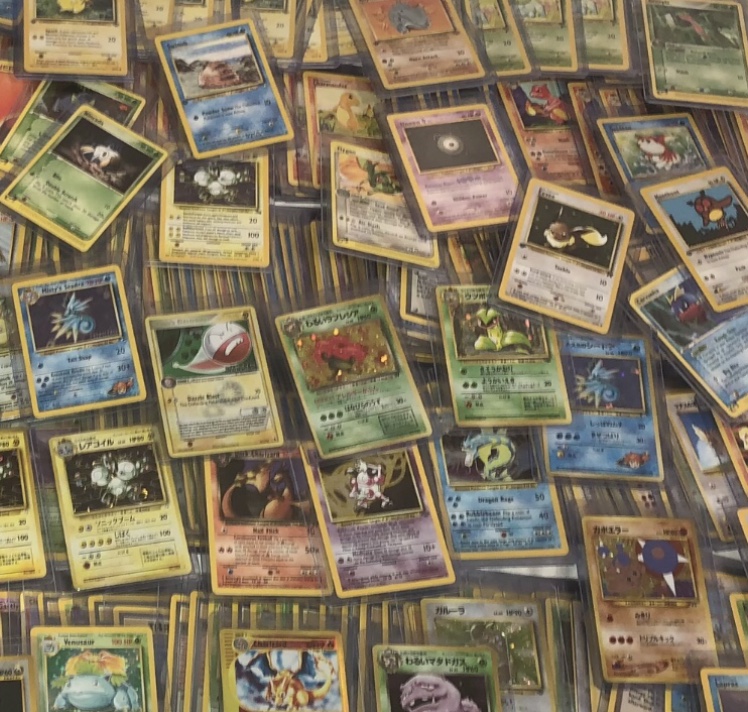
Pokemon cards are works of art to some and the fastest growing, stock market returns beating alternative assets investments to others. Having a collection of over a million cards with an accumulated life time ownership of many more, I probably had billions of dollars worth of collectible assets pass through my hands at one point or another, a terminology I coined as the touch rate. Most of these were identified and purchased by me, along with grouping my other assets like emerging market stocks listed on Pink Sheet, virtual assets including social media websites and domain names, among other things most people at that time did not touch altogether mostly because they did not understand how to create a personal alternative investment index decades ago, when none of these things were even on people’s radars.
I sold or given away things people valued, which mostly are things that will not generate the most optimal returns. To put it bluntly, desirability often accompany rarity and scarcity. When everyone have them, care for them, acquire and sell them, value them then they will most likely not be the most optimal investments. I have a whole balance score card of demands for my assets not just its periodic returns and appreciation potentials but a wide range of attributes that make other people when they are educated about them would eventually want them too. Such attributes include good eye appeal with sentimental values and emotional support, prestige, liquidity to even the lowest pedestrian level common denominator, ease of concealment for transnational or intergalactic transfers, low maintenance and storage costs, etc. Wealth is just a medium resource that can help one acquire other tangible, intangible and hybrid assets. When you have assets to protect, you may have to protect them kinetically, morally and politically.
When you are accumulating assets, you will likely need adequate cash flow to finance it properly and not be forced to make financial decisions on other people’s terms. When you have assets for sale, you need to find ways to sell it optimally. When you have ideas, you need garner trust from the community to propagate and evangelize them. Every action requires specific methods and resources to execute these actions successfully. Pokemon cards check a lot of the boxes above. Obviously nothing probably last forever, with Pokemon cards however, in my opinion, the intrinsic unsystematic risk is much lower than sports cards.
Having dealt with millions of sports cards, I can say with certainty the peak and trough for these assets are almost unpredictable with certainty, regression and conjoint analysis and all. After all, Pikachu is probably not going to get into a scandal of any kind. As long as the systemic risk is reasonable and the franchise is managed well, the volatility of these assets could be a lot less than seemingly similar asset classes. Nostalgic value for you on certain sets obviously depends on when you got into the hobby, however, from a print run, rarity and intangible standpoint, the Wizards of the Coast time era official Pokemon cards will probably be relatively better investments due to the “first factor” even if future generations never bother to watch the first episodes of the animation, though if they are fans, they will probably do watch a clip or two at the very least anyway because they can and most if not all of these episodes are televised, accessible, recorded in a relatively permanent medium. You can visit The Official Pokemon Website to learn more about the franchise.