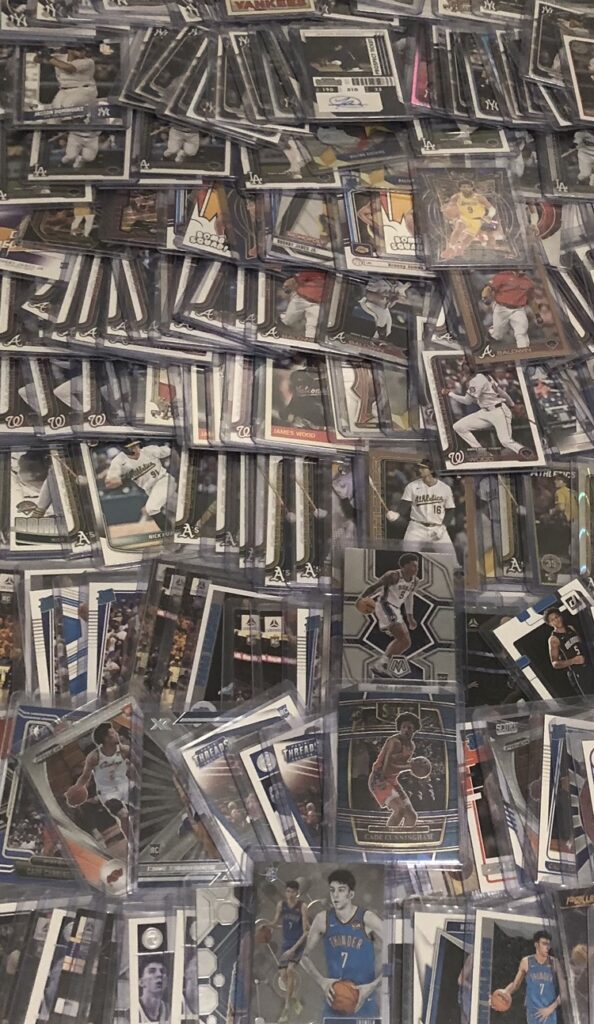
Per what I talked about in my last post, I have a pipeline of rookie cards that I created by focusing on buying a substantial number of rookie cards of approximately 15-30 new players in a given major professional sports league annually. These are indexed long-term investments for me, ones that even if I appear to be wrong on, I typically do not ever intentionally sell unless I am literally needing money to keep me alive. I however will give away my cards to friends, people who are in need of cards or donate them. I have probably given out over a million cards one way or another in my life-time. I do this because it makes me feel good to give back because I have received plenty of free stuff from other people over the years as well and giving it away in my opinion does help grow the hobby by bring people who otherwise would not have known or be interested in the hobby in the first place.
I do sometimes add cards of a given player’s rookie card outside of their rookie year only if it’s within the early years of their career when they have foreseeable additional unrealized potentials and their cards are unnecessarily undervalued due to systematic issues. Typically a player need about five years to show signs of mirage GOATness, a term I coined to reflect seeing glimmers of GOATesqueness that you are almost never too sure about but your instincts tell you something could potentially be up. It will typically require at least eight years to see GOATesqueness in the open consistently. Unless that player starts at 19 years old in the NBA or MLB or 21 year old in NFL, you won’t most likely know the player has high GOATness probabilities until near the end of their competitive sports athletic primes. By that time, if you want to invests in that player’s chase cards, you will probably be spending a lot of money acquiring them. This is probably one of the biggest downsides of the flip culture. People who are not in this for the love of the underlying art will have a hard time making wise decisions for a sustainable strategy and creating millennium wealth. With my background I could probably do almost anything I want to legally, however, I chose to do what I do because it brings me happiness due to a cocktail of reasons.
Of course there will be one out of a million chance that a seemingly undeserving person win in the long-term, but hey, it’s a probability game, if you like that kind of odds then maybe go for it. But before you do, you may or may not want to lookup what may have happened to many lottery winners after they win life changing money. I don’t have to wait 20 years, 10 years or even two years to see results, my rookie cards pipeline is decades involving multiple major professional sports. I literally get new hall of famer rookie cards in my collection during each professional sports’ hall of fame induction ceremony just by maintaining my rookie cards pipeline. With modern day financial strategies, my cards “cards investment farm system” is even cheaper to maintain. I invest in what I invest in, I pick up the non-hyped new athletes’ rookie cards I don’t invest in extremely cheaply in bulk. I will let the cocktail investors make all the “big bucks” on rookie cards of players who I believe are overhyped. In my mind, these cards operate in the same vein as new cards on car lots, few rarely become the “vintage” worth the “opportunity cost” to maintain after driving off the lot and after depleting its “functional useful life.” I live in America which means I have the rights to exercise reasonable free speech as permitted by the law. All posted content(s) on this website are my opinions only which means they should not be taken as advice of any kind. I am a non-celebrity, non-public figure posting anonymously for my own entertainment on a website that is not affiliated with any individual(s), organization(s) and/or any entity/entities.
Let’s talk about my top 10 list of athletes’ rookie sports cards to invest in for May 2026.
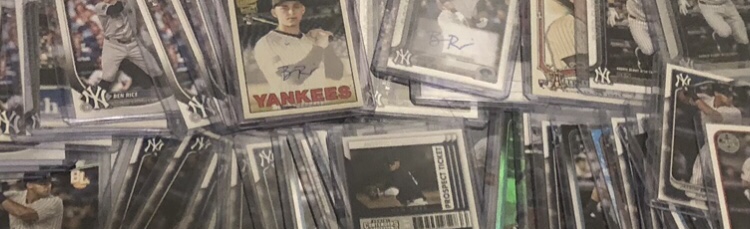
I have some criteria I use when I buy rookie cards. I typically buy rookie cards of rookies from the same year and of players who base cards are typically found in dollar boxes. With some exception, that means I do not usually chase the “next biggest thing.” To be clear, hypes do materialize into GOATential occasional, however, they frequently end up manifesting into your run of the mill hall of famer (which are great achieves for the player given how hard they likely worked to get there) that typically end up in the inflation adjusted rookie base year dollar boxes. You just have to search for the prices of the non-premium junk era and later sets base rookie cards of your favorite non-GOATesque hall of fame inducted players to get an idea. It’s almost like you got nothing to show for if you held their cards for the long-term. Since I don’t buy for short-term gains or speculate due to volatility and risk, if I bought certain overhyped cards of top draft picks, I will probably on average end up losing the time value of money game due to inflation and compounding affects of good investments.
Legitimate GOATs’ rookie cards can be 100X or more in value than their regular hall of famer peers. Think about some of the GOATs that have great reputation in some major sports and then compare their rookie cards from whatever set versus their non-GOATesque hall of famer peers. Like what I mentioned in previous posts, I play the long probability game which somewhat resemble the long-tail strategy, another contrarian strategy I frequently rely upon.
I will discuss why I am collected the below rookie cards of each of these athletes in details in my subsequent posts. The below is a brief summary. Most of their base rookie cards below are around a dollar or two at the moment.
- Ben Rice (Baseball): Reaching prime with the right statistics while playing for a world-class icon of a team. Higher multipliers due to reasons that I cannot fully disclosed due to social contract reasons.
- Nick Kurtz (Baseball): Higher elite professional average expectancy remaining. Higher multipliers due to reasons that I cannot fully disclosed due to social contract reasons.
- Drake Baldwin (Baseball): Hit the right indicators at the right age. Followed up with good second year trends on a good and storied franchise with recent championship. Many GOATs are rookie of the year winners.
- Jasson Dominguez (Baseball): Plays for a marquee franchise, still young, been talked about for years, probably just need to learn to field better which is likely not difficult if he becomes a designed hitter.
- Chet Holmgren (Basketball): His potentially generational beef with Wemby may work out like Bill Russell versus Wilt Chamberlain comparisons. One has too many rings for ten fingered to each wear one and the other is not primarily known as a winner but has significantly more on the personal career statistics and may have lots of stories some of which I don’t think would be appropriate to discuss here. With or without film, historically speaking after both retires many years later, if it were the case, the distinction between a top 40 player versus a top 50 player or whatever will come down to what first comes to mind to people who remember them. Chet’s cards value will likely be pegged to a ratio of whatever Wemby is at whether that’s plus or minus. I don’t waste money on buying Wemby cards just like I don’t buy David Robinson or Tim Duncan’s cards anymore even though many of their rookie cards are around a dollar or two each now.
- Cade Cunningham (Basketball): Pistons are frequently perceived as a tough team for whatever historical reasons. As a guard, his height alone is relatable for many people. I think he is a regional story who may become a national or international story once he starts to win in the playoffs more consistently. I am not particularly attracted to his playing style or anything else. I just think from a statistical standpoint, his cards are very undervalued right now.
- Bronny James (Basketbal): If I think as the same way as other people, I wouldn’t be the permanent contrarian. There are really a few intriguing things about him that will resonate with people despite the hate he sometimes may get. His story of perseverance health wise and humbleness for someone who is in his situation is quite rare. He is pretty mentally tough and is quite wise for his age. People will look his stats and say all kinds of things. I don’t need to repeat it here. However, you have to see the forest for its guano not just s*** that one needs to spend money to clean up. This is a liability to asset double swing if one gets this valuation correctly. The father-son due is a combined story not just a singular story. That means stats can also be split among two players as in first father son duo reach xxxxx of points, assists, steals, regular season games, playoff games etc. Lebron is a historical figure of significant importance hence his scions who are part of this story will be as well. It is an inspirational tale about life and not just about sports. Lebron has at least a few more records to chase (tie for playing in most decades in the NBA, 50,000 regular season points, playing with his two sons in the NBA and in an NBA game on the same team).
- Dalton Rushing (Baseball): Plays for a marquee team. Higher multipliers due to reasons that I cannot fully disclosed due to social contract reasons.
- Paolo Banchero (Basketball): I am not particularly attracted to his playing style or anything else. I just think from a statistical standpoint, his cards are very undervalued right now.
- James Wood (Baseball) – Higher elite professional average expectancy remaining. Hit the right indicators at the right age. Followed up with good second year trends.
Yes, Wemby and a bunch of other players you probably think should be on my top 10 list for reasons I have mentioned above and below. To be Frank, if it was that high on your list, I would probably not have invested in the cards to begin with. All GOATs are historical figures, not all historical figures are GOATs. That means to become a GOAT, you have to do something historical relevant first as the first step to becoming a GOAT, in essence the historical figure that other historical figures during their life-time talked about. The thing you need to understand about Bronny James is he already made plenty of history and will likely make more history.
Many of the players on my list of rookie cards I have a substantial holdings of are majority baseball and the remaining are basketball with no football or hockey. Obviously this list is only a top 10 list, my actual shortlist of cards of athletes per annum is in the triple digits across all major professional sports. Baseball cards are the oldest types of collectible sports cards with over 150 years of history. Their cards collecting fan base is typically wealthier and the sports has many grail cards that shatters records almost every time they are sold. Yes, baseball is not played everywhere like basketball and soccer are, however, America is the richest country in overall nominal GDP and has extremely high median income that no 10 trillion or more econom(ies) now or in the next century will likely come anywhere near it.
What the collectors in the biggest markets prefer set the trend and also sets the prices. The issue with football is career longevity. Most position players will play much shorter careers than their major professional sports counter parts. American girdiron football is undoubtedly popular, however, unlike other sports, the roster is huge with 50 plus active players on a team and players typically specialize on the defensive side, the offensive side or the special team. This makes long-term investing in the hobby challenging. The true premium position in football is the quarterback and then the two wide receiver or the two running back and maybe the tight-end. At most, there are only about six premium positions out of 30 plus possible major on the field positions (approximately 11 players on each of the three sides of play). Premium positions are about 15% of all positions in the NFL. In basketball premium positions are about 60% of all positions as the two guards and the small forward are typically more relatable for normal people therefore more popular than the power forward and center. In baseball premium positions are about 70% including the multiple starting pitchers, shortstop, centerfield, pitcher, third base and often sluggers such as designed hitters. Obviously prospecting baseball minor league cards are a completely different field of study that requires much more research.