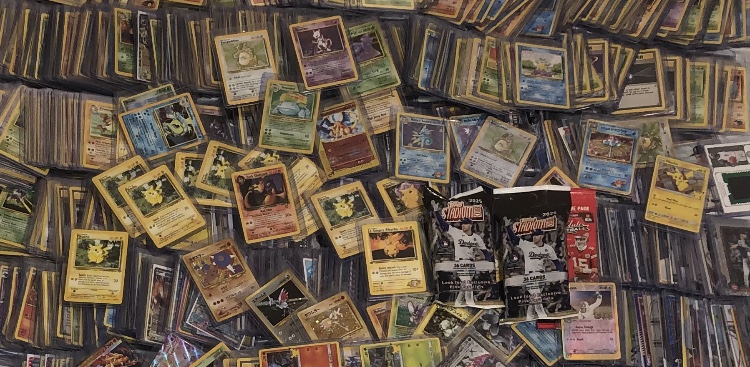
The short answer, I find singles to be a more viable investment than sealed products be it boxes or packs. Some people buy sealed products because of the supply and demand logic of a sealed opened is one sealed less. That may very well be true. However, for the average person, he or she will likely not benefit much from this given most cards companies rarely disclose their true print runs. Even if they do somewhat, besides estimating print runs and reviewing graded cards population published by popular grading service(s), it will be difficult to know exactly how much more supplies are available, unlike the with M1 to M4 reporting of the money supply.
Remember, when cards products are first released, there were likely plenty of supply and no one for sure knew how well these things will do in the long run. If people already know how well something will do with 100% certainty, the profit margins will likely be squeezed because there will be less uncertainty hence less risk premium demanded. Without going too deep into the business and financial side of things, consider this. At the time when Pokemon 1st Edition English version 36-pack Booster Boxes first came out in 1999, they were retailing approximately $150 a box. The secondary market of a 1st Edition English version Charizard card, the best card in the set, was approximately $50 dollars on the secondary market. That means for the cost of the box, one could buy three of the Charizard cards at the time of first release for the price of the booster box. The box now cost about $500,000 and it takes approximately 48 packs to pull that Charizard card from those booster boxes meaning it will on average take more than one box to pull the best card hence pulling the Charizard is not even certain for such a high price box now. Less than 1% of all graded versions of that card by a certain popular grading company graded a “10.” A graded “10” sells for around $800,000 and a “9” is about $100,000. I live in America which means I have the rights to exercise reasonable free speech as permitted by the law. All posted content(s) on this website are my opinions only which means they should not be taken as advice of any kind. I am a non-celebrity, non-public figure posting anonymously for my own entertainment on a website that is not affiliated with any individual(s), organization(s) and/or any entity/entities.
Sealed boxes or packs versus singles Pokemon and sports cards investing?
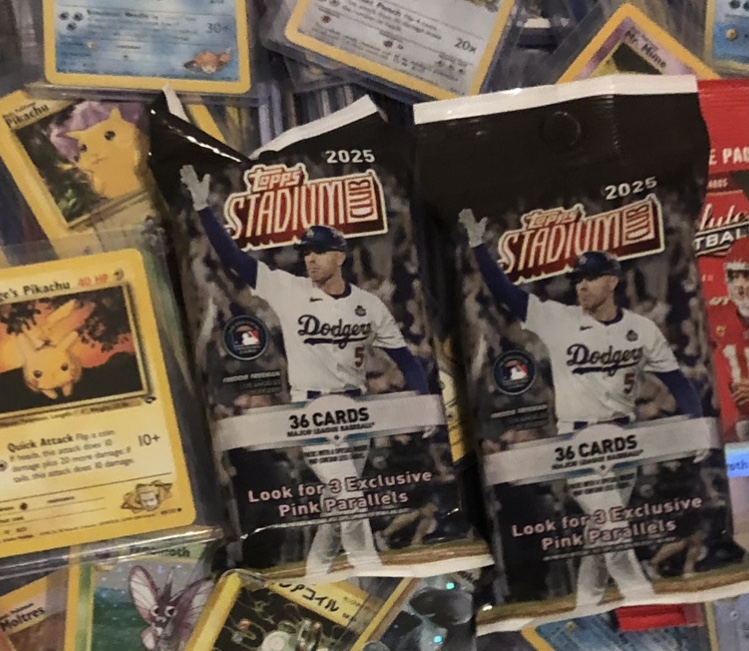
I highly doubt in 1999 many people viewed cards as mainstream investment vehicles alternative assets or not. The market size for these things at the time versus now, most people’s attitudes toward them as investment vehicles and the possible social stigma of treating them as investment vehicles likely made these things being mainstream investment vehicles impossible back in the late 1990s and early 2000s. Card grading has about a 40+ year history, however, it didn’t become all that popular until the last 10 years or so. One huge change that occurred in this market was using market “comps” versus relying on price guide(s) price guidances, this alone likely created a true market driven pricing system. I still use the price guides as a checklist reference guide to see what cards are in a given cards product. The other revolution in the industry is technology. Now it appears machines similar to X-rays can be utilized affordably by certain groups of people to see what are inside of a pack or box. AI whether it’s agentic, generative or whatever else via machine learning and training also appears to be changing the game. Cards can now be scanned by an app using a smart phone’s camera that will instantly give users access to a database or a web aggregator of some sort that allow the cards to be identified, graded, compared, listed online instantaneously among likely many other available features.
Regardless of the investment type whether sealed sports cards or Pokemon cards or something similar, it’s important to understand the cash flow issues, opportunity cost, time value of money, supply and demand, after purchase cost like storage and maintenance cost, selling costs and many other relevant factors that ultimately affect returns on such potential investments. Specifically to sealed cards products, it is important to understand what attracts people to buy certain sealed products in the first place at various stages including prerelease, at release and post release. I believe some of the following questions are important to ask oneself when buying sealed products. Does a cards box have a high returns ceiling? What is the potential returns floor for the cards box? Have all the chase cards already been found? What are the graded cards population trends for the set as reported by a certain popular grading company? Are the rookie cards and/or chase cards in the box still desirable?
My biggest issue with sealed boxes is regarding control. If I am looking for whatever specific card and it only cost moderately more, the same or even less to buy the card as a single versus the aggregate expected cost to find it in its sealed form(s), isn’t that basically trying to win the lottery or gambling? Some major countries have regulations and laws that govern the disclosure of cards pulling odds on card sealed products such as boxes and/or packs. At the end of the day, if everything I do is based on luck and it works out for me the majority of the time, I would probably not even bother thinking at all. Then again, if that’s how things work across the board, there likely won’t be any profits due to lack of scarcity/rarity for anyone because prices will likely be depressed or if it’s still so high, inflation may probably takes place. Either way, no one is necessarily possibly be better off.