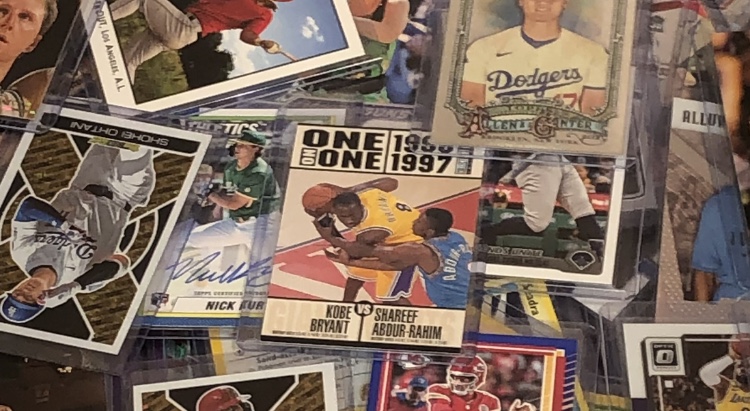
This holds true for sports cards, TCGs and many other types of cards and collectibles. Sure many people collect some TCGs like Pokemon cards for their in-game functionalities. The vast majority of the people who do collect Pokemon cards do not play the tabletop game at all, most probably don’t even know how to play. Many of these people are not even the kids who follow-up with the animation. Why is this important? For one, if you take away the functional value of the card, what is left of the intrinsic value? I will let you think about that one. Do people who collect sports cards use the cards to play any games with it? What is exactly people collecting these cards for? Granted there are TCG franchises like Yu-Gi-Oh! And One Piece where a comparatively higher percentage of their card collectors actually play the TCG. This is why I don’t bother actively investing in these cards because at the end of the day these franchises will have more reasons to help the TCG players than TCG franchises that have a larger percentage of pure collectors. If you look at Yu-Gi-Oh!’s historical high-end appreciation trends along with its historical sets releases and compare that against equivalent levels of Pokemon sets/cards, you will know what I’m talking about. Then there are there are the different variations of the F***F*** cards, the flip bird card, 1990 baseball player shirtless with a bat card, the tobacco score board card, the Knicks card with notable audience members card, the Grizzlies musician card, the Love dunk card etc. Look at Brady’s Bowman rookie card versus his Fleer and Skybox rookie cards?
The price difference is around at least 30X or more for similar conditioned cards. But did you know when those boxes/packed were released in 2000 they were all around three dollars? Bowman’s prestigious reputation did not always translate into being a higher priced card set, but many consumers may associate Bowman with GOAT cards like the 1952 Bowman Mantle card especially for cards of GOATs even if the 2000 Bowman football set were not mostly dumped into the ocean like what happened to the 1952 Bowman set. The 1952 Bowman Mantle card was actually not even Mantle’s true rookie card like the 1951 Topps card is. Before the 1990s, there were very few numbered or rare insert cards. Many of the cards described above were literally worthless when they were first released. To sum it all up, most people are buying cards at the early stages when certain cards were super cheap not to chase or speculate those cards, they likely bought these cards perhaps chasing other cards and not knowing what some of the non-chase cards will be worth in the future. They kept those cards for years because those cards were part of their memories/history and/or something appealed about the cards were appealing to them. Yes, some people now do factor in the appeal factor when investing in cards, but that’s only a small percentage of the collectors out there. Realistically, most of today’s hit cards are probably going to be relatively duds in the future just because of the nature of the card game of revering GOATs. This is also why I am not accumulating any Ohtani cards. It’s true Ohtani is one of the all-time greats. However, realistically and without talking about this in details, Ohtani might be a lot like Rose, Jordan, Shoeless and Bonds in certain aspects.
I live in America which means I have the rights to exercise reasonable free speech as permitted by the law. All posted content(s) on this website are my opinions only which means they should not be taken as advice of any kind. I am a non-celebrity, non-public figure posting anonymously for my own entertainment on a website that is not affiliated with any individual(s), organization(s) and/or any entity/entities.
Why you should not ignore the aesthetic, branding, backstory and history behind a collectible card.
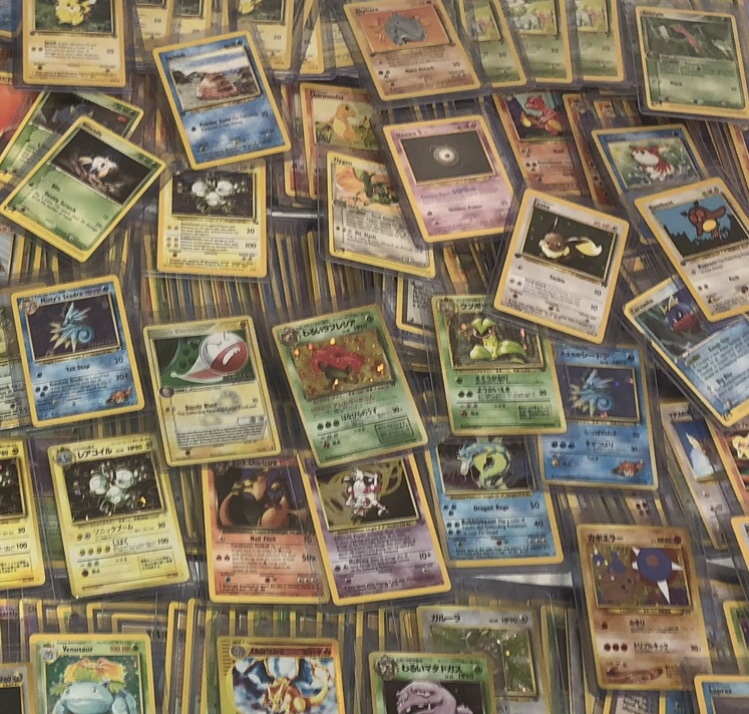
If we are going to be honest, Trout might be a lot like Bonds too in certain aspect(s). A 1986-1987 Fleer #57 Jordan rookie card in graded “8” condition was around $1K in 2000, it’s about $15K in 2026. The issue here is when you bought it for around $1K in 2000 you probably only paid $1K but when you sold the card slab in 2026, you will probably get $13K after the transaction fees, shipping fees and potential best offer discounts. On paper that’s a really good ROI. The issue here is of course inflation and comparables. If that same amount was put into some type of mutual fund that track the S&P 500 it would probably be about $9K by now. There is also S&P 500 at that time and likely now was/is probably seen as a much safer/much more liquid investment benchmark/index than investing in cards by a lot of people hence from an investment standpoint, once a significant risk premium discount is considered for the sports card, the ROI from the sports card is probably not all that attractive. There is also the issue that in 2000, there were so many good investments opportunities few people know about due to information asymmetry that could have yield a much larger return like a 1999 1st Edition/Shadowless/Base Set Charizard. Plus $1K spent on a single card in 2000 was probably seen as a crazy at the time. The bigger issue I see is GOATs in sports change all the time because perception change, game rules change, society change, standards for GOATs metrics change, the world changes and recency bias may apply. With TCG it’s all about cultural relevance and franchises growth. The one unescapable issue that will follow a lot of alternative assets is the fungibility issue. When you talk about stocks, bonds and securities, you are able to talk about one share of the same class of stock in money terms and know exactly how much is issued, in float, earnings per share and thereby calculate market cap, beta, alpha, quick ratio, cost of debt and equity, risk free rate and compare against almost all similar and dissimilar investment grade financial instruments.
Basically what dictate the growth of a securities asset is typically the potential of generating more money in the future whether due to appreciate or dividends and everyone participate in the market somehow in the Western world including governments, banks and the regular person. With alternative assets like cards, there is no true/transparent way to actually measure how much of the card of an athlete or TCG is intrinsically worth or should be worth. Compound this issue with different grading companies grading companies assigning different card grades without any resemblance of fungibility while not knowing how many cards are produced and no easy way to know if it’s real or fake without significant additional opportunity and financial costs. Plus the ecosystem, infrastructure, regulations, monitoring and enforcement of rules are just not there yet. In quite a few countries buying packs to rip may be seen as a form of gambling and requires the card companies to label the odds of finding various cards in the set. In reality, the odds of getting a card of significant value from an expected value standpoint may probably be similar or even worse than winning a significant lottery prize or winning something significant from legal compliant activities similar to the lottery. With no exaggeration, there are literally tens of thousands of publicly listed companies that have larger market capitalization than the value of the entire global collectible cards market. There are also companies that are over a trillion dollars in market capitalization. I think the cards market may get over $1 trillion in market size some time in the future with such high CAGR growth. I just don’t think it’s there just yet. All I’m trying to say is, right now, I believe the collectible cards market is still in a state of information asymmetry and illiquidity. It’s still somewhat of a wild, wild West. That being said, the smart investors with a pipeline investment strategy probably is going to win out in the long run. All the iconic cards that are worth a lot of money started being worth almost nothing. It’s really the early stage aspect of lower-end cards that may likely make the big bucks and have the highest ROI. You don’t need to spend big money in collectible cards to win big. It’s actually pretty smart to spend just marginally on collectible cards and invest in else where. Think about it this way, the global equity market is a multiple hundred trillion dollar market while the global sports cards market is a tens of billions dollars market. There is not enough liquidity for the market to be a true mainstream investment vehicle right now. How much something will worth in the future in the collectible cards market may have very little correlation with their current prices except for the multiplier factors on some of the chase cards, even then its appreciation value depends on the performance of the “underlying asset.”