
Last time I talked about Pokemon cards as a potentially high growth alternative asset, especially Wizards of the Coast era vintage cards. What I didn’t provide were benchmarks serving as indicators to its probable meteoric rise in value. I like winners and I value my time. I will only own or spend time on things that I believe will make me either better off directly or as a medium to become better off. I owned a large number of cards from the Legend of Blue Eyes White Dragon cards and cards from almost every popular set and franchise you can name. Not only are some cards from certain entities hard to sell, in the case of Yu-Gi-Oh!, I lost interest even keeping them “pennies on the opportunity cost dollar for similar era optimal investments” due to a myriad of reasons, most notably because of Yu-Gi-Oh! reprints, whatever logic for these are. One of my core tenets investing in assets is that they must have stakeholders, even the peripheral ones, with a sense of fiduciary responsibility to my well-being as an investor, regardless of motivation, form or substance. I live in America which means I have the rights to exercise reasonable free speech as permitted by the law. All posted content(s) on this website are my opinions only which means they should not be taken as advice of any kind. I am a non-celebrity, non-public figure posting anonymously for my own entertainment on a website that is not affiliated with any individual(s), organization(s) and/or any entity/entities.
Now, let’s talk about my sports cards collection.
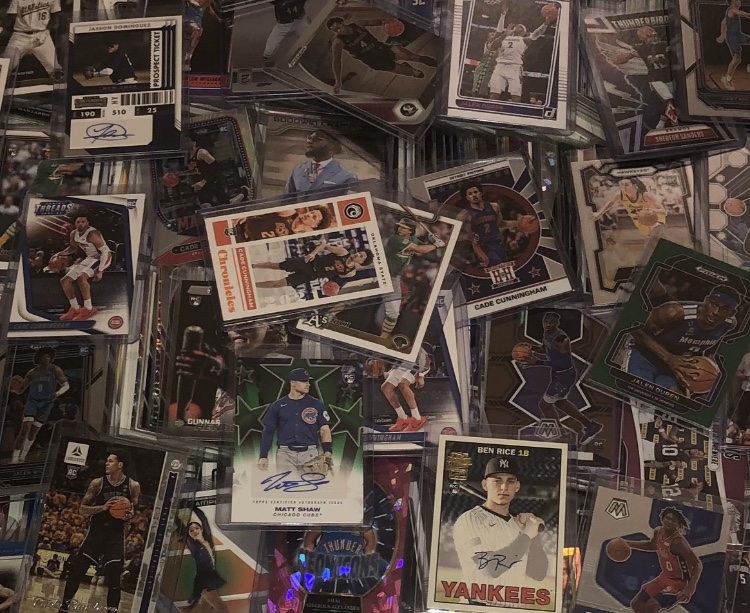
To better understand why Pokemon cards have high potentials, you just have to look at the coin and banknotes and the sports cards markets, more specifically, baseball cards market. If you ever attended a coin and banknotes show, scanned the room for who most of the attendees attending these shows are, you will probably understand what I am talking about. This is even more pronounced before the pandemic. It all make sense since these types of investments require high levels of disposal income, extensive knowledge about the subject matter, in the field experience and strategic patience to buy cards for often large sums of money, hold them for years then sell these assets when they want to. With that, they can dictate which attributes in these assets are the most desirable traits such as a specific originating locale or era and those who want to make money from the market will simply have to tailor to these people’s needs.
The average age of Pokemon card collectors are still quite young, completely reasonable given the age of the franchise and its initial likely target audience’s ages. Demographic groups of stakeholders matters in almost everything including in investing. Yes, one Pokemon card owned by a very famous person with a large social media presence did break sales record(s) recently, however, if you read articles about the highest valued cards ever sold, you probably already know most of these are sports cards. Like generational wealth, baseball cards are frequently passed down from generation to generation. I believe one of the biggest issues with sports cards is its volatility, more so with cards of currently active athletes than retired athletes. The problem is athletes are human-beings who live in real life unlike Pokemon characters. That means will most likely create volatility in card is one of the greatest-of-all-times (GOAT or at the very minimum a once in a generation talent and/or there is something special about the card itself that was later discovered that had nothing to do with the behaviors of the athlete. As mentioned earlier, I prefer to invest in lower valued versions of alternative assets that have all the right attributes because it allows me to free up cash by diversifying my risk into numerous smaller investments while keeping my portfolio liquid at the same time aiming for a higher expected value.
At the end of the day, rational people will benchmark assets one way or another. Metrics like multipliers and ratios will likely be employed. If I am significantly above average in identifying value than others and presuming multipliers are relatively within ballpark, why would I want to tie up that much cash in one single high value asset that will take time to sell when I can spread the risk among my portfolio and possibly get a higher premium due to the card’s lower cost of acquisition and higher liquidity. For purchases on cards of athletes I invest in, I tend to stick to rookie cards, cards in good condition because of the lower price differential on lower valued cards at the time of acquisition, numbered cards, autographed cards, patch cards, and/or all of the above like numbered RPA cards. As long as the prices are properly adjusted, I am typically okay with differences among similar cards such as on card vs sticker autographs and professional vs. amateur level uniforms. After all, these differences do not change the core essence of the investment’s attributes, only its desirability of the baseline value which will affect the multiplier. All of the abovementioned attributes make a card more rare and scarce provided you have reasonable trust in the issuing entity and the industry and the world have not fundamentally changed at the macro level.
Wait, investing in sports cards sounds like a lot of work, why don’t I just stick with Pokemon cards since they are way more stable and also grows pretty fast! There is a reason why investors prefer to diversify their portfolios. Sports cards have higher alphas but also have higher betas, translation, higher risk and higher returns. With Pokemon cards, you mostly only have to worry about systemic or market risk once you come up with a prudent collecting strategy. In some sense, the cards of desirable Pokemon characters like Pikachu and Charizard, mostly introduced in the mid to late 1990s and the early 2000 during the Wizards of the Coast era are kind of fungible in that you mostly can’t go wrong buying them because the storylines are already fundamentally set and its future storyline is not too difficult to predict ballpark wise. Hence regardless of the cards of the sets you buy for some of these Pokemon characters, the baseline values will likely be perceived as the same by bellwether investors, attribute differences like artworks are just multipliers to the equation.

With sports cards, because there are millions of athletes in all different kinds of sports who played in different eras, in different leagues and who played with different levels of completion, investing in these is more like buying a house with each having distinct characteristics like its location, neighborhood median income level, local economy etc and all these things constant evolve over time. This is precisely why English Pokemon holographic cards, especially the vintage ones cost more. Not just because of the language or potential market size difference, but mostly due to pull rate of holographic cards where the Japanese vintage packs essentially guaranteed one holo card per pack whereas the English version packs did not. Hence because the GOAT of a sport is literally just one person or a handful of people at the most, a title that take frequently decades of work to achieve and is often only publicly recognized and granted with consensus years later.
One would argue identifying a potential GOAT who likely had to be benchmarked against hundreds of thousands of contemporaries and predecessors in the few popular sports that actually have a large sports cards collecting fan base, the premium for the massive amount of effort and resources that are poured into this search is akin to finding a specific atom with just the right amount of electrons, protons and neutrons in whatever its required final form be it ionization, fusion or whatever else in a forest in the dark racing against time and with a copious amount of other hunters now that they smelled the money from a potentially $100 billion dollar future industry, have to be huge for all this expenditure to be worth it. Most people like winners and matters with certain desirable attributes, some people are actually willing to pay for these features.
The animation and TCG aspect of the Pokemon franchise will likely prevent it from issuing true rookie cards, numbered cards, memorabilia cards including autographed cards any time soon, things that are highly valued in sports cards collecting. One thing that could be a Pokemon card trend in the future is collecting the cards of a Pokemon’s first introduction or appearance in the TCG. This concept is currently not valued in the Pokemon TCG world with the first edition labels on certain Wizards of the Coast sets being the closest concept. This concept could take off some time in the future, however, given most of the super popular Pokemon’s were introduced during the WOTC era and they had 1st edition labels back then, the ceiling on this concept taking off is probably mild at best. Yes, timing is more important in sports cards investing and it requires up to date information and data to make the most optimal decisions, kind of like what a short term investor or a day trader need to do to be successful in their craft.
Determining what cards to invest in is a complicated process involving doing a ton of research and analysis on on the athletes featured on the cards themselves including their current and future on the field performance and off the field marketability as celebrities. My goal is to buy future GOATs cards before they evolve into their final form of greatness. This means I need to know what are the important aspects of their roles as professionals, what their personal career and life goals are and do they have what it takes to get there. Winning is not really about luck or having some type of super natural abilities, while both will probably help immensely, for the common person it basically comes down to do you understand the groups who will be in some way transacting with these assets. It’s mostly about understanding the group think strategy dictated in various ways by the opinion leader(s) now and potential ones in the future in a timely and relevant manner frequently requires predicting or forecasting. To move the market, pure independent and critical thinking alone will not work. What will work is movement by the masses based on some type of a robustly or even widely believed plausible built logic that at least initially makes sense and the concepts can be refined in the future if necessary, and a call for action from the bellweathers will lead to action. There is a reason why the term bellwether is frequently referred to in investing, a sheep that is both empowered and emasculated, an interesting dichotomy that makes you wonder if things really appear as it seems. You can visit Topps Official Website to learn more about the sports cards industry.