If Charizard is power then Pikachu may be grit. If Charizard cards command a premium then Pikachu cards likely represent higher CAGR within a given price range. There are likely an infinite number of ways to collect, most people collect whatever they like. Fundamentally speaking, I am the exact same way. The difference is that I take a competitive spin to investing because I enjoy winning. Winning takes on many forms and shapes. Some victories may seem losses at first and other victories may be Pyrrhic in nature. You likely can’t win on every transaction but you probably don’t have to secure victory in every battle to win a war. One thing is for sure is you likely won’t win anything if you are not properly prepared for winning even when the opportunity presents itself. I am not trying to split hairs by saying investing in Charizard or Pikachu cards are better than the other. Each types of cards clearly could be winners no matter how you view the situation. I am talking about compatibility to my alternative investing strateg(ies). I am not trying to be funny or anything, but I think Pikachu is basically a mouse. When you think about all the prominent mice in the world, which I will not name due to “you probably guessed it” reason(s), you don’t always get a sense of overwhelming raw, menacing power. If a sports team name their team after a type of mice, I am not sure what the fans will think.
From a card investing standpoint, regular Pikachu cards typically are common cards. After the original series from the WOTC Pokemon cards era ended, many subsequently produced official Pokemon cards of Pokemon introduced during the WOTC Pokemon cards era may have been downgraded from rare to uncommon and from uncommon perhaps to common. All that to say is as the Pokemon universe expanded or continues to expand, powerful Pokemon may continue to emerge hence some of the original Pokemon from the WOTC card era may become relatively less rare and powerful. I live in America which means I have the rights to exercise reasonable free speech as permitted by the law. All posted content(s) on this website are my opinions only which means they should not be taken as advice of any kind. I am a non-celebrity, non-public figure posting anonymously for my own entertainment on a website that is not affiliated with any individual(s), organization(s) and/or any entity/entities.
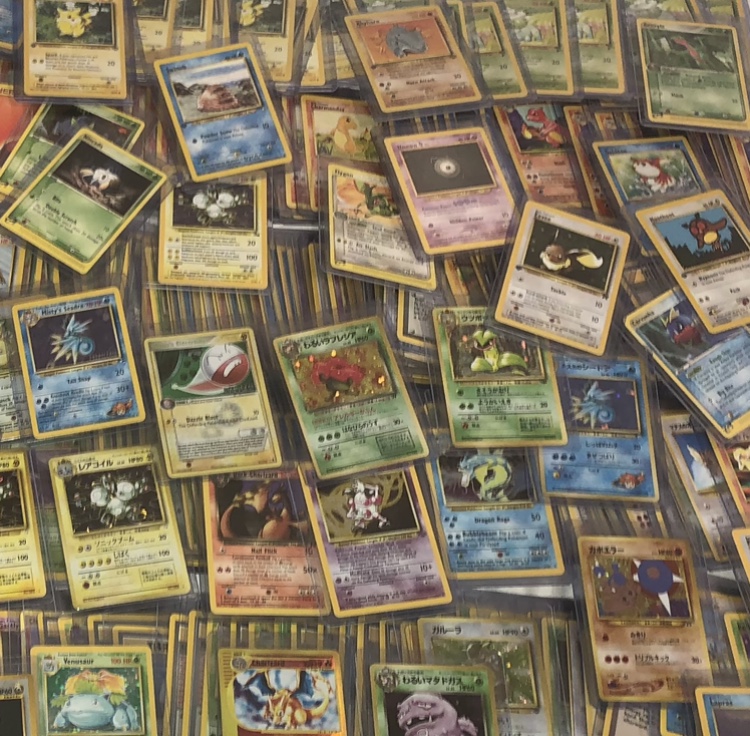
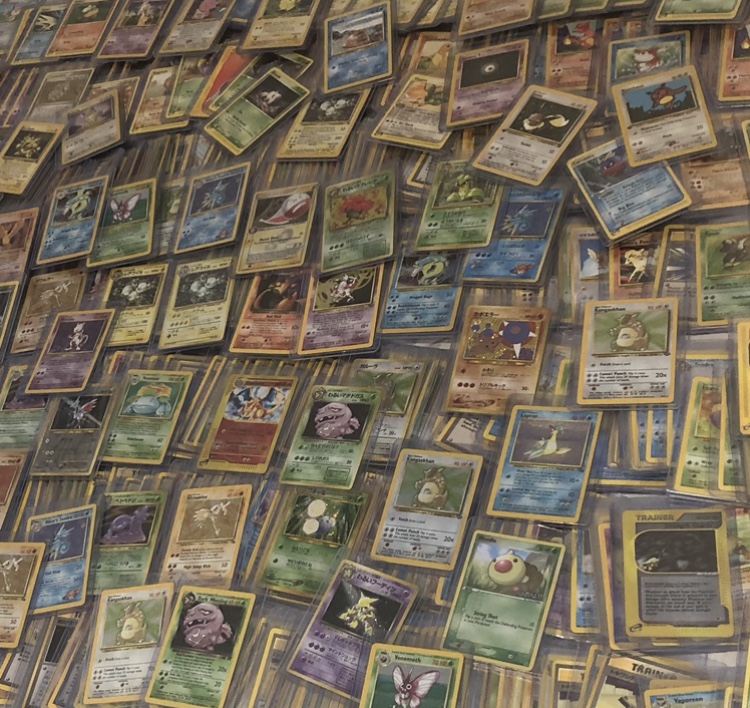
Let’s talk about my Pikachu and Charizard cards collection.
I believe Pikachu has much higher appreciation growth potential in terms of return on investments than Charizard cards. Almost any holo Charizard cards probably are going to be some type of rare or promo whereas many Pikachu cards are mostly common and sometimes promos. The starting price for Charizard cards usually are much higher than that of Pikachu cards due to Charizard being a rarer and one of the most powerful Pokemon in the Pokemon universe. Pikachu, however, is much more accepted as being cute, approachable and inspirational. Pikachu merchandises seems to be literally everywhere and may frequently cross-promote with other intellectual properties. Pikachu to me is more than just an animation character, it is literally the biggest universal icon in the history of this world. In my opinion, Charizard is a cult favorite whereas Pikachu is universally beloved and recognized by almost everyone. In athletics terms, Pikachu may be comparable to the superstar guard most lay people have deemed as the GOAT, Charizard on the other hand appears to metaphorically resemble a dominant 7-foot center likely considered the best center of all-time.
When you think about it, Pikachu is probably a double-digit, billion-dollar industry on its own likely representing a 100+ billion dollar brand yet Pikachu official Pokemon cards are likely only a small percentage of the entire value chain. What is interesting about this is most people would probably say the most collectible Pokemon product is probably Pokemon cards even though it appears Pokemon actually make significantly more money from non-Pokemon cards merchandises. Without stating all the boring details from a marketing and business standpoint regarding the above, I believe the lesson here is Pokemon cards have potentially significant growth opportunities as it is currently not even any where close to being the most significant part of the Pokemon products market size. Many modern common, non-holo/foil/promo/error Pikachu cards possibly can be bought for a few cents each in bulk versus around at least a dollar for the most common Charizard cards. I believe Pikachu is the Pokemon’s spiritual equivalent of the “Logoman” for the NBA or whatever equivalent of the “Logoman” in other major sports league. It is no wonder that some of the most prized Pokemon cards feature Pikachu and not of any other Pokemon.
Pokemon and Pokemon cards of course are relatively new compared to some other brands/franchises and other classes. This may be why the price premium multiplier between newer more modern Pokemon cards and the older vintage WOTC era cards are not as significant as other types of certain types of vintage sports cards. I think the complete human history can not be fully told without the inclusion of the collectibles phenomenon therefore I view Pokemon cards as potential major human artifacts. The collectible cards industry may reach $100 billion dollars within a decade or two due to likely high CAGR which will be a major milestone in human history and have broad impacts on society. A likely large, critical mass percentage level of the world’s population are already collecting cards. This trend may continue to grow at the current or a more rapid pace in the near future. When one Pikachu card can increase by $10+ million and more than double its worth in a matter of a few years, cards that may share certain attributes may also be positive affected, the rest are just multipliers. There may be many examples of this phenomenon happening in recent times, one of which is how the popularity of Gengar cards are affect its “downstream/evolutionary downstream lineage” Pokemon cards like Haunter and Gastly.
If I were a new card collector and knowing what I know now, I would probably make Pikachu cards the staple of my collection. I would probably also buy some other cards that will make up a much smaller percentage of my collection to better diversify my alternative assets investment portfolio. I personally believe Pikachu cards have a higher upside than many other cards. When the Pikachu English version Base Set cards first came out it was probably worth a penny per card for many collectors at the time if anyone even bothered buying it as a single since they were common, non-holographic cards and much easier to pull than certain holographic cards. At about $4+ USD in raw, ungraded card format currently, the same card has increased around 40,000%. Charizard cards in the English version Base Set were rare, holographic cards. Approximately 1 in 3 English Base Set packs contained a holographic card and approximately every 40+ packs had a Charizard card. At the time those packs were selling at around $3.50 USD a pack. Base Set Charizard English cards at the time when they first came out were commanding around $50+ USD on the secondary markets. They are currently around $400 USD. Let’s just say it’s about a 700% increase which sounds impressive. However, when you consider that took 20+ years to get there and S&P 500 index grew by about 750% in the same period when its component stocks are much more liquid, you may think differently.
What about graded versions of these that got a “10” score? For simplicity sake, let’s just say the market value of an English version Base Set Pikachu cards in that graded condition is about $1,000 USD and the Charizard is about $30,000 USD. In that case, the Pikachu card is around 100,000% increase and the Charizard card is about a 58,000% increase. When you look even deeper, you may realize less than 1% of the graded Charizard English version Base Set card submitted to a certain popular card grading company may actually get a “10” score. The difference in value between a lower score of “9” and a “10” can be very significant for that card. The English version Base Set Pikachu card may have a much higher percentage of a “10” score under likely similar circumstances as described above. The above also does not account for how much more liquid the Pikachu versus the Charizard card per the above is due to price differences. The cost difference to grade a 50,000+ USD card versus a $1,000+ USD card can also be incredibly large. The print run difference between 1st edition base set and base set may or may not be as large as some people think. In summation, I believe Pikachu cards at least some of its WOTC cards may carry a much higher “time value premium”, even when they are risk/liquid adjusted, than cards of most other Pokemon.