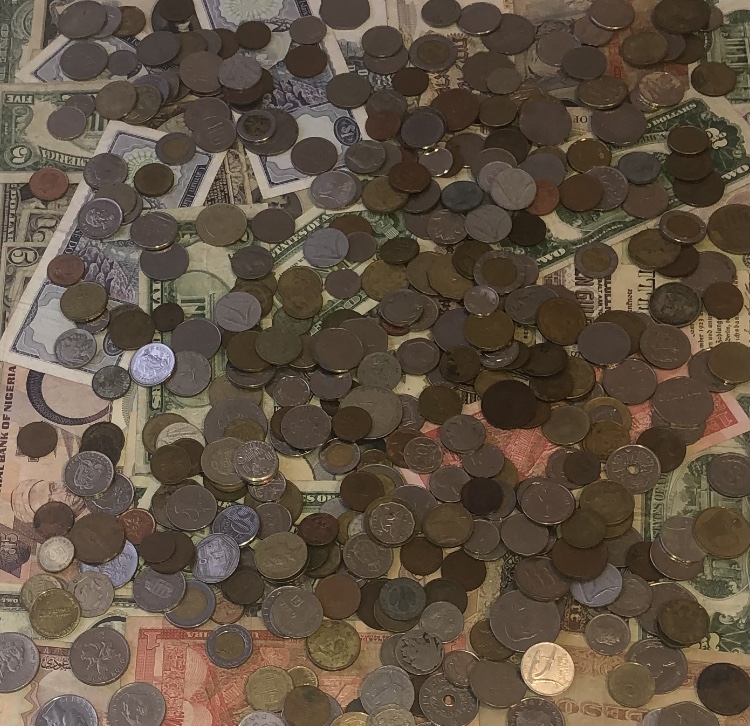
My first loves in collectibles are banknotes and coins. I use to go to many shows just for fun and I was frequently the only youngster in the room looking to buy stuff. Many of my investing principles derive from my days of buying paper money and coins. Sure, I also collected many other things at the time, however, the coin and banknotes community was at the time the most vibrant and largest in terms of market size for a consistent class of mainstream, investible collectibles assets by far out of all of the collectibles at the time. Obviously one of the major factors that made coins and banknotes so valuable is because they are each 1/1 collectibles with their own serial numbers that is unique making them essentially non-fungible products issued by authoritative sources that have incentives to keep their currencies trustworthy and actually had a real function since they are a medium of exchange. When they are in circulation, they may even come with a “life-time warranty” since damaged ones can be exchanged for functional ones at almost any bank within the jurisdiction territories where the currency is created. Basically, these items as a collectibles is just a byproduct of something much larger. Other people have more incentives to make this work more than you do. I live in America which means I have the rights to exercise reasonable free speech as permitted by the law. All posted content(s) on this website are my opinions only which means they should not be taken as advice of any kind. I am a non-celebrity, non-public figure posting anonymously for my own entertainment on a website that is not affiliated with any individual(s), organization(s) and/or any entity/entities.
Now, let’s talk about my coins and banknotes collection.
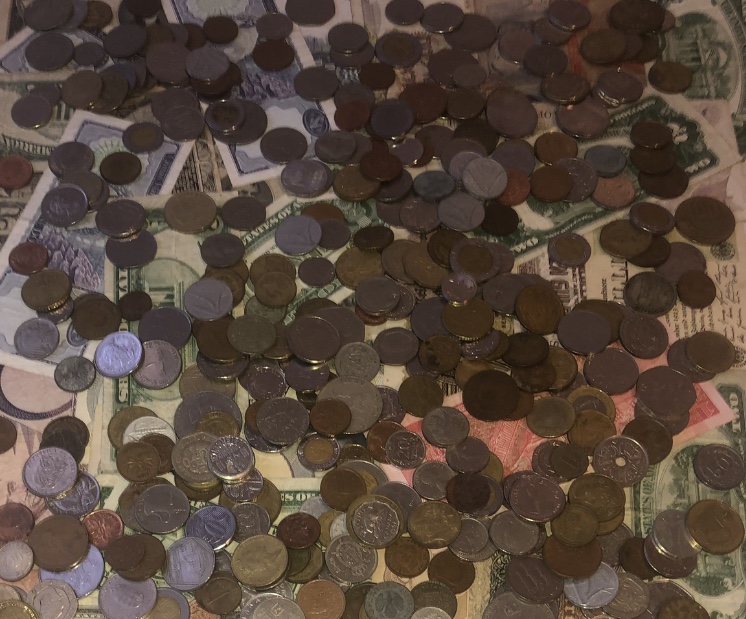
Money supplies are typically controlled by the governments of the issuing countries and territories. Running sustainable economies require active fiscal and monetary policies like M1-M4 measurement monitoring to ensure fiat, coins and credits are managed at a level that create liquidity, curb unnecessary inflation, stray away from deflationary pressure, create employment opportunities, encourage reasonable and sustainable investments that create more jobs and spur invention etc. Money as a core financial instrument follows opportunity cost principles. Time is a valuable resource. You can’t easily buy time, at least right now, you can likely only better manage time. With current technology, it is technically plausible to time travel forward but likely very difficult to travel in time backward. A reality that likely make time value of money and opportunity cost principles work, at least at this moment. This is why when I get a chance, given all things and elements are equal or near equal, I like to buy older/vintage investable item(s) from earlier periods, before my time. I am able to do this, frequently at no premium, because not everyone hold the same view on this topic.
There are some truth to some people stating it is difficult to lose monetary face/nominal value of the coin and banknote when collecting currency because even if the currency is no longer legal tender, Western governments usually offers some type of redemption for new currency at whatever the new exchange ratio is. Of course, real value of money could and frequently do get impacted by purchasing power changes due to economic reasons like inflation or deflation, though that can also be mitigated through diversification, arbitrage, hedging and other potential methods.
Sovereign entities though sometimes do issue solely commemorative currencies, most governments issue and circulate currencies to provide liquidity in the market which they often do so through the services provided by banks at the retail and wholesale levels. In simple terms, if you are a collector, you could legally get near uncirculated or even uncirculated coins and banknotes from banks at face value via simple banking transactions. And in most cases throughout history, if you simply just hold these for long period of time, with the power of inflation and human nature, you could literally see these assets increase over time without doing anything else accept storing them properly. Obviously there are things that make certain coins and banknotes more rare than others like lower estimated circulation rate, certain desirable year of issuance, place of mint that rarely make these, error that may have been accidentally created but we’re widespread etc.
With many collectibles now being viewed as legitimate alternative assets, I believe coins and banknotes collectors will likely be some of the biggest beneficiaries of this trend long term, generationally speaking. With potentially significantly more digital transactions happening on Zelle, Venmo, PayPal, Google Pay and Apple Pay in the US, in the West and overseas, coins and paper money’s market share of total money supply may decrease overtime that potentially could make paper money and especially coins that increasingly cost more and more to make due to inflation on raw materials like metal, more valuable. One thing about physical money that rarely get discussed is the relative freedom it holds for people. Barring a national collapse or other catastrophic collapses which are unlikely to happen in large scale for the next 100 years in the Western world given the entire financial system is riding on its strength and well-being, physical currency protect people’s privacy, a feature that is called out prominently in cryptocurrency. If you do not want people or perhaps just certain person to know what you transacted historically, keep your financial information secure and want to keep your anonymity for all kinds of valid and legally permissible reasons, you probably want to pay in cash. Cash is literally more freedom for those who simply want more privacy when used in compliance with the law. Yes, there are serial numbers on banknotes, however, in almost 99.99% of the cases, no entity will spend vast amount of time and resources just to track it down when it is not worth it.
Many older coins that were made from gold or silver had significant intrinsic value that were themselves kind of act like inflation protected assets. Investing in coins and banknotes are wonderful isn’t it? Perhaps, however, most investments are inherently subject to the risk-reward tradeoff. Also, one needs to remember not all investments work for everyone. For example, if you are looking to sell an item that is worth one million USD quick and due to its cost, there will be very limited amount of potential buyers hence you as a seller have little leverage in this situation and may need to wait a long while before selling the item and possibly not sold at the optimal price. Conversely, you may have a large number of items you want to sell for one million USD. Yes, many can buy pieces from the collection but the time it takes to sell them all and presumably to various buyers will also mean it will take a long time to sell all the items you want to sell and possibly not sold at the optimal prices. You can learn about coins and banknotes by visiting The American Numismatic Association’s website.