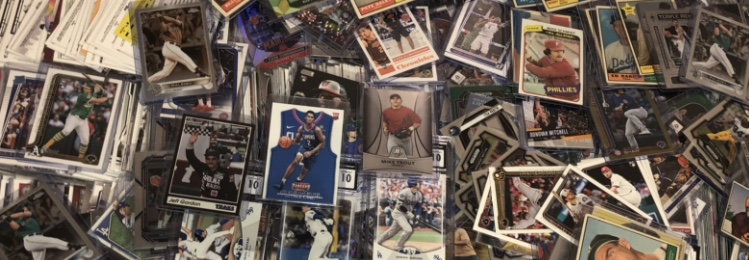
I will start off by saying I have never graded anything in my life for reasons I described below. However, I been through the process before, owns many graded card and know how it all works. Basically grading encompass mainly two services combined into one: authenticating if the item is real then identify what it is and grading the condition of the item based on certain criteria. Note, grading companies also don’t grade everything even within their own grading collectible asset class specialt(ies) making their service(s) not anywhere close to omnipotent. Their reputation is also a big variable as most if not all are not global Fortune 500 companies with other aspects that I won’t say here but clearly annoys me. When the certification from certain grading compan(ies) is/are reported, it can create a permanent issue for those who may be involved in a transaction, at minimum, potential privacy related issues.
In my opinion, the people investing certain alternative asset classes may not be ready to handle Wall Street type money. It is not too difficult to review someone’s resume and within 10 seconds know that is not the drop down of 10 or so schools, elite internship, extracurricular activities, patents and trademarks, national competition awards, entrepreneurship experiences and being the president of whatever club your firm is looking for. And that’s just credentials. Never mind what a background check that includes a check on potential criminal records, federal agency hiring process friends and family check and credit scores may find. With all due respect, some of these people should never be in this hobby in the first place. Obviously, many already left, but there is probably still many more who should not be in this hobby. I am quite annoyed by the grading services for opening the floodgate making it easy for these people to come in and disrupt the market. On the other hand, I am also a greedy capitalists like many others who is extremely thankful for these people coming in and making the hobby much bigger than before. Obviously the whole collecting scene had changed significantly a few years before the pandemic but much of the growth in the large inflow of people came during and after the pandemic. The field is still in some sense a Wild West for most collectibles asset classes except for the coins and banknotes scene for reasons I discussed in previous post(s). I live in America which means I have the rights to exercise reasonable free speech as permitted by the law. All posted content(s) on this website are my opinions only which means they should not be taken as advice of any kind. I am a non-celebrity, non-public figure posting anonymously for my own entertainment on a website that is not affiliated with any individual(s), organization(s) and/or any entity/entities.
Why do people value grading in the first place?
It is true standardization for certain things can be reasonable in the modern era. Some people who clearly know their craft grade just because they know the buyer need to see a grade provided by an “expert” in order to make a decent profit. Grading wasn’t even a thing, with some exceptions, for the thousands of years people have been collecting. The earliest form of grading services of any kind, not related to cards grading, may have been around for close to 60 years yet just baseball cards alone have been around for over 150 years. Card grading may not have been a very prevalent service most people utilized until the last decade or so.
Why don’t I grade things or precisely, why don’t I grade things right now? First of all, I think grading is very subjective within a somewhat objectively framework. Most of the grading services employ different human beings to grade the condition of cards from corner sharpness and surface conditions to centering and etc. I think there are just way too much standard deviation between the grade provided by one grader vs that provided by another grader which frequently result in collector’s arbitrage opportunities where they crack the slab/plastic package open and send collectibles to get graded again, frequently to the same grading company and may often get a different grade. There may be grading companies that use AI for grading, but then again, AI probably can’t escape the potential human bias either because most of the time it’s about machine learning things humans want it to learn based on the criteria set by the human. My biggest issue regarding the grading is transparency. I don’t trust these companies enough to leave anything with them for even one millisecond, or actually, I don’t even want them to know I have it.
The other issue is indicators. Right now most grading services give out scores on point systems which seem to be a good standardization measure. However, many collectors believe grading companies were less stringent on their grading in earlier years than now resulting in collectors rigorously review the certification length to determine which era the grading came from and assigning premium or discounts on the value of the graded collectible during negotiations based on that. That is why I believe the grading services’ core competency is actually their ability to authenticate an item. However, historically there have been mistakes made on that front as well by grading companies in certain collectible fields.
So if I don’t grade collectibles, how do I know if a collectible is real or not and it’s condition? To me, if you are going to be in this field for a long time with a lot of stake in the game, you will likely become an expert yourself. In my opinion, the ones who do well in this field in the long terms are likely already naturally selected and vetted by the hobby market forces. And to be frank, I wouldn’t trust anyone who may be paid a near minimum wage with incentives that may or may not be in contrary to my best interest to handle my stuff without me being involved from start to finish and every second during the process. I am not going to allow a carefully curated collection powered by raw American capitalistic prowess potentially get sabotaged like that.
In my opinion, privacy is probably going to be more valuable as time goes on. If you are an investor, you may have a higher propensity to want anonymity for perfectly valid reasons. People who prefer precious metals and cash may probably wouldn’t like their information freely being associated with a graded piece of collectible that is bought and sold over time.
Yes, people can know your information if they work really hard and expend resources to do so. You may want to create as high of legally compliant deterrent cost as possible for people to not potentially violate your rights. Having your information all over a certification number kept online likely forever is probably not the best way to protect your information. It could get worse if you ask a store or a third party to submit to a grading service. To put it simply, getting your things graded may exposes you to an economic class that may not be within your normal economic circles. Collecting is no longer about sophistication since the influx came in. Savvy collectors and investors may be wise to come up with innovative and social contract acceptable /non-taboo ways to legally insulate themselves from a different crowd that they may not want to associate due to higher potential negative risk yet at the same time taking advantage of the larger market size and liquidity.
Don’t get me started on the grading cost which can frequently exceed the value of the item submitted for grading depending on the grade that is received, turnaround time which can frequently take half year or more and the “up charge” fees because your collectible is now worth more because of getting certain grade. To get faster turnaround time, one may have to pay premium prices to the grading companies which frequently cost exponentially more. I believe grading for condition is most desirable when you have something of high value that you want to sell as soon as possible, you are willing to pay premium prices for fast turnaround and if you can feel assured that your assets are safeguard in all phases of the grading process preferably same day service. Above all of the mentioned above, I am looking for something to hold long term which is typically how you become old money. Grading services and its industry “GOATs” may be too young to have any multi-century brand equity trust factor premiums and don’t have the sophisticated backgrounds which means it may add no long term value in most of my life-time. Considering there is almost zero barrier cost of entry meaning there are a lot of these companies and we are in the AI, I personally don’t even waste time grading anything. If I have to grade something, I probably don’t know what I am doing and in that case, I should have no business in being in the field. Everything else is just transactional cost like day trading.
Like in the stock markets, there are cocktail collectors and there are Wall Street institutional investors with elite backgrounds. I only listen to cocktail collectors to arbitrage better. Their collecting tendencies are frequently more sentimental than what is required to get paid big but they are the biggest herd with mass. Then again I don’t listen to the Wall Street ones either. Many of these type of investors are bandwagon people and some may be in this hobby for the wrong reasons. Normally I would recommend a website for you to learn more about the topic if you want to, however in this case, I won’t even bother because I could not in good conscience do so.