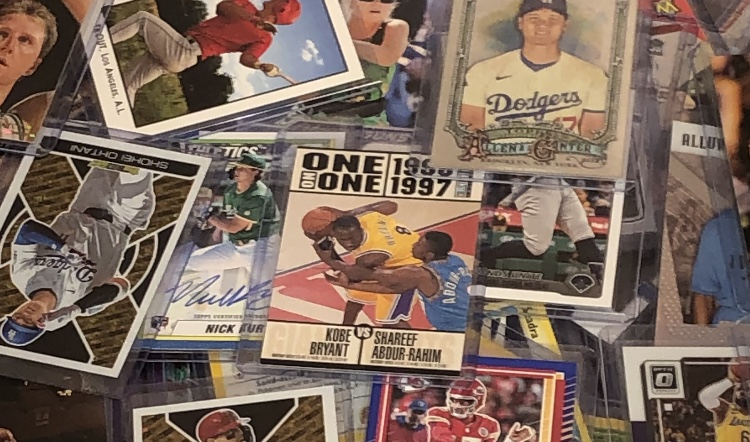
Card shows and it’s not even close. The potential logistic, scam, timing, transaction cost and many other issues associated with online transactions make selling relatively non-fungible high dollar items not very feasible. Just remember, there are transaction costs to everything even when you are not getting charged for it. Every ticking second can be an opportunity cost. Diversifying is good in most cases but not in the way you may think it is. When people talk about asset allocation or investment diversification, they are talking about mostly invest grade assets in significant monetary quantity. They are most likely not talking about a few hundred or even a few thousand dollars. One of the reasons why a lot of people stopped speculating on a few dollar cards is because transaction costs have dramatically increased for grading, which affects the entire valuation model for a card. This is precisely why GOAT rookie base cards are really the way to go because at minimum even if the GOAT ranking changes, the player likely could still to be a GOATesque level player and their card could still hold some significant value. This is a trust game.
Get someone you know through buying or selling cards to introduce you to the dealer who buys your particular type of cards. Typically the buyers who sell online and/or does cards livestreams/breaks usually have the money to buy large collections. Make sure you know the channel the people you want to sell your cards are selling their cards at. These people are usually on the younger side, frequently between around mid to late 30s and mid to late 40s. They have done this for a while but keeps abreast of technological changes and trends in the industry. Like with everything else, don’t try to sell at the absolute highest point. Most of the time it won’t work out well due to timing and risk associated with psychological price thresholds or support/resistance levels. Instead, find a good stopping point when prices become somewhat stable. I think the best time to sell your card collectible is when you don’t really need the money. People do the craziest things when they are desperate for money.
I live in America which means I have the rights to exercise reasonable free speech as permitted by the law. All posted content(s) on this website are my opinions only which means they should not be taken as advice of any kind. I am a non-celebrity, non-public figure posting anonymously for my own entertainment on a website that is not affiliated with any individual(s), organization(s) and/or any entity/entities.
Best time and place to sell your collectible cards.
When you are able to sell at the right time of your choosing under minimum pressure, you will likely get a better deal when you do sell your cards. Try to avoid summer times when you are selling your collection. The only major sport still playing during that time is baseball and many people are on vacation. If you do try to sell your collection during the summer time, try to do so a week or two before the National as many people including dealers likely want to build up before the National hence many dealers are likely willing to buy during that time. Of course if you could make it to the National’s, that might be an excellent time to sell your cards as well. If you are attending local shows, I would say the cards you could get premiums on and sell well are cards of athletes who played or is currently playing for the local team. Try to sell cards of a specific sport during the season because likely there will be more of a premium versus off-season. Working with one or two dealers that you frequently sell your cards to likely will get your better prices because this is a trust game. I would recommend not dealing directly with a collector when you at a dealer’s booth trying to sell at card shows as that is kind of disrespectful and possibly a violation of the show’s rules. It’s not just about margins but cash flow and minimizing transaction costs.
Most established dealers can probably afford a few thousand to buy a collection on the spot when the deal is too good to pass up. It takes at least seven years for a player to show true GOATesqueness. Selling a chase card of a potential GOAT too early is typically not recommend. Yes, many players don’t end up becoming GOAT or even show GOATesque, however, the differential between the downside risk and upside risk for selling a GOAT or GOATesque player’s card too early versus selling a non-GOAT/non-GOATesqueness player’s card are too large to ignore. Let’s say we are taking about a numbered RPA card of a promising but non-lottery young athlete that you probably bought for $100 USD, if the card become totally worthless, you probably lost $100 USD. However, if that athlete becomes Tom Brady or Patrick Mahomes who were picked in late rounds of the draft and were not expected to be stars, guess what their numbered RPAs will be worth when they become who they become after about seven years? Obviously the trick here is to increase your initial probability of success by increasing your probability of buying RPA cards of players who are hidden gems with early indications of greatness in smaller batches to minimize risk as the expected dollar value of the upside may probably be much greater than the downside value on an expected value basis when the initial selection is of higher probability of success to begin with. TCG is obviously a bit different from sports cards, however, the broader collectible card trends impact almost all cards. Like with sports cards, supplies and demand, seasonality, cynical nature, historical significance of the card, rarity/scarcity and card aesthetics probably all matter in terms of how much you can get from seller your card.